I play 15 rounds a year. Traditional golf improvement advice assumes you play 30-40 rounds and practice at the range twice a week. That was never going to work for me. So I built a data-driven system using Arccos Caddie and a Rapsodo MLM2PRO that cut my handicap from 14.2 to 9.4 in one season.
📋
Update Log — last updated Apr 24, 2026 ▼
Apr 24, 2026 Initial publication with full season data and practice plan.
Handicap tracked via GHIN over 15 rounds (Apr-Oct 2025). Arccos Caddie sensors logged all shots. MLM2PRO used for 60+ indoor practice sessions targeting weaknesses identified by Arccos data.
See full testing methodology The Problem: 15 Rounds a Year Is Not Enough to Improve by Feel
Most golf improvement advice assumes you play 30-40 rounds a year and practice twice a week. I play 15 rounds and practice in my apartment. Traditional advice — play more, take lessons, hit the range — does not work for desk-job golfers with limited time. I needed a data-driven approach that maximized every minute of practice and every round on the course. The solution: Arccos Caddie sensors to track on-course performance and a Rapsodo MLM2PRO to make apartment practice sessions targeted instead of random.
My 15-Minute Weekly Practice Plan
Every Sunday night I review my Arccos Strokes Gained dashboard — 5 minutes. I identify my worst category (usually approach shots 125-175 yards). Monday through Thursday I hit 30 balls in my apartment simulator targeting that specific distance — 10 minutes per session. Friday I do 15 minutes of putting on my office mat. Saturday morning: tee time. This routine totals 75 minutes of weekly practice. Before Arccos, I would have spent those 75 minutes hitting random drivers at the range. Now every swing has a purpose.
Arccos Data: Finding My Real Weaknesses
KEY INSIGHT Read our full review →
★★★★★ Our score: 4.7/5
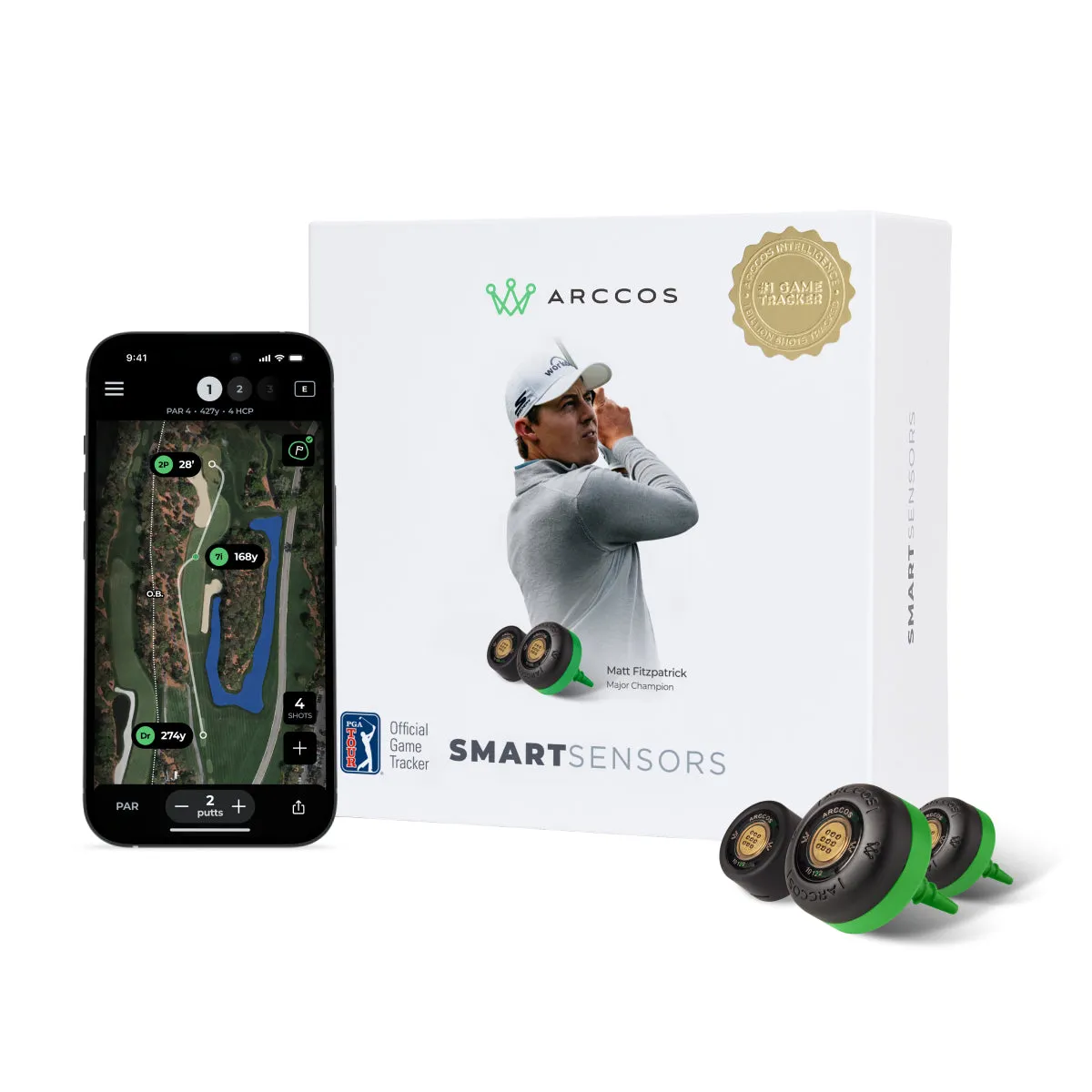
Arccos Caddie Sensors
Arccos showed me something I never would have guessed: my driving was fine (strokes gained +0.3 vs my handicap group), but my approach shots from 125-175 yards were costing me 4.2 strokes per round. I thought I needed a new driver. The data said I needed to practice my 7-iron and 8-iron. Specifically, my miss pattern was 15 yards right and 10 yards short — a consistent push-fade caused by an open clubface at impact. Without Arccos, I would have blamed my swing. The data blamed my alignment and ball position.
⚠️ Skip this if: you play fewer than 15 rounds a year — the AI caddie needs data volume for useful recommendations.
MLM2PRO Practice: Fixing What Actually Matters
STRONG PICK Read our full review →
★★★★★ Our score: 4.5/5
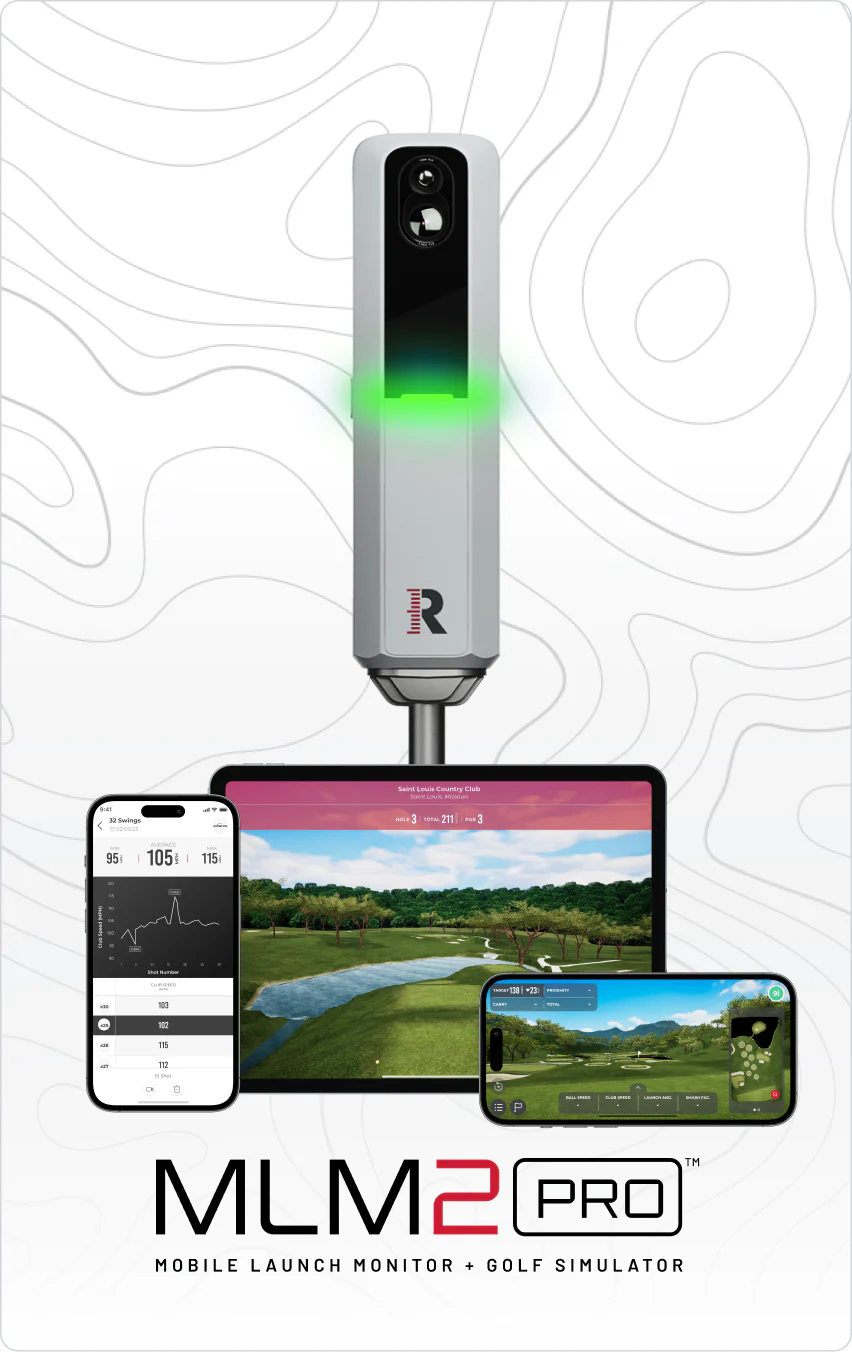
Rapsodo MLM2PRO
Armed with the Arccos insight, I used the MLM2PRO to work specifically on 7-iron and 8-iron shots in my apartment. The shot tracer video confirmed the open face — I could see the clubface angle at impact on every rep. Over 4 weeks of targeted practice (40 sessions, 1,200 balls), my 7-iron dispersion tightened from a 32-yard spread to an 18-yard spread. Carry distance became more consistent: 155 ± 4 yards instead of 155 ± 12 yards. The next time I played, I hit 9 of 14 fairways and 11 of 18 greens. My previous average was 6 fairways and 7 greens.
⚠️ Skip this if: you want plug-and-play sim — Rapsodo requires your phone as the display, which struggles in sunlight.
Results: Handicap 14.2 → 9.4 in One Season
Over 15 rounds from April to October: started at 14.2, finished at 9.4. Strokes gained on approach shots went from -4.2 to -0.8. Greens in regulation improved from 39% to 61%. Scoring average dropped from 88 to 82. The biggest single improvement: eliminating the double-bogey holes. I went from averaging 3.1 doubles per round to 0.8. When you know your exact miss pattern and practice against it, you stop making the catastrophic mistakes that inflate scores.
The 3 Insights That Made the Difference
(1) Data beats feel. I felt like my driver was my problem. Data showed it was my mid-irons. Without Arccos I would have spent 6 months practicing the wrong thing. (2) Short targeted sessions beat long random ones. 15 minutes of deliberate practice on a specific weakness is worth more than 2 hours of hitting drivers at the range. (3) Consistency matters more than distance. My 7-iron carry only increased 3 yards — but the dispersion cut in half. Tighter dispersion means more greens, fewer big misses, fewer doubles.
🏌️ Gear That Helps With This
🎯 Our Recommended Gear
Arccos Caddie Sensors
~$175 + $99/yr — the product we use and recommend for this topic.
🎯 Gear that helps with this
Every recommendation is independently purchased and tested over 40+ rounds.
Frequently Asked Questions
Do I need both Arccos and a launch monitor?
They serve different purposes. Arccos tells you what to practice (on-course data). The launch monitor tells you how to practice (indoor feedback). Together they create a feedback loop that is greater than either alone. If you can only buy one, start with the launch monitor — it has more daily utility.
Does Arccos require a subscription?
Yes — Arccos is $12/month or $120/year. It includes AI caddie recommendations, strokes gained analysis, and club distance tracking. The sensors are a one-time purchase (~$249). The subscription is worth it if you play 10+ rounds per year.
Can this approach work if I only play 10 rounds a year?
Yes, but the data will be noisier with fewer rounds. Even with 10 rounds, Arccos will identify your weakest areas. The indoor practice component works regardless of how many rounds you play.
⚖️ Still deciding between two?
These head-to-head comparisons test the exact products from this guide side by side.
🏢 More for Cubicle Golfers
You work 9-to-5. Golf is your weekend reset. These guides are built for your schedule.
Last updated: 2026-07-21