Improve Your Golf Game
We may earn a commission from links on this page — it never affects our picks. Disclosure
Practical guides for weekend golfers who want lower scores without quitting their day jobs to do it.
Improvement that fits a 40-hour work week
You play golf on weekends. Maybe a quick 9 after work if the schedule lines up. You do not have time for a 2-hour range session three times a week, and the magazine advice that assumes you do is useless to you. Every guide below is written for the schedule you actually have — short, focused practice, on-course strategy that does not require a new swing, and improvements you can make at home between rounds.
The guides here are organized by the four areas that actually move handicap. Scoring and strategy: how to break 90 with course management, how to lower your handicap by identifying where you lose strokes. Short game: chipping, putting improvement, and the wedge play that accounts for roughly two-thirds of your shots. Swing fixes: practical solutions for the slice, fat iron shots, and topped balls — the three faults that derail more recreational rounds than anything else. Practice routines: at-home drills and before-work routines built for people with 15 minutes, not two hours.
Every guide on this site includes a specific practice plan with time estimates. If a guide says you can improve your putting in 10 minutes a day, it tells you exactly which drill, how many reps, and what to look for. No vague "feel" advice, no promises of "miracle fixes," no swing thoughts that work for one round and disappear by the next.
The fastest measurable handicap-lowering move for most weekend golfers? Fix three-putts. The average bogey-golfer three-putts 4–5 times per round — that is up to 5 free strokes available for the cost of a $25 putting mirror and 10 minutes of practice three times a week. No other single intervention saves more strokes per dollar.
All guides written from the perspective of Ryan O., a 10-handicap weekend golfer. Author bio on the about page.
Arccos Caddie Sensors — ~$179
Auto-tracks every shot and shows exactly where you lose strokes
All improvement guides
Green Speed Chart: What Stimp Actually Does to Your Putt
Everyone explains what a Stimpmeter is. Nobody tells you what the number does to your putt. Here is the arithmetic.
Golf Distance by Temperature: How Many Yards Cold Costs You
Cold air is denser and a cold ball compresses less. Here is what that costs you, club by club, from 30°F to 90°F.
Golf Wind Chart: How Many Yards Wind Actually Costs You
Wind is the biggest thing moving your carry number, and it is not symmetrical. Here is what to add and subtract, club by club.

Average Golf Handicap by Age and Gender — 2026 Data
What's an average golf handicap? See the latest data by age, gender and skill level — and how to lower yours.
Golf Ball Compression Chart — Match Your Swing Speed
Every golf ball ranked by compression — find the right ball for your swing speed in 30 seconds.
How to Break 90: A Weekend Golfer's Roadmap
The exact skills, stats, and mindset shifts that move you from 95 to 89.
How to Stop Topping the Ball in Golf
Topped shots are caused by early extension, not lifting your head. Here is the actual fix that works in two practice sessions.
How to Lower Your Golf Handicap: What Actually Works
Most golfers try to improve by hitting longer drives. That is the wrong approach. Here is the most efficient path to a lower handicap.
Why Do I Keep Hitting My Irons Fat? Causes and Fixes
A fat iron shot happens when the club bottoms out behind the ball. Four causes — and the fix for each.
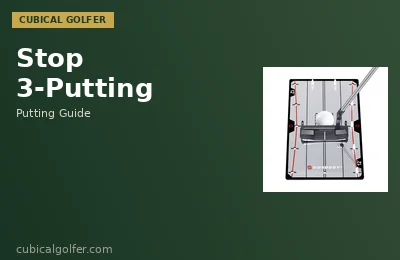
🎯 How to Stop 3-Putting — 5 Drills That Fix It Fast
Three-putting costs the average weekend golfer 4-6 strokes per round. These 5 drills fix the three root causes in 2-3 sessions on the putting green.
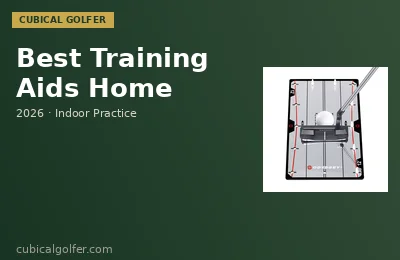
Best Indoor Golf Training Aids — Practice Without a Yard
5 training aids that actually improve your game at home — tested by golfers who practice between rounds.
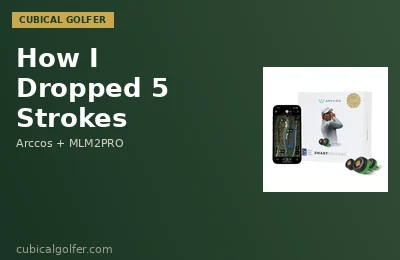
How I Dropped 5 Strokes With Arccos + MLM2PRO Data (15 Rounds/Year)
Handicap 14 to 9 with only 15 rounds a year — using Arccos data and MLM2PRO apartment practice.
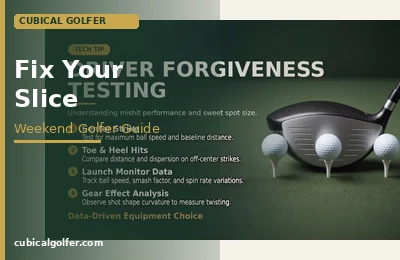
Best Training Aids to Fix Your Slice — 3 That Actually Work
3 training aids that actually fix a slice — tested by a recovering slicer.
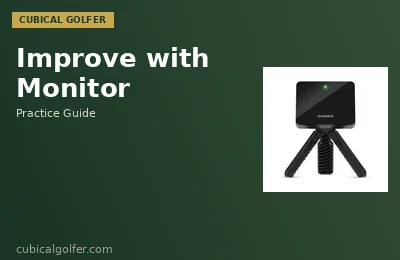
How to Actually Improve With a Launch Monitor — Practice Guide
Owning a launch monitor does not make you better. Using it with a structured plan does. Here is how.
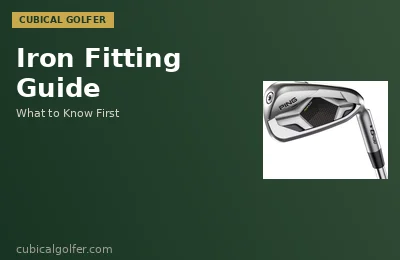
Iron Fitting Guide for Beginners — Before Your First Fitting
Your first iron fitting does not have to be intimidating. Here is exactly what happens, what they measure, and when it is actually worth the money.

Wedge Bounce Explained — How to Choose the Right Bounce for Your Game
Wedge bounce is the most misunderstood spec in golf. Here is what it actually does and how to pick the right number for your game.

Golf Shaft Flex Guide — How to Choose the Right Flex for Your Swing
Wrong shaft flex costs you 5-10 yards and creates inconsistent ball flight. Here is how to choose the right flex for your swing.

Driver Loft Guide — What Loft Should Your Driver Be?
Most golfers play too little loft on their driver. More loft means higher launch, less side spin, and often MORE distance. Here is how to find your number.

How Far Does the Average Golfer Hit a 7 Iron?
The average golfer hits a 7 iron 130–150 yards — but that varies a lot by handicap. Real data on what golfers at every level actually carry.
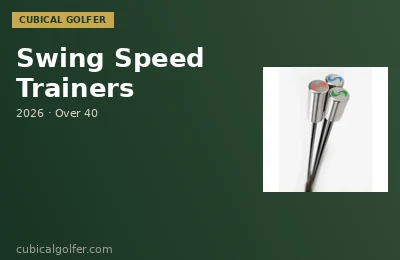
Best Swing Speed Trainers for Golfers Over 40
Best swing speed trainers — add 5-8% speed in 6 weeks with 15 minutes 3x per week.
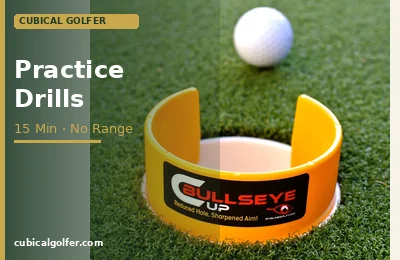
7 Golf Practice Drills at Home (15 Minutes)
Quick golf practice drills for the golfer who works all week and cannot always make it to the range.

Hybrid vs Long Iron — Which Should You Carry? (Data Inside)
We hit 100 shots with both and measured everything. Here is when hybrids win and when long irons still make sense.
Average Golf Swing Speed by Age — Driver, 7-Iron & Wedge Data
Complete breakdown of average swing speed by age group and gender. See where you stand — and what gear changes actually help.
How to Fix Your Slice: The Weekend Golfer's Complete Guide
Step-by-step drills and gear adjustments that actually stick — no range bucket required.
Why Does My Golf Ball Keep Going Right? (Causes + Fixes)
A ball that goes right means the clubface is open at impact. Here are the 4 causes (and their fixes) in order of how common they are.
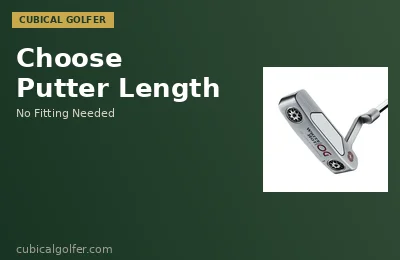
How to Choose Putter Length (No Fitting Required)
Find your correct putter length — a DIY method that matches pro fitting 90% of the time.
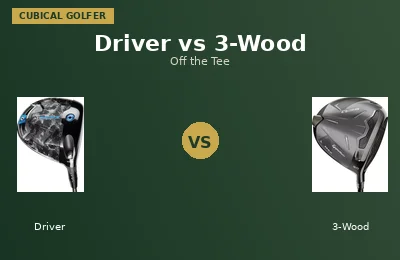
Driver vs 3-Wood Off the Tee — Which Should You Hit?
When to hit 3-wood off the tee instead of driver — the data says more often than you think.

🏌️♂️ Golf for Beginners — Complete Guide
Everything a complete beginner needs to start playing golf in 2026. Gear, fundamentals, practice routines, and realistic expectations — in one place.

Golf Handicap Explained for Beginners
Golf handicap explained simply — what it is, how to calculate it, and why every golfer should have one.

How Many Clubs in a Golf Bag — Rules, Strategy, and What to Carry
14 clubs maximum — but which 14? Recommended bag setups by handicap level.

Golf Tips for Beginners
The essential golf tips every beginner needs — without the jargon and without the overwhelming advice.
How to Chip in Golf: Simple Technique That Works
Most weekend golfers overcomplicate chipping. Here is the one technique change that eliminates thinned chips and duffs immediately.
Where strokes actually come from in a weekend golfer's round
Most weekend golfers think their problem is the driver. It almost never is. Even a bad driver round produces something like 3–5 hosed tee shots — total damage maybe 6 strokes. The hidden bleeding happens in the short game and the putts. Three-putts: 4-5 strokes a round. Chunked or thinned chips inside 30 yards: 3-4 strokes a round. Approach shots that miss the green on the wrong side, leaving impossible up-and-downs: another 3-4 strokes. That is 10-13 strokes per round available without ever touching the driver.
The improvement guides on this site are weighted toward this reality. Putting and short game get the most coverage because they offer the most strokes per practice hour. Course management content sits in the middle because strategy changes can save 3-5 strokes per round overnight with zero swing work. Full-swing instruction is the smallest category because, frankly, the existing internet has 50,000 videos on how to fix your slice — what is missing is the framework for figuring out which fix to use and how to keep it from disappearing by the next round.
If you only read one guide on this site, make it how to lower your golf handicap — it covers the diagnostic framework that tells you exactly where your strokes are coming from and what to fix first.
Related sections
The right gear amplifies practice — a worn glove or wrong-flex shaft erases hours of work. See the gear reviews hub for buying guides aligned to your skill level. For the data side of improvement — apps, shot trackers, launch monitors — see the golf tech hub. For the lifestyle and time-management piece of fitting golf into a busy life, see the golf lifestyle hub.
Improvement FAQ
I have not improved in two years. Where do I actually start?
Look at your most recent five rounds and count three numbers: total putts, fairways hit, and greens in regulation. The number that is worst relative to your handicap level is where you start. For most weekend golfers the answer is putts — the average 90s shooter takes 36-38 putts per round when they should be at 32. Fix that and you drop strokes without changing your full swing at all. The full diagnostic is in our <a href="/how-to-lower-golf-handicap/">handicap-lowering guide</a>.
How long does it actually take to break 90?
Honest answer for a weekend golfer: 12-18 months if you have the right practice routine, longer if you do not. The players who break 90 fastest are the ones who stop trying to fix their swing and start managing the course differently — playing shorter clubs off the tee, laying up to your favorite wedge yardage, and never going for a green you cannot reach in two with a confident swing. Our <a href="/how-to-break-90/">break 90 guide</a> covers the math and the on-course strategy.
Are lessons worth it for a recreational golfer?
Yes, but probably not the way you are thinking. A weekly lesson plan is overkill for someone who plays once a week — most of the improvement evaporates between sessions. The high-ROI move is one 60-minute video lesson at the start of the season focused on grip, stance, and ball position, then a second one mid-season to recheck. Two lessons a year is enough to fix the structural problems that prevent everything else from working.
Why does my swing fall apart on the course when it feels fine on the range?
Two reasons. First, the range has flat lies, no consequences, and no time pressure — you can hit 20 balls until one feels right. The course has none of those luxuries. Second, your range swing is usually slower and more rhythmic than your course swing because you are not nervous. The fix is to build pre-shot routines that you also use on the range, so the swing you produce there is the same one you produce on the first tee. Covered in our <a href="/golf-tips-for-beginners/">routine guide</a>.
What is the single most overrated piece of improvement advice?
"Hit more balls." Volume is not the answer for a weekend golfer — most people already practice more than they need to, just inefficiently. Twenty focused minutes of putting beats two hours of mindless range balls every time. The most underrated advice: keep a one-line journal after every round noting what cost you strokes that day. Patterns emerge within four or five rounds, and the patterns tell you exactly where to focus practice time.