The most reliable chipping technique for weekend golfers: narrow stance, ball back in stance, weight forward, hands ahead of ball at impact. Deadhands technique with a 9-iron eliminates the biggest chipping errors in one adjustment. Our top pick: the Cleveland RTX-6 Wedge (~$169).
Our #1 Pick: ~$130 at Golf Galaxy — Check Today's Price ↗ Read the full guide below.
The fastest fix for bad chipping: put 70 percent of your weight on your front foot at setup and keep it there throughout the swing. This single change eliminates 80 percent of fat chips and thin skulls by ensuring the club contacts the ball before the ground. Use your putting grip, hinge your wrists slightly on the backswing, and let the loft of the club do the lifting — never try to scoop the ball into the air.
Most weekend golfers chunk and thin chips for the same reason: too much wrist action. The fix is not a complicated technique overhaul — it is one setup change that eliminates the hands from the equation. Here's exactly how to chip consistently.
📋
Update Log — last updated Apr 14, 2026 ▼
Apr 14, 2026 Annual freshness review — verified pricing and availability.
The Chipping Setup: Get This Right First
Every reliable chip shot starts from the same setup — nail this and the technique almost takes care of itself. Narrow your stance to about hip width with your feet close together. Play the ball in the center of your stance or one ball-width back. Put 60 to 65 percent of your weight on your lead foot (left foot for right-handers) and keep it there throughout the swing — no weight shift. Press your hands ahead of the ball so the shaft leans toward the target. Your hands should be over your lead thigh at address. This setup does three things: it moves the low point of your swing forward (ball-first contact), it de-lofts the club slightly (lower running shots), and it eliminates the wrist flip that causes chunked chips. If you do nothing else differently, this setup alone will cut your chipping misses in half within one practice session.
Hit the Ball First: The Descending Blow
The biggest chipping mistake is trying to scoop the ball into the air. When you flip your wrists to help the ball up, the club catches the ground behind the ball (chunk) or the leading edge catches the equator (blade across the green). Instead, hit DOWN on the ball and let the club's loft do the lifting. A pitching wedge has 46 degrees of loft — that is more than enough to pop the ball up even with a descending strike. The feel you want: the butt end of the club stays ahead of the clubhead throughout the stroke. Your hands lead, the clubhead follows. After impact, you should see a small divot or scuff mark that starts where the ball was and extends forward — never behind the ball. If you struggle with the same fat contact on full iron shots, our guide on
why you hit irons fat covers the same fundamental from the full-swing perspective.
The Most Common Chipping Mistakes
Three mistakes account for 90 percent of bad chips. Mistake 1: scooping — trying to help the ball up by flipping the wrists. Fix: keep your hands ahead of the clubhead through impact. Mistake 2: decelerating — slowing the club down through impact out of fear of hitting it too hard. Fix: make a shorter backswing and accelerate through the ball. A short-backswing, firm-contact chip is always more reliable than a long-backswing, decelerated one. Mistake 3: too much wrist action — hinging and unhinging the wrists like a full swing. Fix: use a pendulum stroke with quiet wrists, letting your shoulders rock the club. Think of it as a long putt with loft. If you blade chips across the green, you are
topping the ball — the fix is the same: keep your chest down and hands leading.
Club Selection: Which Wedge to Use
Different situations call for different clubs, and choosing the right one is half the battle. From the fringe with lots of green to work with: use a 9-iron or 8-iron — the low loft creates a bump-and-run that rolls like a putt. From 10 to 15 yards off the green with moderate green: use a pitching wedge — it flies a third of the way and rolls two-thirds. From rough or over a bunker with little green: use a sand wedge or 56-degree — the higher loft gets the ball up quickly and stops it faster. The rule of thumb: always use the lowest-lofted club that carries the ball onto the green and lets it roll to the hole. Rolling is more predictable than flying. A bump-and-run with a 9-iron is the highest-percentage shot in chipping, and it is the one most amateurs never try.
The One-Club Beginner Approach
If club selection overwhelms you, start by chipping everything with a pitching wedge. One club, one setup, one technique. Vary distance by changing the length of your backswing — shorter back for short chips, longer back for longer ones. The pitching wedge is the most versatile chipping club because its moderate loft (46 degrees) works from the fringe, from light rough, and from 20 yards out. Master the pitching wedge chip first. Once you can consistently land the ball on your target spot and predict the roll, add the 9-iron for bump-and-runs and the sand wedge for high-loft situations. But one club for the first 10 rounds of chipping practice builds a fundamentally sound stroke that transfers to every club.
Bump-and-Run vs Lofted Chip
The bump-and-run (low chip that rolls most of the way) and the lofted chip (high shot that carries most of the way and stops quickly) are two different tools for two different situations. Use the bump-and-run when: the lie is clean, you have at least 10 feet of green between you and the pin, and there are no bunkers or obstacles between you and the hole. Use the lofted chip when: you need to carry over a bunker, the pin is close to the edge with little green to work with, or the ball is sitting down in thick rough. The critical decision rule: when in doubt, bump-and-run. It has a smaller margin of error because a slightly mis-hit bump still reaches the green. A slightly mis-hit lofted chip can chunk, blade, or come up short in the bunker. For
reducing three-putts, getting on the green — even 20 feet from the pin — is always better than a creative chip that goes wrong.
Chipping From Bad Lies
Bad lies change your technique slightly. From thick rough: use your sand wedge, open the face slightly, and make a steeper backswing. The grass will grab the hosel, so aim slightly left (right-handers) and swing more aggressively than you think — the rough absorbs energy. Expect less roll. From a tight fairway lie (no cushion): use a pitching wedge or 9-iron with a narrow stance and hands well ahead. Play the ball back in your stance. The key is hitting the ball first — there is zero margin for hitting behind it on a tight lie. From a downhill lie around the green: lean your body with the slope (shoulders matching the slope angle), play the ball back, and accept that the ball will come out lower and run more. Do not fight the slope — work with it.
Drill: The Landing-Spot Towel Drill
Place a towel on the green where you want the ball to land — not where you want it to finish. Hit 10 chips trying to land the ball on the towel. This drill teaches the most important chipping skill: picking a landing spot and hitting it consistently. Once the ball lands on your spot, gravity and green speed determine where it finishes — and those are predictable. Most amateurs aim at the hole when chipping, which gives them no reference for whether the shot was well-executed. A chip that lands 5 feet short of your intended landing spot and rolls to the hole looks good but teaches nothing. A chip that lands exactly on the towel and rolls 3 feet past the hole is a better chip — repeat it and the next one will be perfect.
Distance Control: The Clock System
For consistent chipping distances, use the clock system. Imagine your backswing as a clock face. A 7 o'clock backswing (hands barely past your trail thigh) produces a short chip of 5 to 10 yards. A 9 o'clock backswing (hands at hip height) produces a medium chip of 15 to 25 yards. A 10 o'clock backswing (hands between hip and shoulder) produces a longer pitch of 25 to 40 yards. The key: keep your follow-through the same length as your backswing. A 9 o'clock back, 9 o'clock through. This prevents deceleration and produces consistent contact. Practice each clock position with 5 balls and note the distance each produces with your pitching wedge. Write those numbers down — they become your personal chipping yardage chart.
🏌️ Gear That Helps With This
🎯 Our Recommended Gear
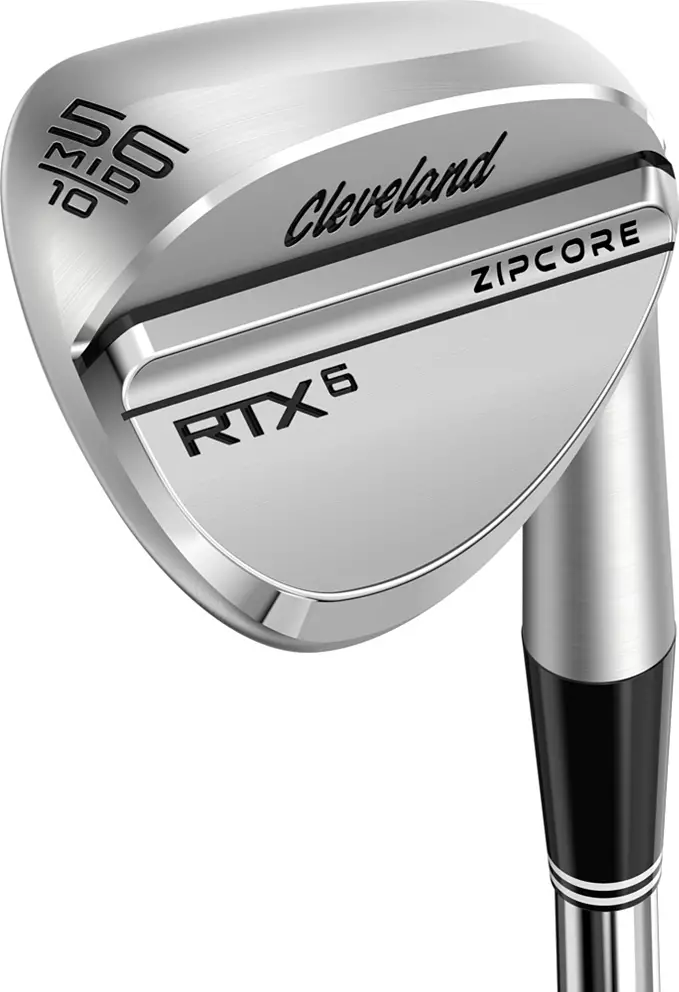
Cleveland RTX 6 52
~$130 — the product we use and recommend for this topic.
🎯 Gear that helps with this
Every recommendation is independently purchased and tested over 40+ rounds.
Frequently Asked Questions
What is the easiest club to chip with?
The pitching wedge (46 degrees) is the easiest and most versatile chipping club. It produces a reliable mid-trajectory chip that flies a third of the distance and rolls two-thirds. Master the pitching wedge before adding other clubs to your chipping rotation.
Why do I keep chunking my chips?
Chunked chips come from scooping — trying to help the ball into the air by flipping your wrists. The fix: keep your hands ahead of the clubhead through impact and feel like you are hitting DOWN on the ball. The club loft does the lifting, not your wrists.
Why do I blade chips across the green?
Bladed chips happen when the leading edge of the club strikes the middle of the ball instead of the bottom. This is caused by standing up through impact or pulling the club upward. Keep your chest down, maintain your spine angle, and let the club swing through to a finish.
Should I use a 7-iron or wedge for chipping?
Use a 7-iron or 8-iron for bump-and-run chips when you have lots of green to work with. Use a pitching wedge for standard chips from 10 to 20 yards. Use a sand wedge only when you need height to clear a bunker or stop the ball quickly on a short pin.
How do I practice chipping at home?
Use foam practice balls and chip into a laundry basket or towel in your backyard or garage. Focus on landing the ball on the towel consistently. The landing-spot skill transfers directly to the course because real grass only changes how far the ball rolls after landing, not the swing itself.
🏢 More for Cubicle Golfers
You work 9-to-5. Golf is your weekend reset. These guides are built for your schedule.
Last updated: 2026-04-26