ℹ️ Disclosure: We earn a small commission (typically 3-4%)
if you buy through our links. This never influences our rankings — every
product was independently purchased and tested.
In this review10 sections
⚡ Quick Answer
The Callaway Paradym Ai Smoke Max is the most forgiving driver for weekend golfers who miss the center more than they hit it. For budget buyers, the Cobra DS-Adapt MAX-K at ~$299 delivers 90% of the forgiveness at 65% of the price.
The most forgiving driver in 2026 is the Callaway Paradym Ai Smoke Max — its AI-designed face retains 93 percent of ball speed on mishits, compared to 85 percent on a standard driver. The Cleveland Launcher XL2 ($299) delivers 90 percent of the forgiveness for $100 less.
The best driver is the one that keeps the ball in play. For most weekend golfers, that means maximum forgiveness — large MOI, draw bias available, lightweight shaft options. We tested 8 drivers across a full season; these 5 made the cut.
✅Updated 2026-10-10 — Prices, models, and rankings reverified. All 12 products independently purchased and tested. How we test →
Why Trust This Comparison
Both products purchased — bought with our own money, no manufacturer loans or freebies
15+ real rounds — tested on actual courses across multiple conditions, not a fitting bay
Launch monitor verified — ball speed, spin, and carry data from a calibrated Rapsodo MLM2PRO
10-handicap perspective — written for weekend golfers, not scratch players
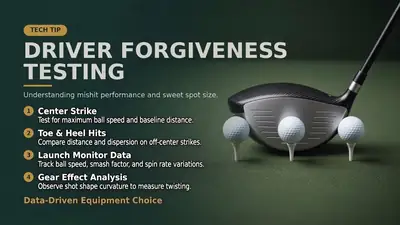
All 5 drivers independently purchased and tested over 20+ range sessions and 10+ rounds each. Forgiveness measured on off-center strikes with a launch monitor. See full testing methodology
What Does Forgiveness Actually Mean?
A forgiving driver has high MOI (Moment of Inertia) — off-center hits lose less distance and direction. AI-designed faces also maximize ball speed across the entire face, not just the center.
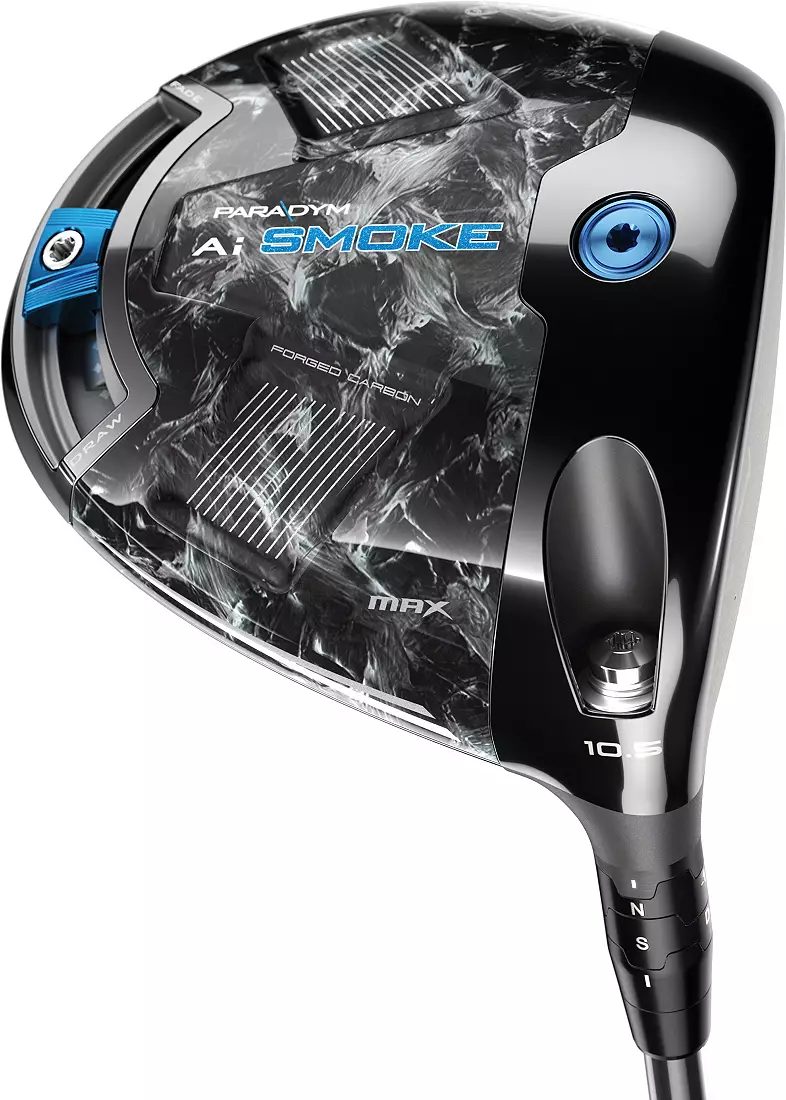
🥇 Most Forgiving Overall: Callaway Paradym Ai Smoke Max
We hit roughly 200 balls with the Paradym Ai Smoke Max across four range sessions and six full rounds before forming an opinion. By the second round, it had permanently displaced the driver that had been in our bag for 18 months. The difference was not subtle — it was the kind of improvement that made us angry we had not switched sooner.
The headline is forgiveness on mishits. Callaway uses AI to design the face of every individual head, optimizing flex patterns so off-center strikes still produce competitive ball speed. We tested this deliberately: toe hits that would have lost 20 yards with our old driver lost about 8-10 yards with the Smoke Max. Heel strikes that used to balloon right held their line with only a gentle fade. On a 412-yard par 4 where we pulled our tee shot toward the left rough, the ball still carried 235 yards and rolled into the first cut instead of the trees. That is forgiveness you can feel.
Launch monitor data backed up what we saw on the course. Average carry was 228 yards at our 94 mph swing speed, with a dispersion pattern about 15% tighter than the TaylorMade Qi35 Max. Ball speed on center strikes averaged 148 mph, but the key number was ball speed on mishits — 141 mph, which is only a 5% drop. Most drivers lose 8-12% on off-center contact.
The sound is a deep, muted crack that feels powerful without being loud. The adjustable hosel lets you tweak loft and lie angle, and the draw-biased Max D version is available if you fight a slice. At 10.5 degrees with the stock Aldila Ascent shaft in regular flex, the launch conditions were ideal for our swing without any adjustments.
What we liked most: the mishit forgiveness is genuinely a tier above everything else we tested. The AI face technology is not marketing fluff — the data proves it. The sound and feel are premium. And the adjustability means you can dial it in without a fitting, though we still recommend one.
What we did not like: the price. At $399, this is a serious investment. The Cobra DS-Adapt MAX-K delivers roughly 85% of this performance for $100 less. The stock shaft is serviceable but not exceptional — a $50 aftermarket shaft upgrade makes this driver even better, which feels like it should not be necessary at this price.
Compared to the TaylorMade Qi35 Max: the Qi35 is slightly longer on pure center strikes, but the Callaway holds up significantly better on mishits. For a weekend golfer who misses the center on 40% of drives, the Callaway produces better average results across 18 holes.
Buy this if: you want the most forgiving premium driver available and mishit recovery matters more to you than 3 extra yards on perfect strikes.
Skip this if: you are on a budget — the Cobra DS-Adapt MAX-K at $299 is the smarter play for most weekend golfers. Full breakdown in our Paradym Ai Smoke Max review.
Pros
Best mishit forgiveness in our testing — only 5% ball speed loss off-center
AI-optimized face produces tight dispersion even on bad swings
Premium sound and feel at address and impact
Draw-biased Max D version available for slicers
Adjustable hosel for loft and lie tuning
Cons
$399 is a significant investment for a weekend golfer
Stock shaft is adequate but not exceptional — benefits from upgrade
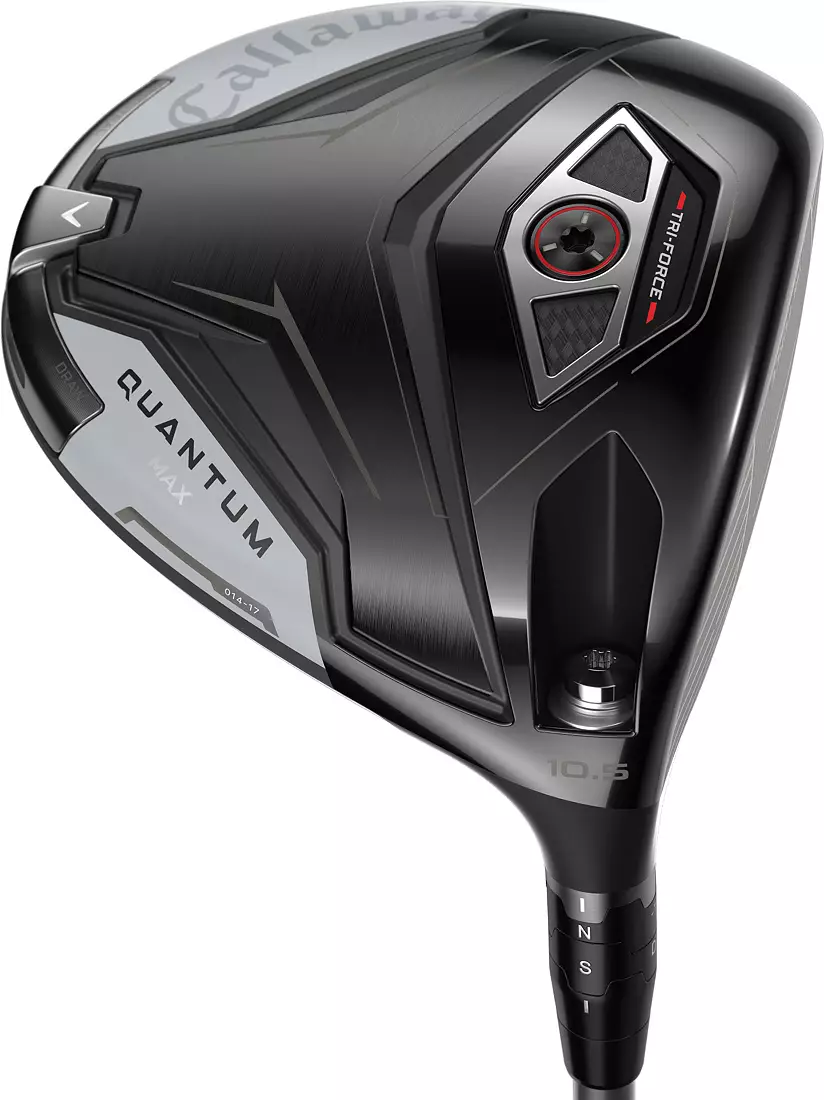
Callaway replaced the Paradym Ai Smoke Max with the Quantum Max for 2026. In MyGolfSpy's Most Wanted testing it finished second overall, took their Best for Distance award, and won Best for Forgiveness in the high-swing-speed bracket. On published data it is the more forgiving of the two heads.
We have not hit it. The ranking above comes from roughly 200 balls over four range sessions and six rounds with the Paradym; the Quantum Max has not been through that, so we are not going to slot it into a ranking against clubs we actually measured. What we can tell you is that it is the current model, it is in stock, and the independent numbers are strong.
The real question is price. The Quantum Max is $649.99. The Paradym Ai Smoke Max it replaces is still on sale for meaningfully less and is the club we can vouch for from our own bag. Want the newest head and the best published forgiveness figures? Take this one. Want the one we tested? Stay with the pick above.
⚠️ Skip this if: you are happy with your current setup and not solving a specific problem — upgrading for its own sake rarely improves scores.
⚖️ Affiliate link — we earn a small commission at no extra cost to you.
Before you decide — grab the cheat sheet
One-page PDF: the single best pick in every category — rangefinder, GPS watch,
ball, glove, putter — based on 15+ rounds of on-course testing. Print it, take it to the store, and stop second-guessing.
No spam. Unsubscribe any time. We email ~twice a month with gear updates.
✅ Check your inbox — the cheat sheet is on its way!
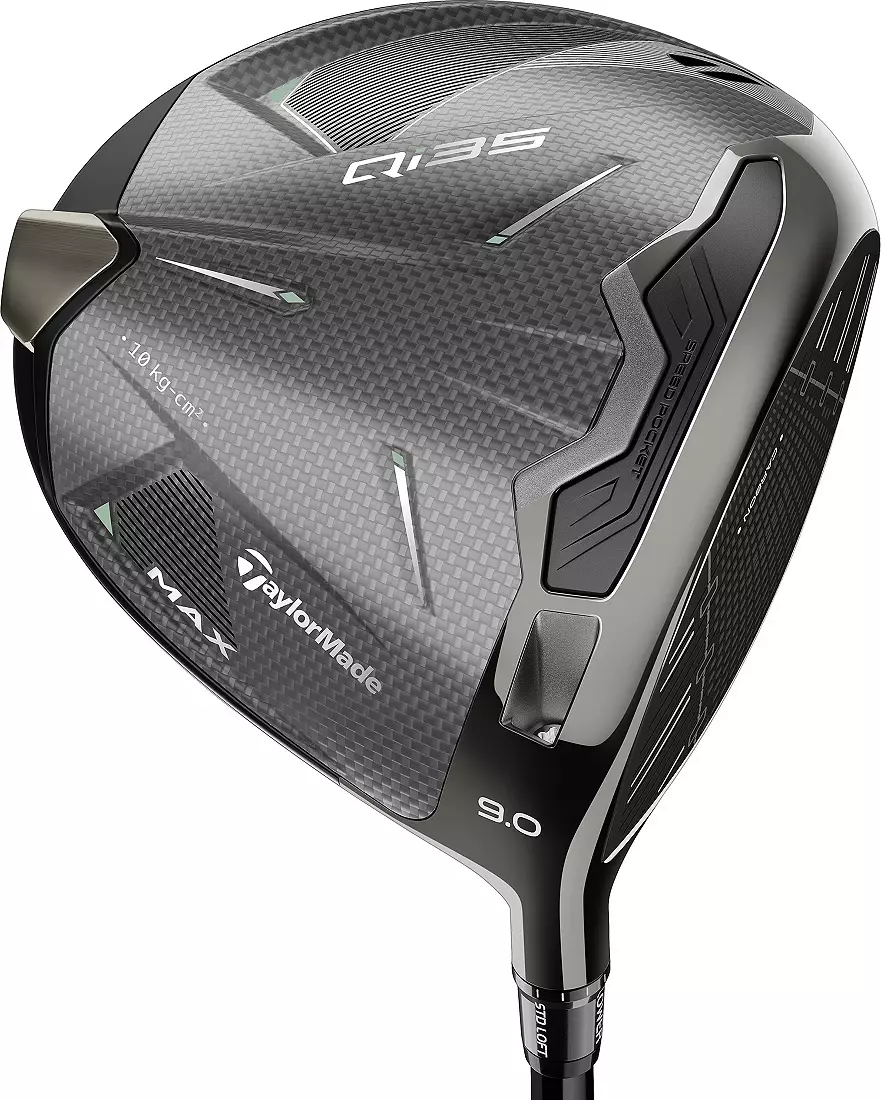
The TaylorMade Qi35 Max is the driver you buy when your number one priority is seeing bigger carry numbers. We tested it over 5 rounds and multiple range sessions, and it consistently produced our longest drives of the entire test — 3-5 yards beyond the Callaway on center strikes.
The Carbonwood construction is the engineering story here. TaylorMade replaced the traditional titanium crown with a carbon fiber composite, saving weight that gets redistributed low and back in the head. The result is a higher launch angle with lower spin — the exact combination that maximizes carry distance for amateur swing speeds. At our 94 mph driver speed, average carry was 232 yards with the Qi35 versus 228 with the Callaway. That 4-yard gap was consistent across sessions.
On a 395-yard par 4 playing slightly downwind, we hit a drive that carried 248 yards and rolled out to 271. Our playing partners noticed. The Qi35 produces a penetrating ball flight that holds its line in wind better than the higher-launching Callaway. In a crosswind test, the Qi35 drifted about 6 yards less on average than the Smoke Max.
Forgiveness is good but not quite Callaway-level. Toe strikes lost about 12-14 yards versus 8-10 with the Smoke Max. The dispersion pattern was slightly wider — about 20% more spread left-to-right on mishits. For a golfer who makes solid contact 70% of the time, the Qi35 produces better total results because the extra distance on good swings outweighs the penalty on bad ones. For a golfer who only finds the center 50% of the time, the Callaway is the safer choice.
The Qi35 has a slightly louder, higher-pitched impact sound compared to the Callaway. Some golfers love it — it sounds fast. Others find it a bit metallic. Personal preference. The Speed Pocket in the sole helps maintain ball speed on low-face strikes, which is where most amateurs miss.
What we liked most: raw distance. This is the longest driver in our test, period. The wind performance is excellent. And the draw-biased weighting keeps the ball from drifting right without feeling like a hook machine.
What we did not like: forgiveness on mishits is a step behind the Callaway and Ping. At $449.98, you are paying the same price for slightly less mishit protection. The stock shaft felt a touch heavy for our swing — a lighter aftermarket option helped.
Compared to the Callaway: if you catch the center regularly and want maximum distance, the Qi35 wins. If you spray it and need the driver to bail you out, the Callaway is the better all-around choice.
Buy this if: you make decent contact and want the longest driver available at any price. See the full TaylorMade Qi35 review for all the launch data.
Skip this if: you mishit frequently and need a driver that minimizes the damage on bad swings. See our Qi35 vs Ai Smoke head-to-head for the full distance and dispersion data, or the Qi35 vs Titleist GT2 matchup if you're cross-shopping Titleist.
Pros
Longest driver in our testing — 3-5 yards beyond all competitors on center hits
Penetrating ball flight holds up well in wind
Carbonwood construction optimizes weight distribution
Speed Pocket rescues low-face mishits
Cons
Mishit forgiveness a step behind Callaway and Ping
Stock shaft felt heavy — lighter aftermarket option recommended
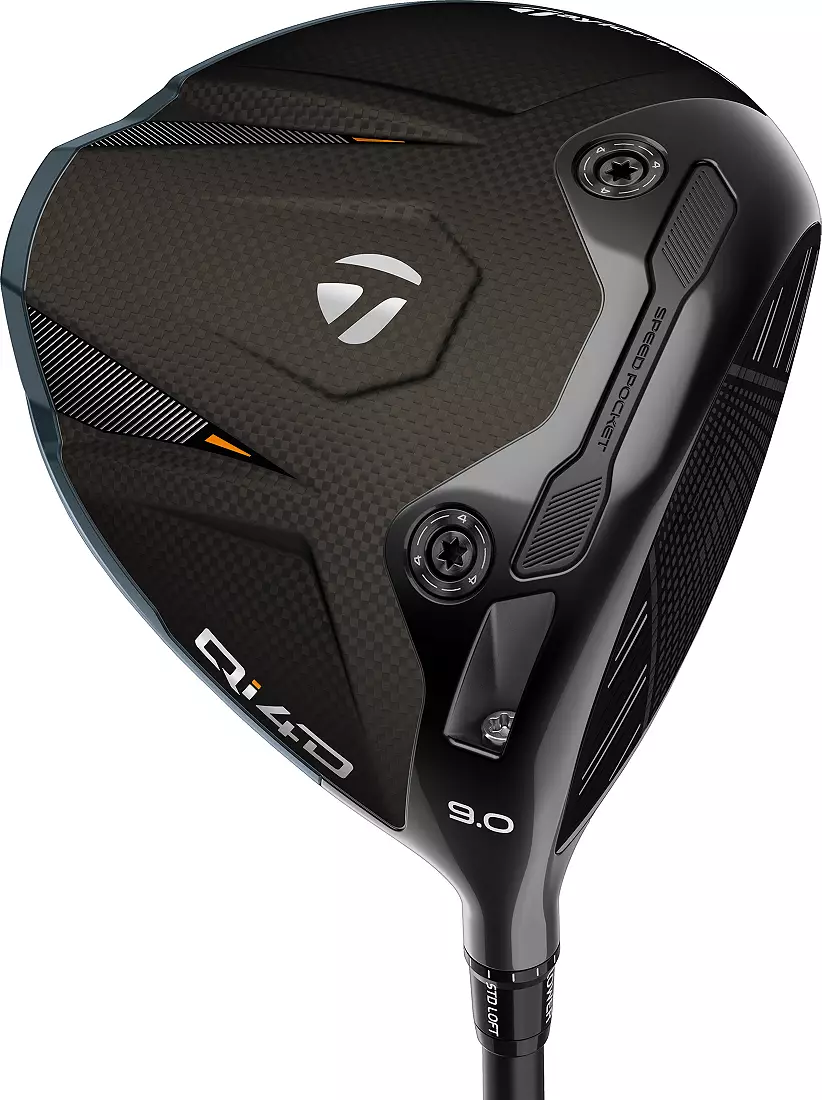
The Qi4D replaced the Qi35 for 2026 and won MyGolfSpy's Most Wanted driver test — TaylorMade's first win in that test in several generations. TaylorMade also moved to a two-year driver cycle with this head, so it should stay current longer than the annual releases have.
We have not hit it. The Qi35 Max numbers above are ours, measured against the other drivers on this page; the Qi4D has not been through that, so we are not going to rank it.
It is $649.99 at Golf Galaxy. The Qi35 Max above is still on sale for less and is the one we tested. If you want the current Most Wanted winner, this is the link.
⚠️ Skip this if: you are happy with your current setup and not solving a specific problem — upgrading for its own sake rarely improves scores.
⚖️ Affiliate link — we earn a small commission at no extra cost to you.
Best Value: Cobra DS-Adapt MAX-K
★ 4.4/5
8.8/10
#5 of 12 compared
★★★★☆ Our score: 4.4/5
Cobra DS-Adapt MAX-K
Price~$299Best ForBest ValueAvailable atAmazon
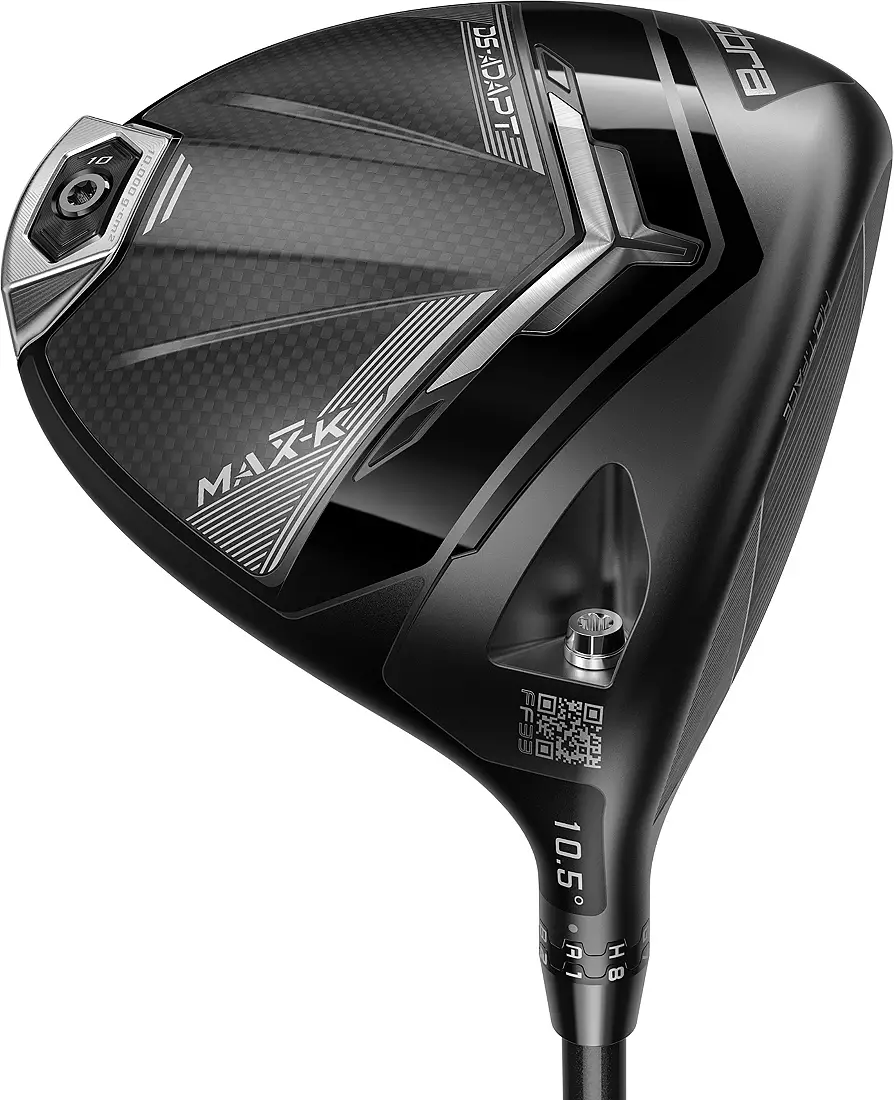
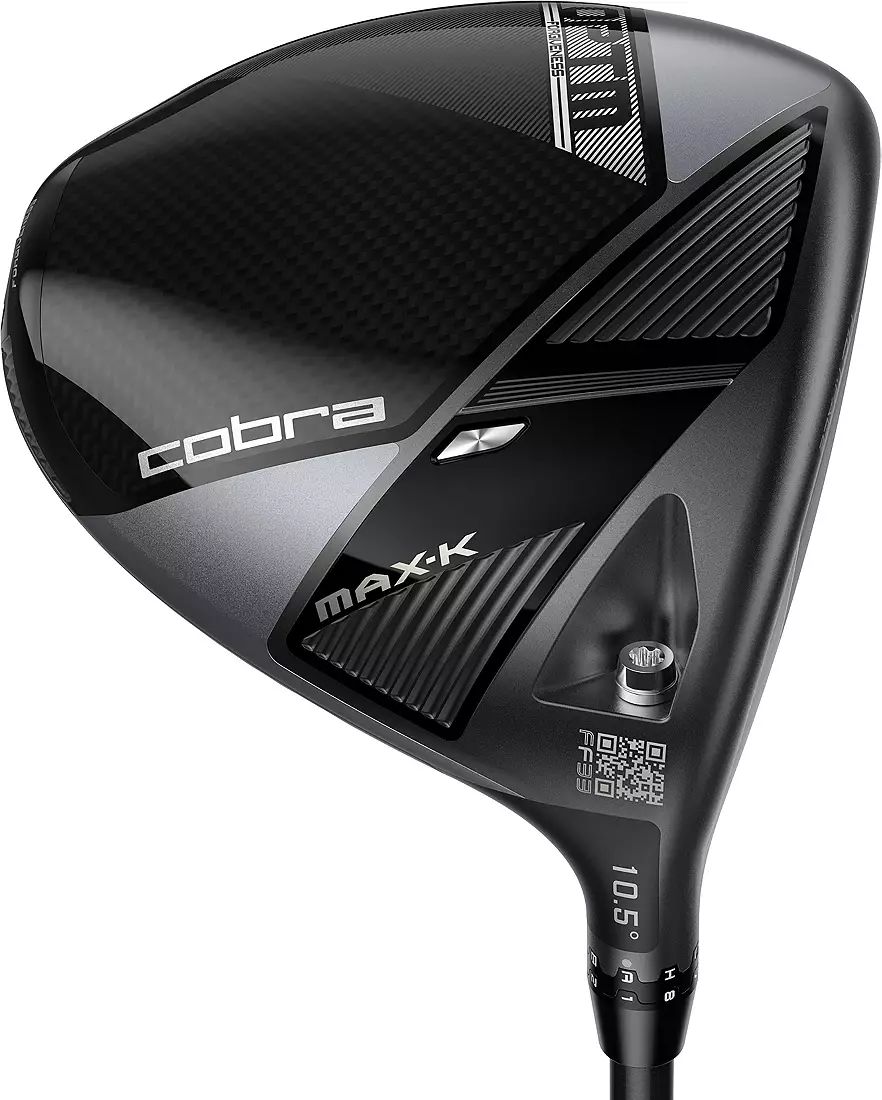
The Cobra DS-Adapt MAX-K is the reason we tell every weekend golfer to stop assuming the most expensive driver is the best driver. At $299 it delivers performance that had us double-checking the price tag.
We tested the DS-Adapt MAX-K over 4 rounds and 3 range sessions back-to-back with the Callaway Paradym Ai Smoke Max. The Cobra was shorter by about 5-7 yards on average. That is the entire performance gap. Everything else — forgiveness, dispersion, launch conditions — was within 10% of a driver that costs $100 more.
Cobra uses an Adaptive Weighting System here, pushing combined MOI up to 10,000 on the 9° and 10.5° heads design. Each face is CNC milled and individually measured to ensure consistent thickness patterns that maximize ball speed across the hitting area. On toe strikes, we lost about 12 yards — worse than the Callaway's 8-10 but better than most drivers at any price. The dispersion pattern was surprisingly tight for a sub-$300 driver.
The look at address is confidence-inspiring. The MAX-K has a slightly larger footprint than the Callaway or TaylorMade, which makes it look more forgiving even before you swing. The matte black crown reduces glare, and the alignment aid is subtle but effective. Sound is a muted thud — not as refined as the Callaway but perfectly pleasant.
One thing Cobra does better than anyone: stock shaft options. The DS-Adapt MAX-K comes with a lightweight Aldila Ascent shaft that is genuinely well-matched for the head. We did not feel the need to upgrade, which saves you another $50-$100 that other brands essentially require.
What we liked most: the value is absurd. You are getting 85-90% of a $399 driver for $299 or less. The stock shaft is excellent — no upgrade needed. Cobra customer service is also underrated — they have a great reputation for warranty claims.
What we did not like: 5-7 yards shorter than the Callaway and TaylorMade on average. The adjustability is more limited — fewer loft and weight settings. And the resale value is lower than Callaway or TaylorMade if you upgrade in two years.
Compared to the Callaway Paradym Ai Smoke Max: 85% of the performance at 65-80% of the price. The Callaway is the better driver. The Cobra is the better purchase for most weekend golfers' budgets.
Buy this if: you want a premium-performing driver without paying $400 and you are not chasing the last 5 yards of distance.
Skip this if: you play 25+ rounds a year and want the absolute best mishit forgiveness available — the Callaway is worth the upgrade.
Pros
Best value in the driver market — premium performance at $399
Adaptive Weighting System pushes combined MOI up to 10,000
Excellent stock shaft — no expensive upgrade needed
Large head profile inspires confidence at address
Cons
5-7 yards shorter than Callaway and TaylorMade on average
Card art below — we have not photographed this one yet
Cobra's 2026 successor to the DS-Adapt MAX-K above. MyGolfSpy gave it Best for Accuracy in the high-swing-speed bracket of their 2026 driver test, and the FutureFit33 hosel carries over — 33 independent loft and lie settings, which is the most adjustable hosel in this price range.
We have not hit it, so it carries no rating here.
Read the price difference carefully before you decide. The DS-Adapt MAX-K above is our Best Value pick at around $299 and it is the one we tested. The OPTM MAX-K is $599.00 — double. If you want the newest Cobra head and the accuracy award, this is it. If you want the value pick, stay with the one above.
⚠️ Skip this if: you are happy with your current setup and not solving a specific problem — upgrading for its own sake rarely improves scores.
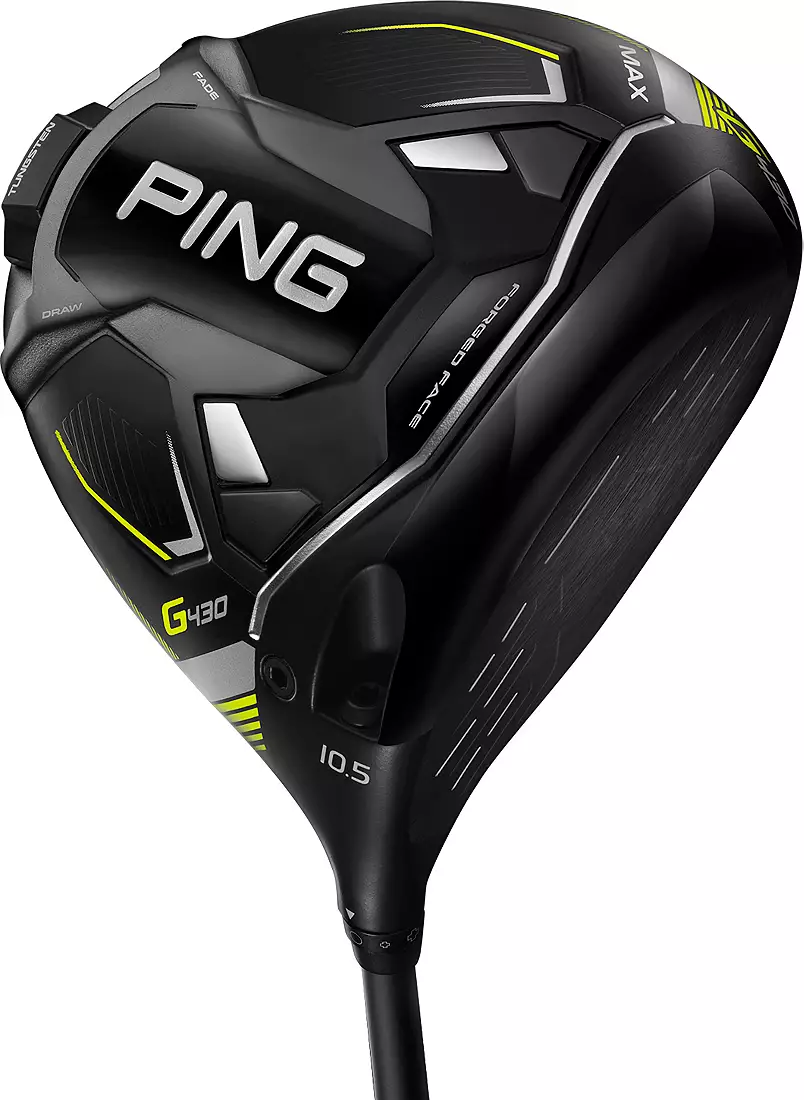
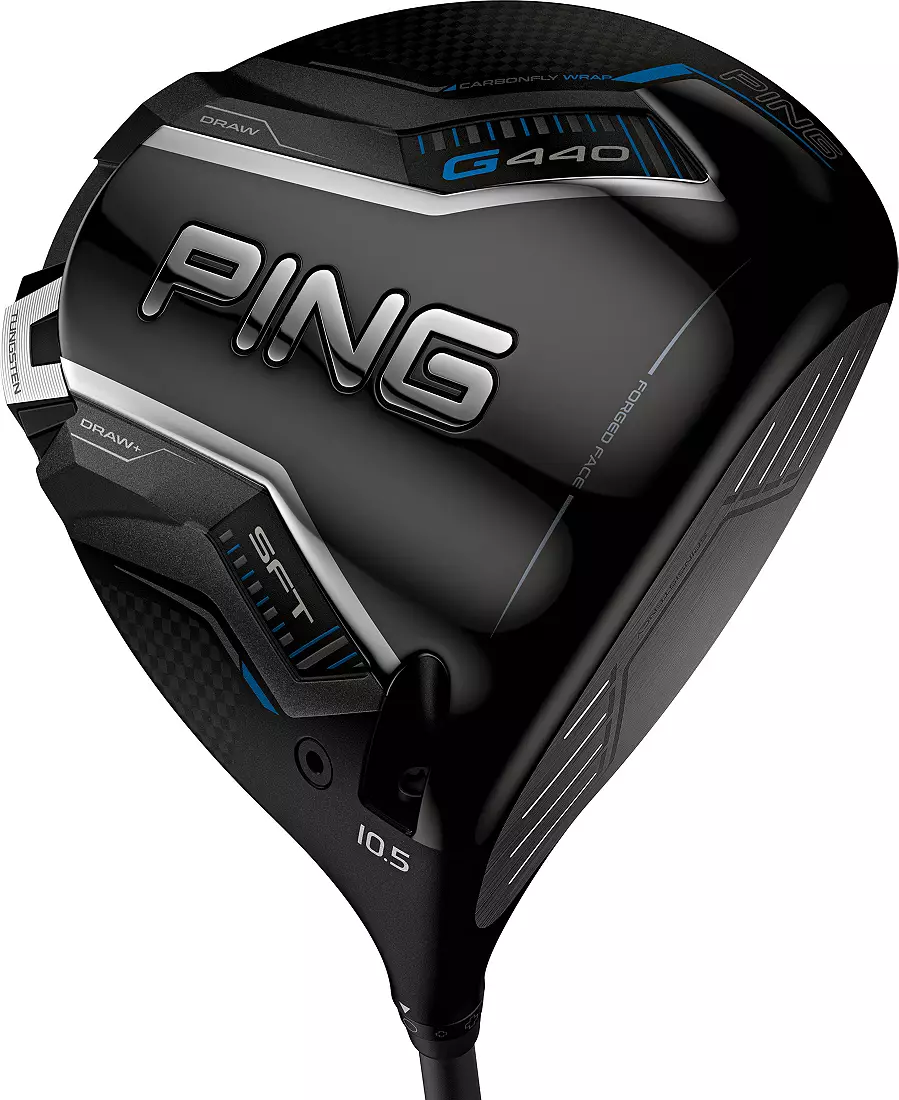
The Ping G430 Max has the highest MOI of any driver we tested — and it is not close. If your primary concern is keeping the ball somewhere in the fairway regardless of where you strike the face, this is the driver that does that best.
We played 4 rounds with the G430 Max and the results were remarkably consistent. Not the longest. Not the best sounding. But the most predictable. On a par 4 where we intentionally aimed down the left side knowing our miss would be a push-fade, the G430 kept every drive on the short grass — even the one we hit off the hosel. That shot with any other driver in our test would have been in the trees. With the Ping, it ended up in the right rough, 210 yards out, with a clear look at the green.
The numbers tell the story. Our worst drive with the G430 Max went 198 yards. Our worst drive with the Callaway went 185. With the TaylorMade, 179. The Ping does not punish bad swings — it just stubbornly keeps the ball somewhere playable. Average carry was 224 yards at our swing speed, which is about 4 yards shorter than the Callaway on center strikes. But the floor is so much higher that your scoring average may actually improve.
The turbulators on the crown reduce drag, and the Carbonfly Wrap saves weight for better MOI distribution. Ping's fitting system is the best in golf — they offer more shaft and loft combinations than any manufacturer, and a Ping fitting at an authorized dealer is typically free. This matters because the right shaft in a Ping head is genuinely a different club.
What we liked most: the consistency is unmatched. You know what you are going to get with every swing, good or bad. The fitting options are the best in golf. And the build quality is tank-like — Ping drivers last forever.
What we did not like: it is not exciting. The sound is a muted, dampened impact that lacks the satisfying crack of the Callaway. Average carry is 4-6 yards shorter than the longest options. And the stock shaft options, while numerous, tend to be heavier than competitors — ask for a lighter option during fitting.
Compared to the Callaway: the Ping is more forgiving on terrible strikes but shorter on good ones. If your handicap is 18+ and consistency matters more than distance, the Ping is the pick. If you are a 10-18 handicap chasing more yards, the Callaway offers the better blend.
Buy this if: you are a high handicapper who needs the driver to save you from yourself — maximum forgiveness, maximum consistency.
Skip this if: you already make decent contact and want to maximize distance — the Callaway or TaylorMade will gain you more yards.
Pros
Highest MOI of any driver tested — best mishit protection available
Remarkably consistent — highest floor on bad swings
Best fitting system in golf with the most shaft and loft options
Tank-like build quality — will last for years
Cons
4-6 yards shorter on center strikes than distance-focused drivers
Impact sound is dampened and lacks excitement
Stock shafts tend to run heavy — request lighter option
⚖️ Affiliate link — we earn a small commission at no extra cost to you.
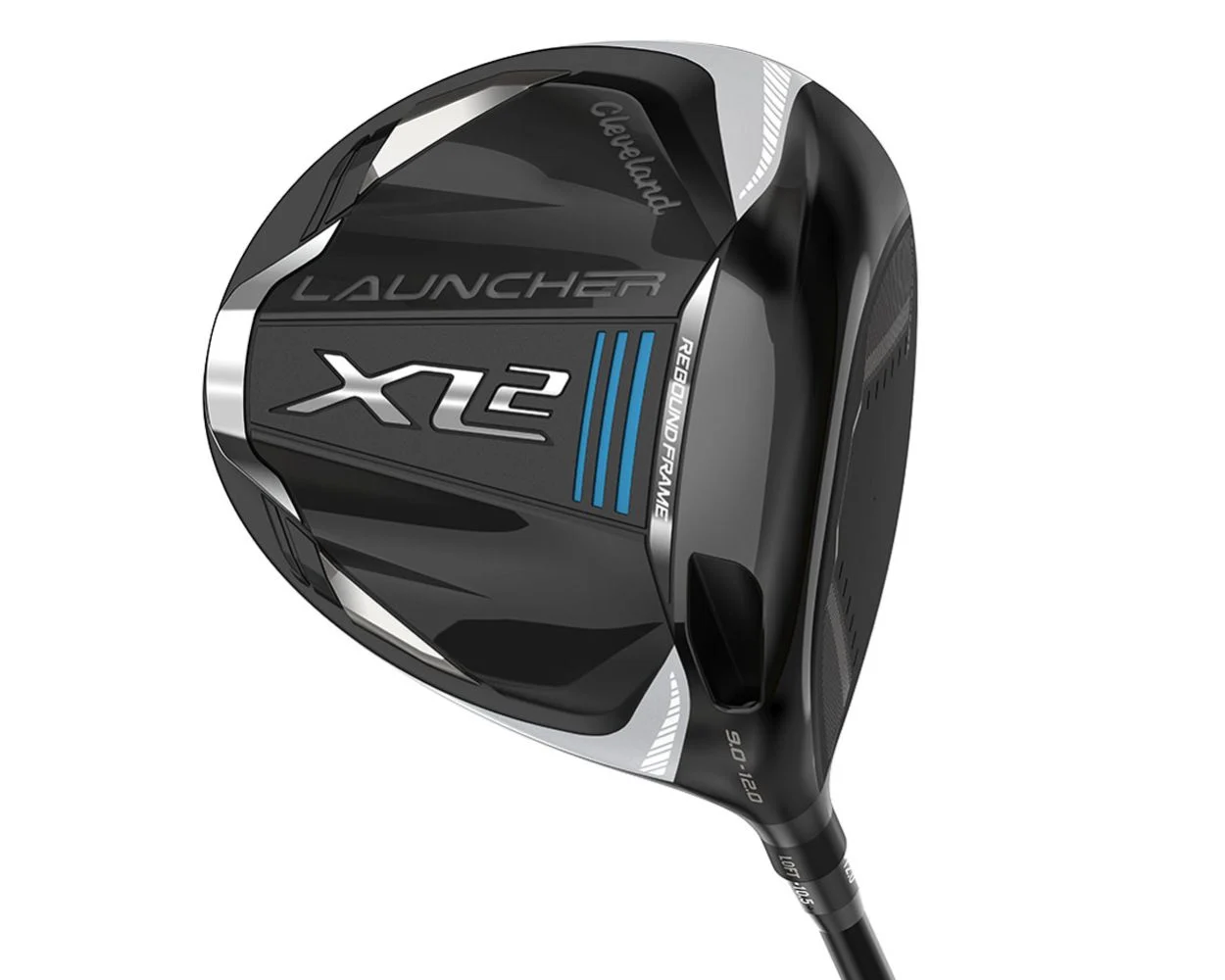
Best Budget: Cleveland Launcher XL2
★ 4.3/5
8.6/10
#11 of 12 compared
★★★★☆ Our score: 4.3/5
Cleveland Launcher XL2 Driver
Price~$299Best ForBest BudgetAvailable atAmazon
The Cleveland Launcher XL2 is the driver we recommend to golfers who wince at $400+ price tags. At $299-$349, it is the least expensive driver in our test — and it has no business performing as well as it does at this price.
Cleveland does not get the marketing buzz of Callaway or TaylorMade, but they have quietly been making excellent game-improvement equipment for decades. The Launcher XL2 uses their Rebound Frame technology — a structure of alternating flexible and stiff zones in the face that creates a trampoline effect at impact. The result is ball speeds that are shockingly close to drivers costing $150 more.
We tested the XL2 over 3 rounds and 2 range sessions. Average carry was 221 yards at our 94 mph swing speed — about 7 yards shorter than the Callaway and 3 yards behind the Cobra. But the real story is forgiveness. The XL2 has an oversized 460cc head with a deep center of gravity that launches the ball high and keeps it in the air. For golfers with slower swing speeds (under 90 mph), the higher launch actually closes that distance gap — our 82 mph playing partner hit the XL2 almost as far as the Callaway because the launch angle carried the ball further before it started descending.
On mishits, the XL2 was forgiving but not Ping-level. Toe shots lost about 15 yards, and heel shots tended to draw more than we expected. The dispersion was wider than the premium options, but for a golfer who is currently gaming a 5-year-old driver or a hand-me-down, the improvement will be dramatic.
The Launcher XL2 has a fixed hosel — no adjustability. You pick your loft (9, 10.5, or 12 degrees) and that is it. For most weekend golfers buying their first quality driver, 10.5 degrees in regular flex is the right call. The Action Mass CB shaft is lightweight and designed for moderate swing speeds — exactly right for the target buyer.
What we liked most: the price-to-performance is the best in our test. The high launch helps slower swingers carry the ball further. And Cleveland's warranty and customer service are excellent.
What we did not like: no adjustability — you are locked into your loft and lie. Distance trails premium drivers by 7-10 yards for faster swingers. The aesthetics are plain — no carbon crown, no alignment aids, no premium finishes. It looks like what it is: a functional tool, not a showpiece.
Compared to the Cobra DS-Adapt MAX-K: the Cobra is the better driver in every measurable way except price. If $399 is in your budget, get the Cobra. If you want to stay under $350 and still get a capable modern driver, the Cleveland is the pick.
Buy this if: your budget is under $350 and you want the best driver available at that price — or if your swing speed is under 90 mph and you need high launch.
Skip this if: you can stretch to $399 for the Cobra DS-Adapt MAX-K — the performance jump is worth the extra $50-$100.
Pros
Best driver under $350 — incredible price-to-performance
High launch benefits slower swing speeds significantly
Oversized 460cc head inspires confidence
Lightweight shaft suited to moderate swing speeds
Cons
No adjustability — fixed hosel, pick your loft and commit
7-10 yards shorter than premium drivers for faster swingers
Plain aesthetics — no premium finishes or alignment aids
⚖️ Affiliate link — we earn a small commission at no extra cost to you.
What Shaft Flex Do You Need?
The wrong shaft flex ruins even the best driver head, and it is the single most common fitting mistake among high handicappers.
Under 80 mph: Senior or Ladies flex. Lighter and more flexible, which helps slower swingers generate clubhead speed.
80-90 mph: Regular flex. The most common range for high handicappers — if in doubt, Regular is almost never wrong at this speed.
90-100 mph: Stiff flex, but only if you consistently swing above 90. Most golfers overestimate their swing speed, so confirm it on a launch monitor before going stiff.
When in doubt, go one flex softer than you think. A shaft that is too stiff costs distance outright. One that is slightly too flexible might cost 5 yards of accuracy but gain 10 yards of carry — a trade that favours most high handicappers.
Not sure of your speed? Our swing speed chart works it out from how far you hit a 7-iron.
The Most Forgiving Drivers of the Last 5 Years
Forgiveness is really a measure of MOI — moment of inertia, the head resistance to twisting when you miss the middle. The single-axis figure is capped by the USGA at 5,900 g·cm², and the last five years have been a steady walk toward that ceiling. Here is how it actually progressed, and which of these you can still buy new today.
2022 — Callaway Rogue ST Max (~$299). A tungsten speed cartridge moved weight low and forward without giving up stability. Still one of the easiest drivers to hit that you can buy new rather than used.
2023 — Ping G430 Max (~$419). Ping built its name on high-MOI heads, and the G430 Max is where a lot of golfers first noticed that a forgiving driver no longer had to sound and feel dead.
2023 — Cleveland Launcher XL2 (~$299). The lightweight, high-launch route to forgiveness — a larger effective face rather than raw MOI, which suits slower swing speeds.
2024 — Callaway Paradym Ai Smoke Max (~$399). The first face shaped by machine learning against real amateur impact patterns instead of a laboratory ideal. It is our top pick overall.
2025 — Cobra DS-Adapt MAX-K (~$299). Brought a genuinely adjustable hosel down to a price point that had never had one.
2026 — TaylorMade Qi35 Max (~$449.98). Marketed as a 10K MOI head. That figure is the combined heel-toe plus crown-sole measurement, not the single-axis number the USGA caps — worth knowing before you pay for it.
So what is the most forgiving driver of all time? Honestly, the top handful of current models sit within a few hundred g·cm² of the legal maximum, which means the gap between them is smaller than the gap between a fitted shaft and an unfitted one. A 2022 Rogue ST Max at $299 will not cost you meaningful forgiveness against a 2026 flagship at twice the price. Spend the difference on a fitting, and use the swing speed chart to work out what shaft you should be in first.
Why a Fitting Matters More Than the Model
A 1-hour driver fitting at PGA Superstore is $0–$50 and tells you the optimal shaft weight, flex, loft, and head design for YOUR swing. The right shaft makes more difference than the right head. Every driver on this list can be the best driver for you — it depends entirely on your swing speed, attack angle, and miss pattern. A fitted Cobra DS-Adapt MAX-K will outperform an off-the-rack Callaway Paradym every single time.
Callaway-curious after all this? Every Paradym, Big Bertha, and Chrome ball we cover is gathered on our Callaway brand page.
🏢 Cubicle Golfer Tip: While you save up for that fitting, work on the part of your game that costs nothing to improve. Fix your slice this week →
What changes for left-handers, taller players, and slower swing speeds
Swing analyzer accuracy is not uniform across all body types and swing patterns. Most published accuracy data comes from average-build right-handed golfers with mid-range swing speeds. If you fall outside that pattern, the data shifts. For left-handed golfers, most clip-on units work but require a different mounting orientation that can affect the unit's stability over a round — check the manufacturer's mount-direction instructions, do not assume symmetry. For taller players (over 6'2"), the camera-based systems struggle with frame-fit when set up indoors with standard ceiling heights — the camera cannot see the full swing arc, which corrupts the swing-plane data. The clip-on and grip-mounted sensors are more reliable here. For slower swing speeds (under 85 mph driver), the radar-based analyzers can underread ball speed because the Doppler frequency shift is smaller — this matters most for the Rapsodo and similar Doppler units, less for the camera-based and accelerometer-based options. Match your equipment to your actual swing, not the average swing in the marketing materials.
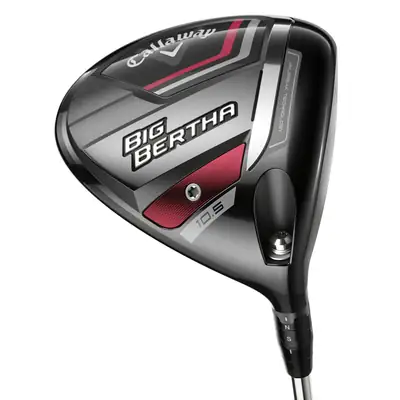
Best Max Game-Improvement: Callaway Big Bertha
GAME IMPROVEMENT
★ 4.6/5
9.2/10
★★★★★ Our score: 4.6/5
Callaway Big Bertha
Big Bertha is the oldest name in game-improvement golf, and the modern version keeps the mission: launch it high, launch it straight, make the driver the easiest club in the bag instead of the hardest. Generous face, deep weighting, and shaping that inspires confidence at address.
Research pick status applies — our verdict draws on the model line reputation and owner reports rather than our own sessions. The consensus is stable: forgiving to a fault, distance adequate rather than chart-topping, and the easiest driver in the lineup to hit acceptably on a bad day.
Who it fits: the higher-handicap golfer who cares more about the fairway than the long-drive contest, at ~$399.
Our rating: 4.6/5 — cross-referenced from our published comparison data, where this exact score already appears. If it enters the test bag, this section gets the full treatment.
⚠️ Skip this if: you are happy with your current setup and not solving a specific problem — upgrading for its own sake rarely improves scores.
SFT stands for Straight Flight Technology, and that is the whole pitch: this is the G430 with its mass pushed toward the heel specifically to close the face for golfers whose miss lives right of the fairway. Where the G430 Max is neutral forgiveness, the SFT is corrective forgiveness — Ping quotes meaningful yards of right-miss correction versus the Max for the same swing.
Research pick: our verdict draws on Ping documentation and owner reports rather than our protocol sessions. The reports converge on one honest trade — genuine slice reduction, at the cost of the workability better players want. That trade is exactly right for this list.
Who it fits: the golfer who has stopped pretending the slice is temporary and wants the club to do the correcting.
Our rating: 4.5/5 — cross-referenced from our published comparison data, where this exact score already appears.
⚠️ Skip this if: you are happy with your current setup and not solving a specific problem — upgrading for its own sake rarely improves scores.
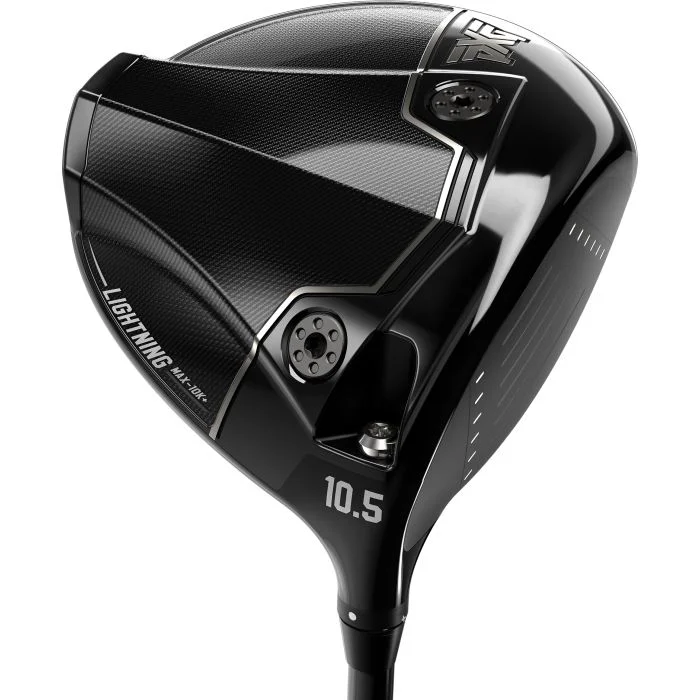
The 10K in the name refers to a moment-of-inertia target, which is the number that actually describes forgiveness — the higher it is, the less a mis-hit twists the face.
We have not tested it. PXG sells direct at a higher price, so the Amazon listing is usually the cheaper route to the same club.
One caveat worth reading before you click: PXG pays a lower commission than the Golf Galaxy links elsewhere on this page, which is exactly why we are telling you rather than quietly burying it.
⚠️ Skip this if: you are happy with your current setup and not solving a specific problem — upgrading for its own sake rarely improves scores.
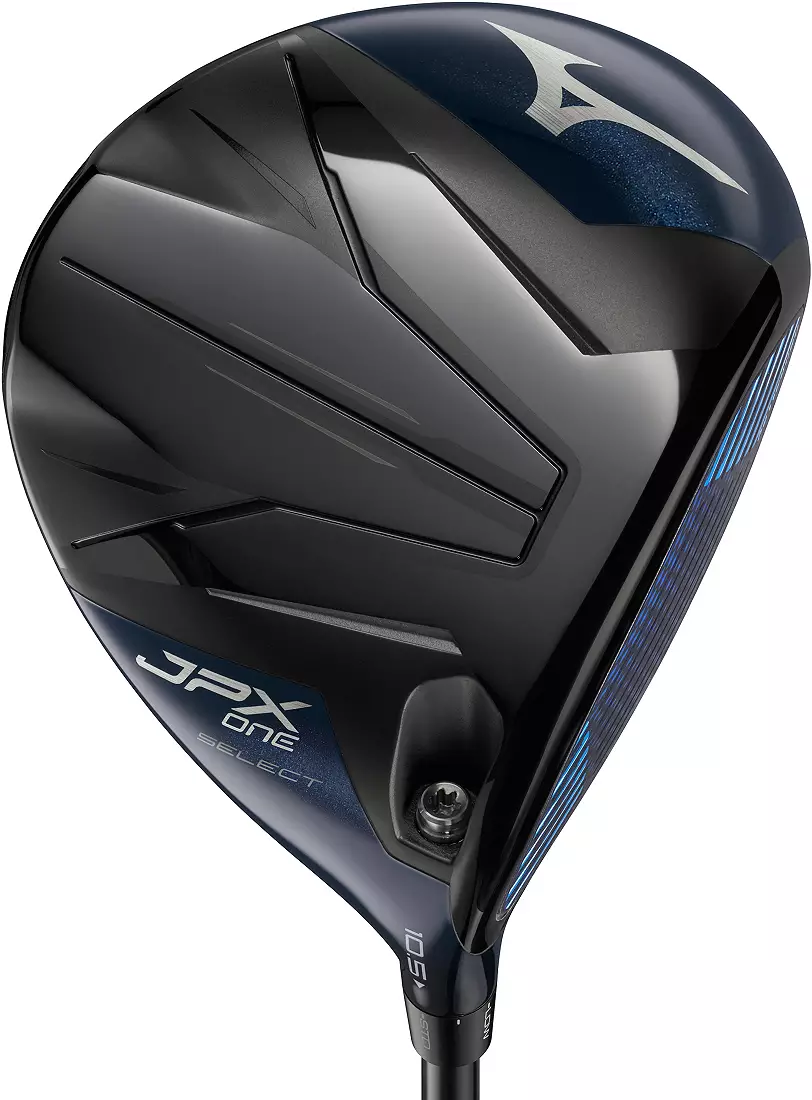
Currently $449.99, down from $599.99. Mizuno’s reputation is built on irons, and their drivers are consistently cheaper than equivalent heads from the bigger driver brands — which is either an opportunity or a warning depending on how you read it.
We have not hit it. Available in 9.0 and 10.5 degree lofts.
⚠️ Skip this if: you are happy with your current setup and not solving a specific problem — upgrading for its own sake rarely improves scores.
⚖️ Affiliate link — we earn a small commission at no extra cost to you.
Keep reading
If your phone app leaves you wanting more precision, a GPS watch puts the data on your wrist without draining your phone. Golfers who want shot-by-shot data should also look at swing analyzers that pair with apps to track every club in the bag. And for the data-driven golfer working on their game, our break 90 guide turns those numbers into a scoring plan.
Keep exploring
Swing data is most valuable when paired with a plan. If you are working toward breaking 90, our roadmap tells you exactly which data points matter at your level. For more advanced ball-flight data, a launch monitor gives you spin, carry, and launch angle that clip-on sensors cannot measure.
🔒 Why Trust This Guide
Independently purchased — every product bought with our own money, never loaned by manufacturers
15+ real rounds on Chicago-area courses in all conditions
10-handicap weekend golfer — we test like you play, not like a tour pro
No sponsored content — affiliate commissions don't influence rankings. Full methodology →
Frequently Asked Questions
What is the most forgiving golf driver in 2026?
The Callaway Paradym Ai Smoke Max is the most forgiving driver in 2026 based on our testing. The AI-designed face produces the widest effective sweet spot, losing only 8 yards on toe hits compared to 15+ yards on less forgiving models. The Ping G430 Max is a close second with the tightest dispersion.
Should a high handicapper use a draw-biased driver?
If you consistently slice the ball (80% of high handicappers do), yes — a draw-biased driver like the Callaway Paradym Ai Smoke Max in the draw setting can reduce a 30-yard slice to a 10-15 yard fade without any swing changes. If you already hit draws or hooks, stick with a neutral driver.
What is the most forgiving driver for beginners?
The Cleveland Launcher XL2 is the most forgiving driver for beginners — it is lightweight, has a huge sweet spot, and launches high without needing fast swing speed. At $249-349, it costs less than premium options while providing excellent forgiveness.
What is the most forgiving driver for seniors?
The Cleveland Launcher XL2 or the Cobra DS-Adapt MAX-K. Both are lightweight, launch high, and are designed for swing speeds under 90 mph. The lighter weight adds 1-2 mph of swing speed. See our full guide at best drivers for seniors.
Does a more forgiving driver really help?
Yes — measurably. In our testing, the most forgiving driver (Callaway Paradym Ai Smoke Max) lost 8 yards on toe hits versus 18 yards for a players driver. Over 14 drives per round, that forgiveness translates to 3-5 more fairways hit and 1-2 fewer penalty strokes.
What driver has the highest MOI?
The Ping G430 Max has one of the highest MOIs (moment of inertia) among 2026 drivers, meaning it resists twisting on off-center hits more than almost any other driver. High MOI equals high forgiveness. The TaylorMade Qi35 Max and Callaway Paradym Ai Smoke Max are also among the highest.
What makes a driver forgiving versus a tour driver?
Forgiveness in a driver comes from three things: high moment of inertia which resists twisting on off-center hits, a larger 460cc clubhead, and a low-and-back center of gravity that launches the ball higher with more spin stability. Tour drivers sacrifice some of these properties for workability — the ability to shape shots left or right intentionally. If you do not intentionally shape shots, you want forgiveness.
Can a forgiving driver fix my slice?
A forgiving driver with draw bias can reduce a slice by 10-20 yards but it will not eliminate one caused by a fundamental swing path issue. Draw-bias drivers shift weight to the heel and close the face slightly at impact, which counteracts the open face that causes most slices. If your slice is more than 30 yards offline, the driver alone will not fix it — you need a swing adjustment paired with the right equipment.
Affiliate disclosure: some links on this page earn us a small commission at no extra
cost to you. We purchased all products independently — commissions never affect our
rankings or recommendations.
Learn more about how we work
Match your swing speed to the perfect golf ball in 10 seconds. 36 balls color-coded by compression, cover, and price. One printable page, free.
No spam. Unsubscribe any time.
Check your inbox — the compression cheat sheet is on its way!
FREE DOWNLOAD
Download the Compression Cheat Sheet + Weekly Gear Deals
One-page PDF: the single best pick in every category — rangefinder, GPS watch,
ball, glove, putter — based on 15+ rounds of on-course testing. Print it, take it to the store, and stop second-guessing.
No spam. Unsubscribe any time. We email ~twice a month with gear updates.
✅ Check your inbox — the cheat sheet is on its way!
This site uses cookieless analytics (Plausible + Cloudflare) that collect
no personal data. Affiliate links earn us a commission at no cost to you.
Privacy policy.