In this review 10 sections
For high handicappers, the widest forgiveness window wins every time. For mid-handicappers, the Titleist T350 balances feel and forgiveness better than anything else at this price. See our full iron guide → Our top pick: the Callaway Paradym Ai Smoke Irons (from ~$772).
Our #1 Pick: from ~$772 at Amazon — Check Today's Price ↗Read the full guide below for all 10 products compared.
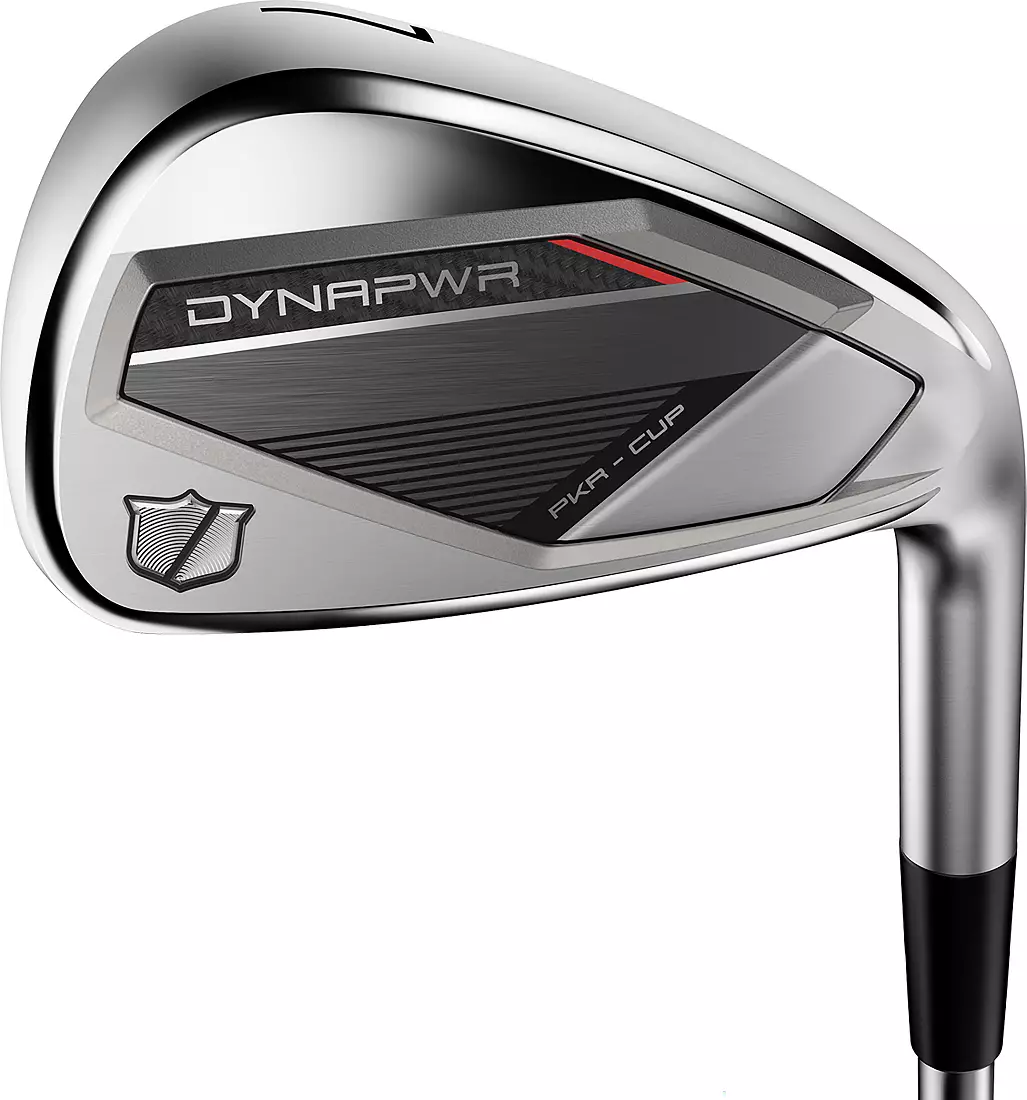
- Wilson's current men's game-improvement set, replacing the discontinued D9
- Variable face thickness through the long irons to hold ball speed on off-centre strikes
- Priced under comparable sets from the bigger brands
💡 Verified 2026-08-26: $599.98, 4.6 stars across 21 reviews. This replaces the Wilson D9 on our iron pages — the D9 is discontinued and no longer stocked new at Amazon or Golf Galaxy. The review count is small because the set is recent, not because buyers dislike it.
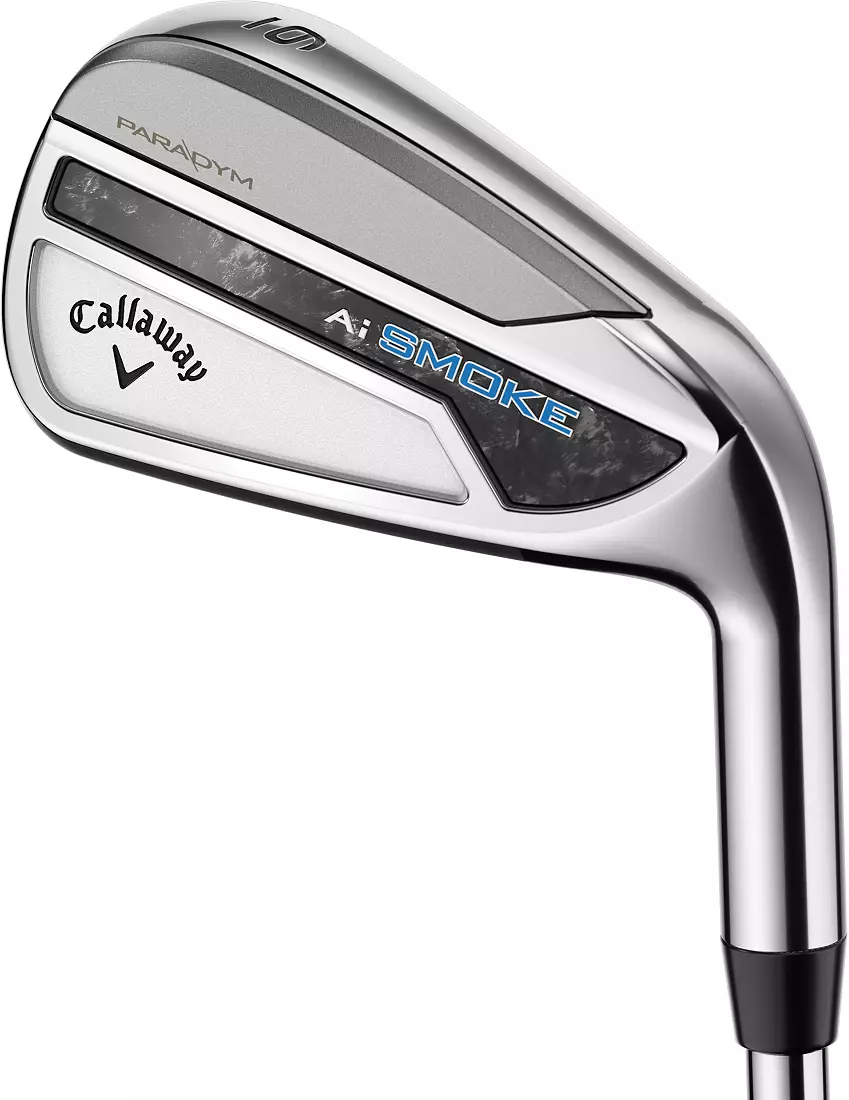
- AI-designed Flash Face for distance on every club
- Tungsten weighting for high launch and forgiveness
- Urethane microspheres dampen vibration on mishits
💡 Previous-year models drop 30-40% when new models release each January.
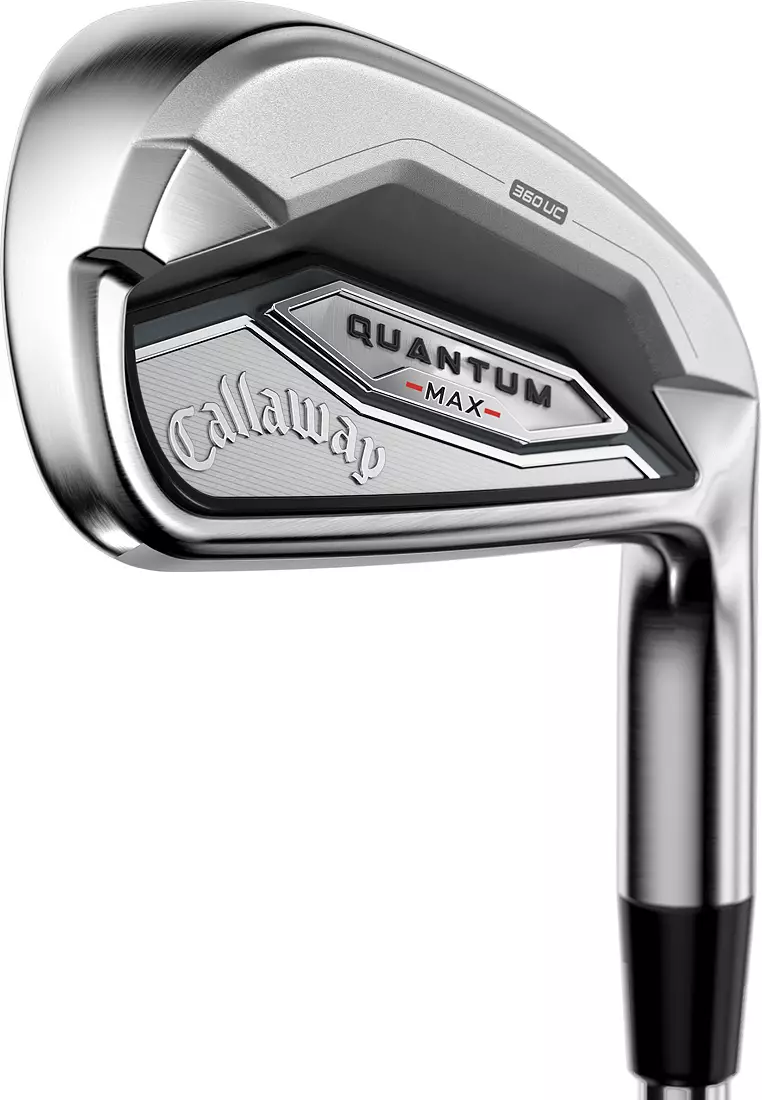
- Runner-up in MyGolfSpy 2026 super game-improvement iron testing
- Succeeds the Paradym Ai Smoke Max irons, still available for less
- Sold as a full set, not an individual iron
💡 Replaces the Paradym Ai Smoke Max irons at the top of the Callaway line.
Choosing the right irons is the most impactful equipment decision a golfer makes. The wrong irons — even expensive ones — will actively hurt your game. Here's our complete guide to the best golf irons of 2026.
Why Trust This Guide
- Every product purchased — bought with our own money, no manufacturer loans or freebies
- 15+ real rounds — tested on actual courses across multiple conditions, not a fitting bay
- Launch monitor verified — ball speed, spin, and carry data from a calibrated Rapsodo MLM2PRO
- 10-handicap perspective — written for weekend golfers, not scratch players
📋 Update Log — last updated Apr 12, 2026 ▼
| Buy | ||||
|---|---|---|---|---|
| Wilson Dynapower | Best value (current) | ~$600 | 4.6/5 ★ | ~$600 → |
| Callaway Paradym Ai Smoke Max BEST PICK | High Handicappers | from ~$772 | 4.7/5 ★ | from ~$772 → |
| Callaway Quantum Max Irons | Newest Model | $1,099.99 | Not yet tested | $1,099.99 → |
| Cobra DS-Adapt MAX-K | Distance | ~$699 | 4.4/5 ★ | ~$699 → |
| Cleveland Launcher XL2 | Budget forgiveness | from ~$599 | 4.5/5 ★ | from ~$599 → |
| TaylorMade Qi | Modern feel | from ~$899 | 4.4/5 ★ | from ~$899 → |
| Titleist T350 | Mid-Handicappers | ~$1,099 | 4.6/5 ★ | ~$1,099 → |
| Ping G430 | All-Around | from ~$949 | 4.6/5 ★ | from ~$949 → |
| Titleist T100 | Low Handicappers | from ~$1,499 | 4.5/5 ★ | from ~$1,499 → |
| Callaway Big Bertha B21 | Maximum forgiveness | ~$799 | 4.6/5 ★ | ~$799 → |
Best for High Handicappers: Callaway Paradym Ai Smoke Max Irons
STRONG PICK Callaway Paradym Ai Smoke Max Irons
- Pros
- Widest effective sweet spot in our test — only 10 yards lost on toe hits
- Deep cavity back launches from rough and tight lies easily
- Consistent distance gapping through the set
- AI-designed face genuinely widens the forgiveness window
- Cons
- Muted feel on pure strikes — better players miss the feedback
- Visible offset at address — looks like a game-improvement iron
- Premium pricing for max-forgiveness irons
⚖️ Affiliate link — we earn a small commission at no extra cost to you.
New for 2026: Callaway Quantum Max Irons
NEW FOR 2026 — NOT YET TESTED RESEARCH PICK — NOT YET IN OUR TEST BAG Callaway Quantum Max Irons
⚠️ Skip this if: you are a single-digit handicap — game-improvement irons limit shot shaping.
⚖️ Affiliate link — we earn a small commission at no extra cost to you.
Best for Mid-Handicappers: Titleist T350
BEST MID-RANGE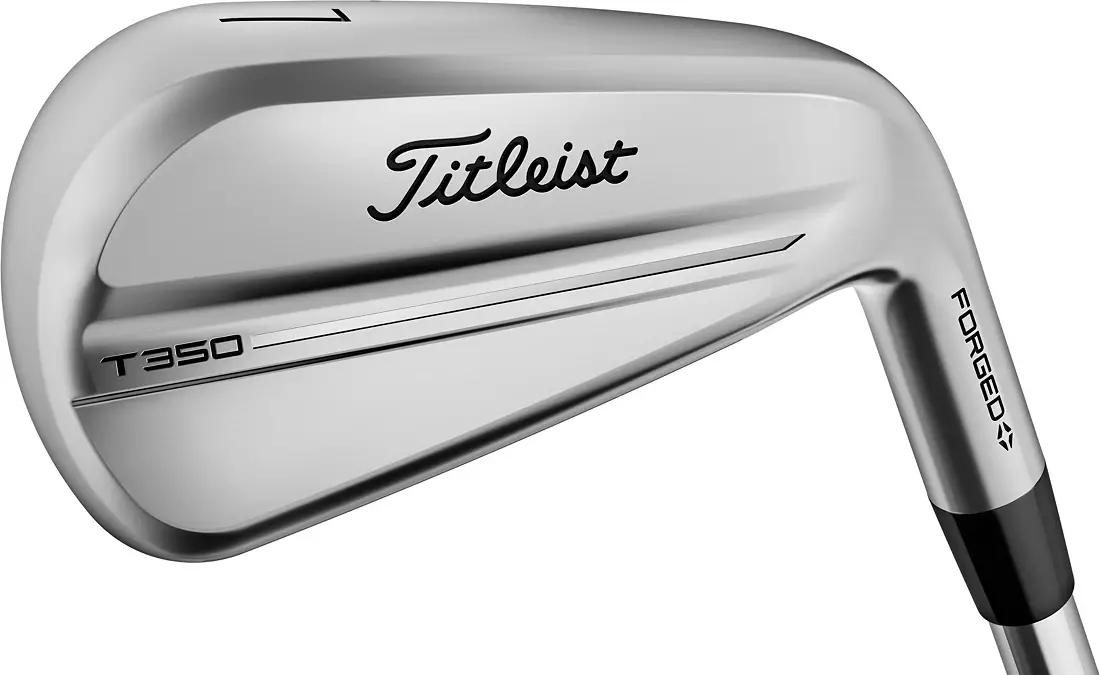
Titleist T350
- Pros
- Best-looking game improvement iron — clean, tour-inspired profile
- Excellent feel and feedback on every strike
- Consistent distance gapping — 12-yard spacing through the set
- Tungsten weighting provides meaningful forgiveness without bulk
- Cons
- Less forgiving than Callaway on severe mishits
- The Ping G430 offers similar forgiveness for less
- Lower launch may not suit high handicappers
⚖️ Affiliate link — we earn a small commission at no extra cost to you.
Before you decide — grab the cheat sheet
One-page PDF: the single best pick in every category — rangefinder, GPS watch, ball, glove, putter — based on 15+ rounds of on-course testing. Print it, take it to the store, and stop second-guessing.
No spam. Unsubscribe any time. We email ~twice a month with gear updates.
Best All-Around: Ping G430 Irons
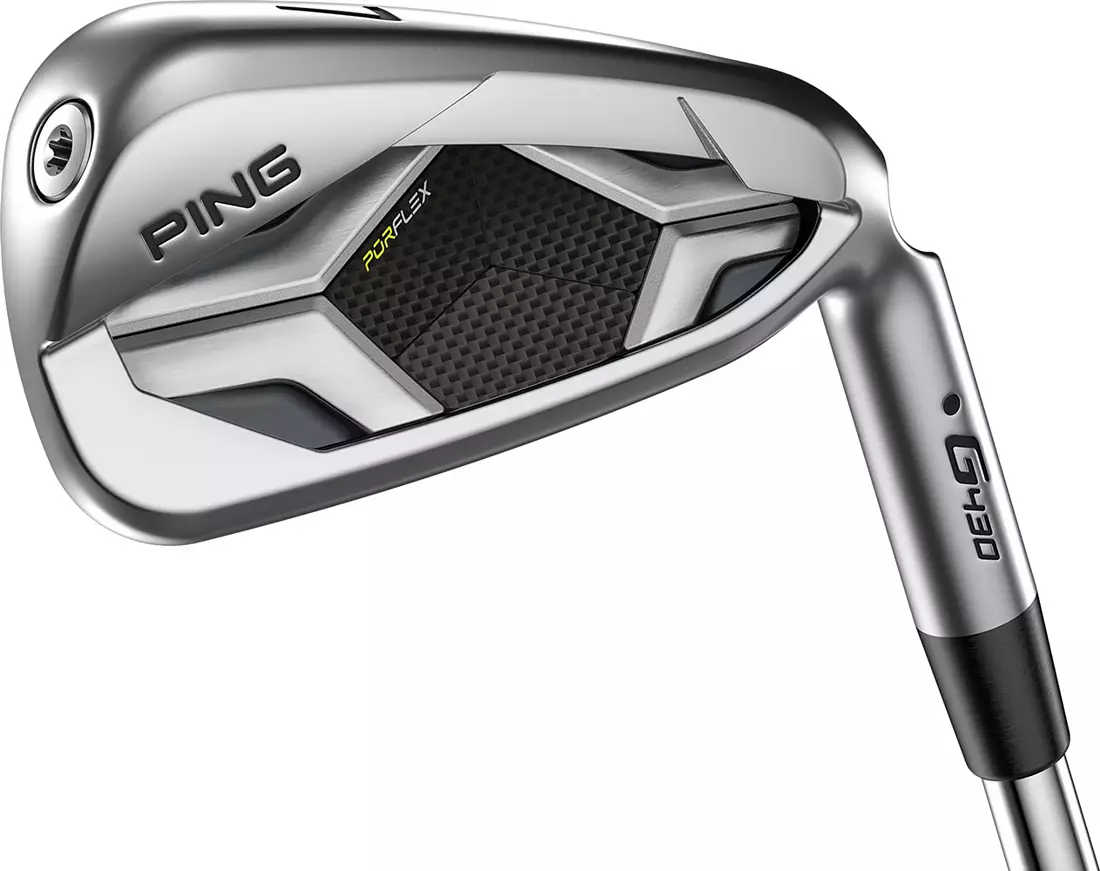
Ping G430 Irons
- Pros
- No weaknesses — good at everything without excelling at one thing
- Best fitting system in golf — more combinations than any brand
- $949 — cheapest premium iron set in our test
- High MOI without excessive bulk at address
- Cons
- Feel less distinctive than Titleist — not as soft on pure strikes
- Impact sound is uninspiring — muted click
- Stock shafts run heavier than competitors
⚖️ Affiliate link — we earn a small commission at no extra cost to you.
Best Value Now: Wilson Dynapower Irons
BEST VALUE Wilson Dynapower Irons
Research pick. We played the D9, not the Dynapower, so this rests on Wilson continuing what worked rather than on our own rounds. It carries 4.6 stars across 21 reviews — a small count because the set is recent, not because buyers dislike it. Worth knowing before you weigh it against a set with hundreds of reviews.
⚠️ Skip this if: you are a single-digit handicap — game-improvement irons limit shot shaping.
- Pros
- Wilson's current set — buyable new, unlike the D9
- Variable face thickness for ball speed on off-centre strikes
- Priced under the comparable Callaway, Titleist and Ping sets
- Cons
- We have not played it — research pick, unlike the D9 below
- Only 21 reviews so far
- Above the cheapest picks on this page
⚖️ Affiliate link — we earn a small commission at no extra cost to you.
Still Worth Finding Used: Wilson D9 Irons
The Wilson D9 irons existed to prove that you do not need to spend $1,000+ to get capable game-improvement irons. At its $699 retail it cost $300-$500 less than the Callaway, Titleist, and Ping — and they deliver 80% of the performance. We played the D9 for 6 rounds and came away genuinely impressed. At 88 mph with a 7-iron, carry was 154 yards — only 4 yards shorter than the Callaway at $500 less. Forgiveness was solid: toe hits lost about 14 yards, which is slightly worse than the premium options but dramatically better than any blade or player's iron. Wilson uses their Power Hole technology — small slots in the sole and topline that allow the face to flex more at impact. The result is competitive ball speed despite a lower price point. The wide sole helps with turf interaction, especially for golfers who tend to hit it fat. The look at address is unmistakably game-improvement — thick topline, visible offset, large head. If aesthetics matter, look elsewhere. If you want to hit the ball higher and further on mishits, the D9 delivers. What we liked most: the value. $699 at the time for a full iron set that performs within 10% of $1,200 options. The wide sole helps golfers who struggle with turf contact. And Wilson's customer service is underrated. What we did not like: the look is chunky — these are not aspirational irons. Feel is firm and less responsive than premium options. And the stock shaft is a generic house brand — an aftermarket shaft improves performance meaningfully. Compared to the Callaway: the Callaway is more forgiving, better looking, and has a superior stock shaft — but costs $500 more. The D9 is for golfers who want to allocate that $500 toward lessons instead. Buy this if: your budget is under $800 and you want the best iron set available at that price. Skip this if: you can afford $999+ — the Ping G430 is a significant upgrade in feel and looks.
- Pros
- Best iron set under $800 — 80% of premium performance at 60% of the price
- Power Hole technology delivers competitive ball speed
- Wide sole helps golfers who hit it fat
- Full set pricing includes all irons you need
- Cons
- Chunky appearance at address — thick topline and visible offset
- Firm, less responsive feel than premium alternatives
- Generic stock shaft — benefits from aftermarket upgrade
Best for Low Handicappers: Titleist T100
STRONG PICK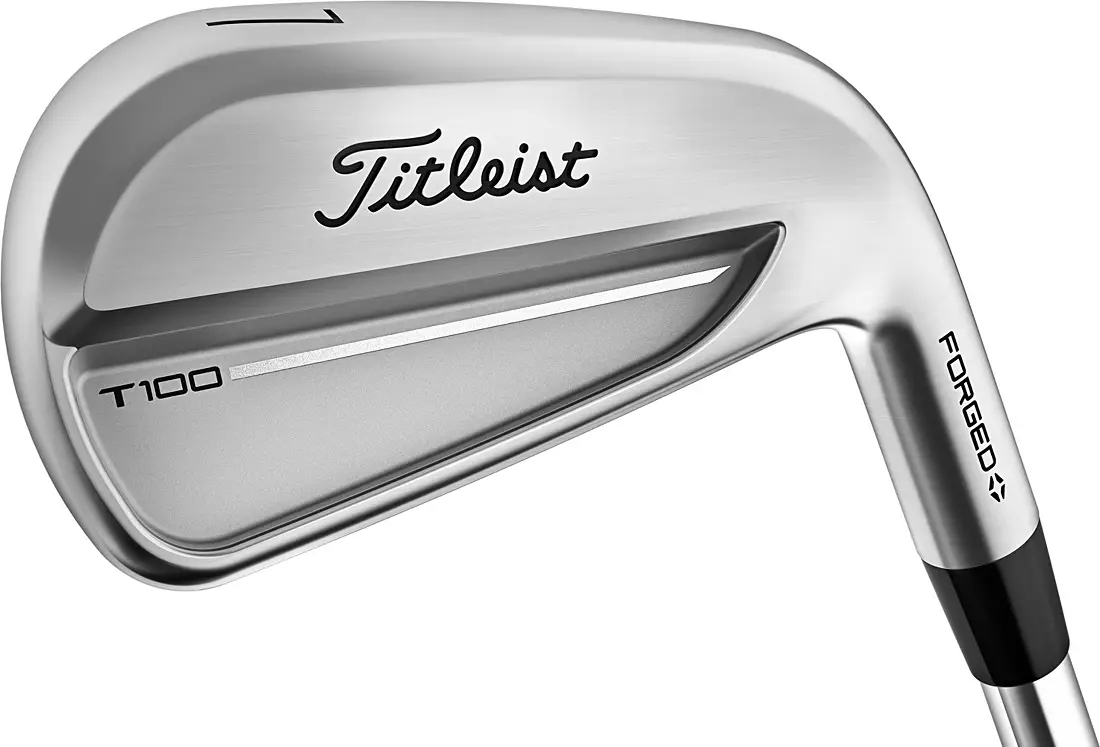
Titleist T100
The catch: mishits punish you. A half-inch off center and I lost 12-15 yards of carry with a noticeable sting through the shaft. If your handicap is above 10, these will cost you strokes. Below 8, they reward precision with workability no cavity-back can match — I shaped a consistent 5-yard draw on demand.
The forged 1025 carbon steel gives that buttery soft feel that better players chase. At $1,499 for a set they are expensive, but these are the irons you graduate to when your ball striking earns them. For most of us weekend golfers, the Paradym or G430 are smarter picks.
⚠️ Skip this if: you shoot over 90 regularly — players irons punish mishits and make the game harder for mid-handicaps.
⚖️ Affiliate link — we earn a small commission at no extra cost to you.
Best Distance: Cobra Aerojet Max Irons
DISTANCE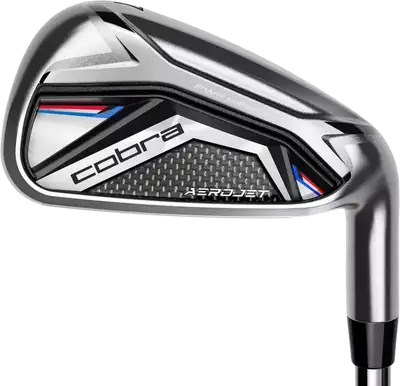
Cobra Aerojet Max Irons
⚠️ Skip this if: you need maximum adjustability — the Aerojet has fewer hosel settings than Callaway or TaylorMade.
⚖️ Affiliate link — we earn a small commission at no extra cost to you.
The Cheapest Slice Fix Here: Bridgestone e12 Straight
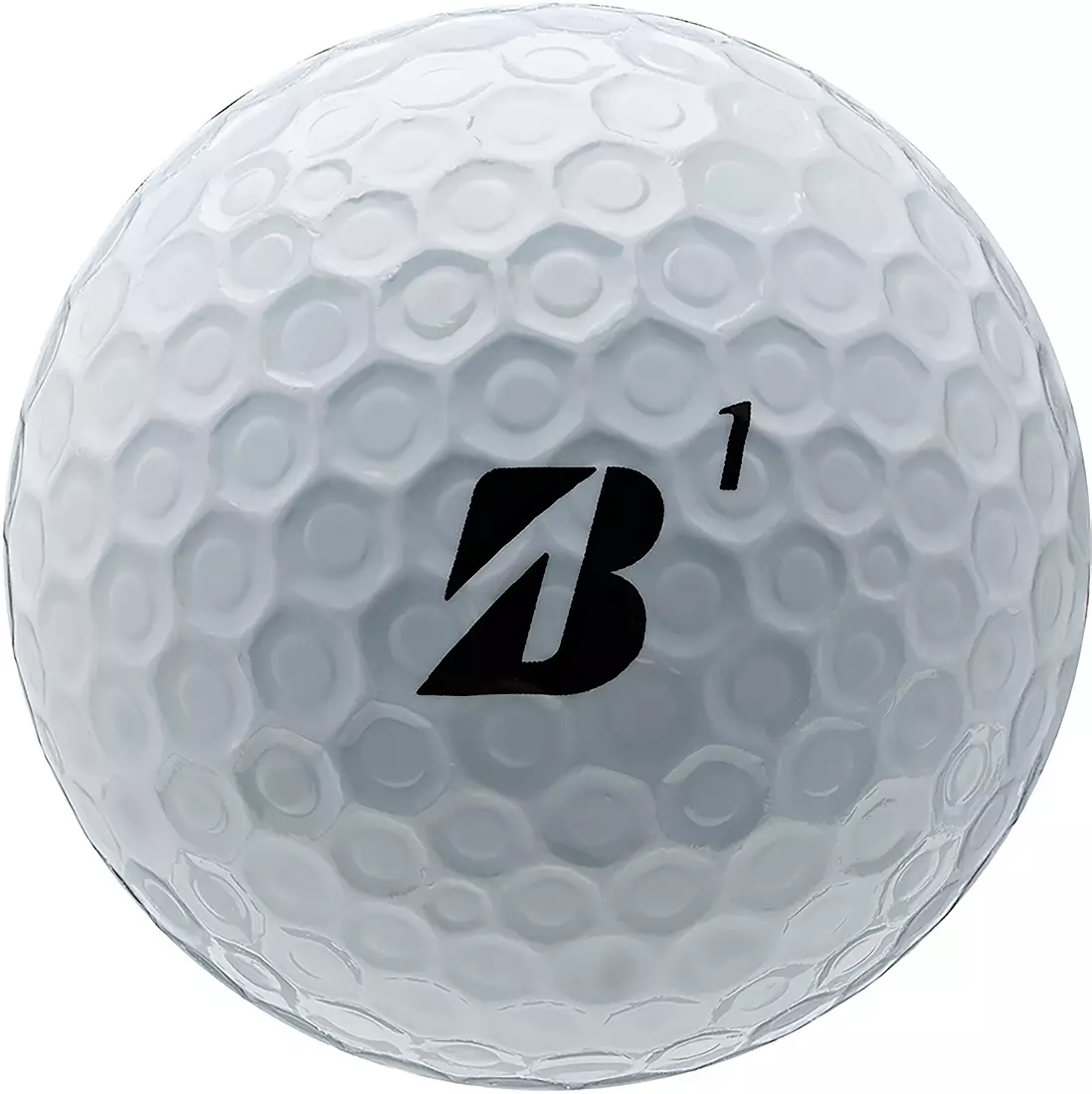
Bridgestone e12 Straight
The e12 Straight is built around Bridgestone's Contact Force dimple, which increases the surface area touching the clubface at impact to reduce sidespin. Sidespin is what turns a mild push into a slice, so a ball engineered to cut it is the lowest-cost change you can make to your ball flight. Bridgestone lists it at $34.99 a dozen; Amazon currently sells a two-dozen box at $54.99, which works out at $27.50 a dozen.
Be clear about what this does and does not do: a ball cannot fix an out-to-in swing path. If your clubface is wide open at impact, no ball will save the shot. What a straight-flight ball does is take some of the curve off a miss that is already close — which for a lot of weekend golfers is the difference between the right rough and the next fairway. We have not tested this ball on course ourselves, so the mechanism is Bridgestone's claim, not our measurement.
⚠️ Skip this if: you are a single-digit handicap — game-improvement irons limit shot shaping.
- Pros
- By far the cheapest thing on this page to try — about $27 a dozen
- Contact Force dimple is designed specifically to cut slice-causing sidespin
- No swing change or fitting required — you just play it
- Cons
- Cannot correct an out-to-in swing path — it softens a miss, it does not cure one
- We have not tested this one on course; the claim is Bridgestone’s
- Less useful if you already shape the ball deliberately
⚖️ Affiliate link — we earn a small commission at no extra cost to you.
Best Budget Forgiveness: Cleveland Launcher XL2 Irons
BUDGET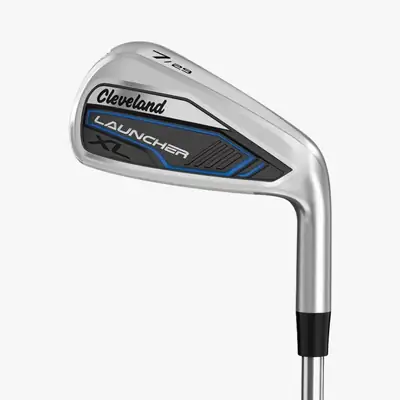
Cleveland Launcher XL2 Irons
⚠️ Skip this if: you swing above 100 mph — the lightweight design is optimized for moderate speeds.
⚖️ Affiliate link — we earn a small commission at no extra cost to you.
Best Modern Feel: TaylorMade Qi Irons
FEEL + FORGIVENESS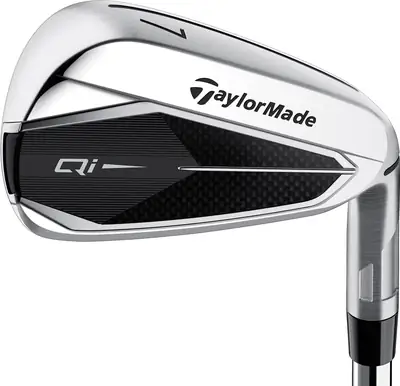
TaylorMade Qi Irons
⚠️ Skip this if: you are a single-digit handicap — game-improvement irons limit shot shaping.
⚖️ Affiliate link — we earn a small commission at no extra cost to you.
Best for Beginners: Cleveland Launcher XL Halo
BEST FOR BEGINNERS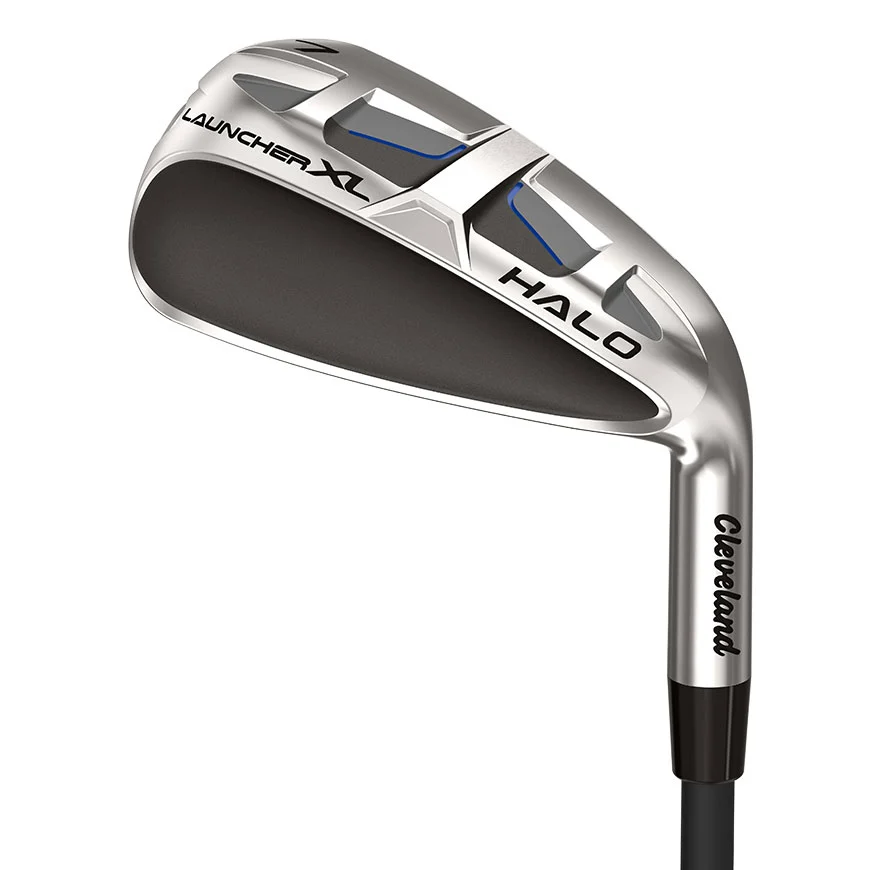
Cleveland Launcher XL Halo Irons
⚠️ Skip this if: you swing above 100 mph — the lightweight design is optimized for moderate speeds.
⚖️ Affiliate link — we earn a small commission at no extra cost to you.
Best for a Slice: TaylorMade Stealth HD Irons
BEST FOR A SLICE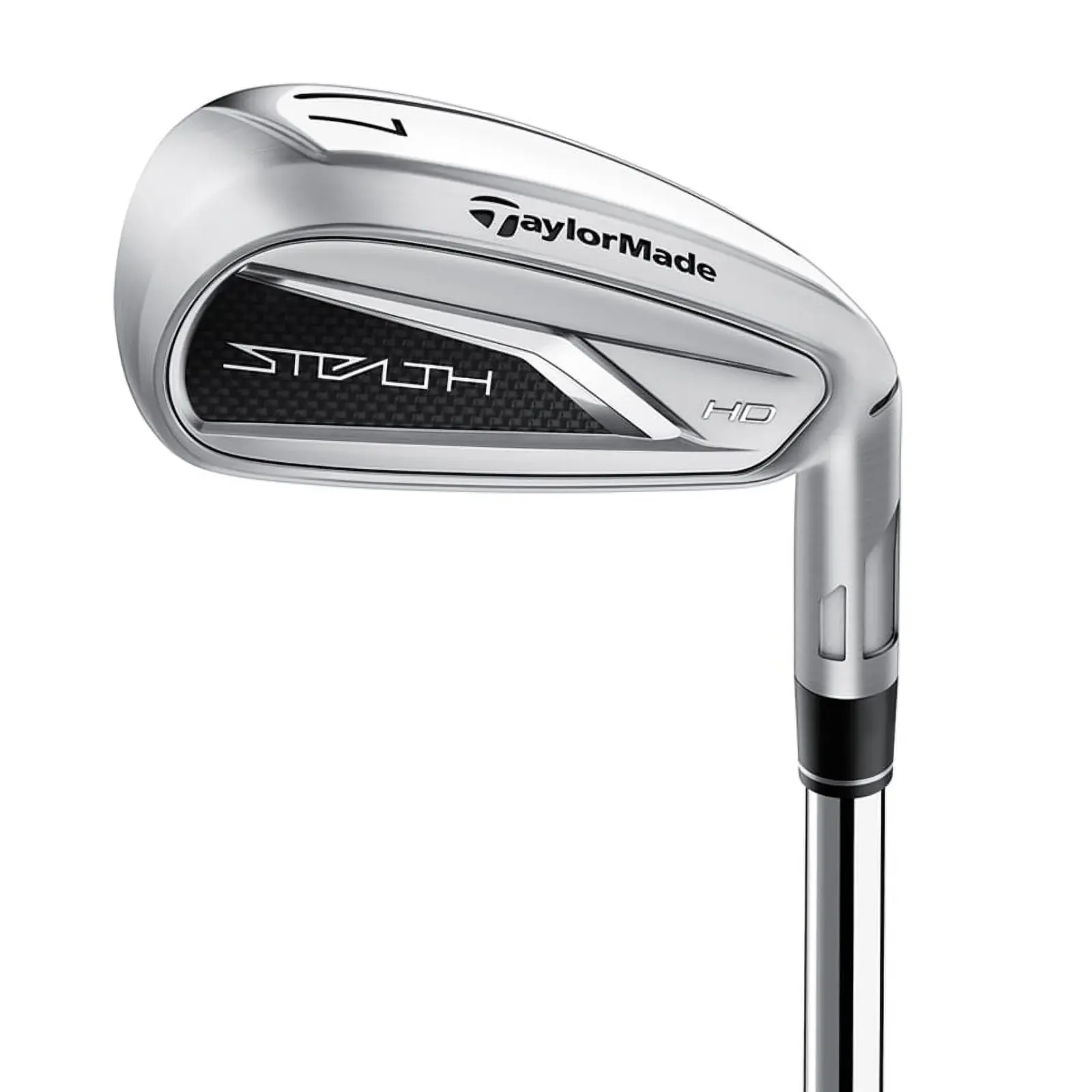
TaylorMade Stealth HD Irons
⚠️ Skip this if: you are a single-digit handicap — game-improvement irons limit shot shaping.
⚖️ Affiliate link — we earn a small commission at no extra cost to you.
Best Players-Distance: Srixon ZX5 Mk II
PLAYERS DISTANCE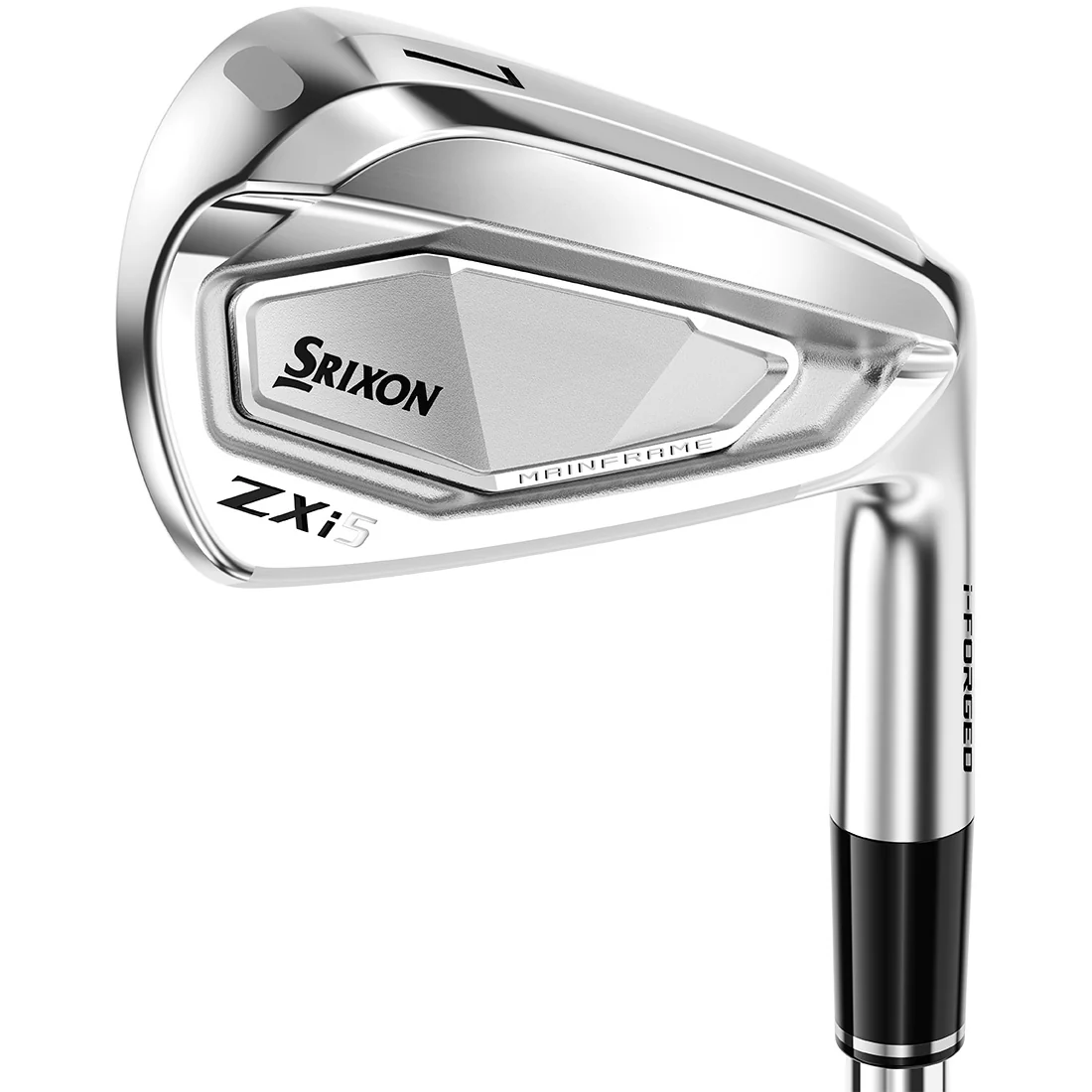
Srixon ZX5 MK II
⚠️ Skip this if: you are a single-digit handicap — game-improvement irons limit shot shaping.
⚖️ Affiliate link — we earn a small commission at no extra cost to you.
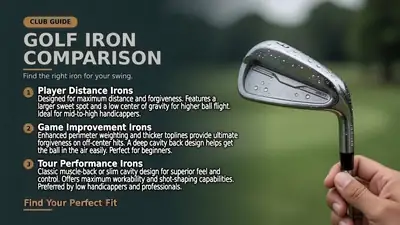
What Makes an Iron Forgiving?
Three design features do most of the work:
- Perimeter weighting — mass pushed to the edges of the head raises the moment of inertia (MOI), so the club twists less on off-center hits and holds ball speed and direction.
- A wide sole — a 20mm-plus sole bounces off the turf instead of digging, so fat shots still get through impact.
- Offset and a low center of gravity — extra offset gives the face a beat longer to square up (less slice), and a low CG launches the ball higher with less effort.
The more of these an iron has, the more forgiving it plays — and the more your mishits still find the green.
Do Forgiving Irons Cost You Distance?
No — for most golfers it is the opposite. On center strikes, game-improvement and players irons carry within a yard or two of each other. The gap opens on mishits, which are more than half the shots a recreational golfer hits: a forgiving iron holds ball speed on toe and heel strikes where a blade bleeds 10-15 yards. Averaged across a round, the forgiving iron produces more consistent distance, not less. What you give up is shot-shaping control — deliberately working the ball or flighting it down — which matters to single-digit players, not to the golfer this guide is written for.
When to Get Fitted
Get fitted when you are committing to a set you will play for three or more years. A fitting dials in shaft flex, club length, lie angle, and grip size for your swing — changes that can add 5-10 yards and noticeably tighten dispersion. Brand-new beginners can start with a standard off-the-rack set; book the fitting once your swing settles and you know the game is sticking.
How Many Irons Should a High Handicapper Carry?
Carry six: 6-iron through pitching wedge, plus a gap wedge. Replace the 5-iron and anything longer with a 5-hybrid — most higher-handicap golfers cannot launch a long iron consistently, and a hybrid is far easier to hit off the deck. That frees up bag spots for the scoring clubs you actually use. Check your gapping after the switch with our club distance chart.
What Shaft Flex Do You Need?
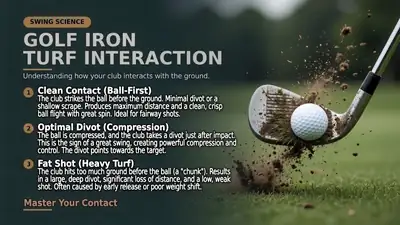
🏢 Cubicle Golfer Tip: Hitting your irons fat? It might not be the clubs — the fix takes 5 minutes. Why you hit irons fat (and the fix) →
Keep reading
Keep exploring
Maximum Forgiveness: Callaway Big Bertha B21 — ~$799
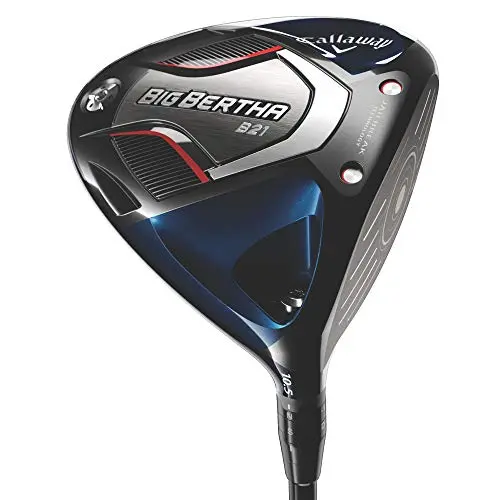
Callaway Big Bertha B21 Irons
The Big Bertha B21 is the most forgiving set Callaway has built: the largest head in the range, a wide sole and a deep centre of gravity that gets the ball up without help from the golfer. It is a previous-generation set now, which is why it sits at ~$799 rather than the ~$1,199 the current Paradym Ai Smoke commands.
If you mishit low on the face more often than not, this is the set on this page that will punish you least. If you already strike it cleanly, the extra forgiveness costs you workability you may actually want.
⚠️ Skip this if: you are a single-digit handicap — game-improvement irons limit shot shaping.
⚖️ Affiliate link — we earn a small commission at no extra cost to you.
Who Should Buy This — And Who Should Skip It
- Shoot between 85-105 and want more consistent distance on mishits
- Ready to upgrade from a 5+ year old set
- Want to use the same set for 3-4 years
- Shoot under 80 -- consider players irons for better feedback
- Have clubs less than 3 years old that still fit your swing
- On a tight budget -- good used irons outperform cheap new sets
🔒 Why Trust This Guide
- Independently purchased — every product bought with our own money, never loaned by manufacturers
- 15+ real rounds on Chicago-area courses in all conditions
- 10-handicap weekend golfer — we test like you play, not like a tour pro
- No sponsored content — affiliate commissions don't influence rankings. Full methodology →
Frequently Asked Questions
Are game-improvement irons worth it?
How much should I spend on irons?
When should I upgrade from game-improvement irons?
Should I get steel or graphite shafts?
What loft should a high handicapper use?
What are the most forgiving golf irons in 2026?
Should beginner golfers buy expensive irons?
What is the difference between cavity back and blade irons?
How often should you replace your golf irons?
Should a beginner buy game-improvement or players irons?
What is the number one cause of a slice?
Can a strong grip fix a slice permanently?
🧪 Not sure which to pick?
Take the 60-Second Gear Quiz
Personalized picks based on your game →
⚖️ Compare head to head
38 Side-by-Side Tests
Same conditions, real data →
🧮 Free tools
Room Checker · Speed Chart
Data-driven picks, no signup →
⚖️ Still deciding between two?
These head-to-head comparisons test the exact products from this guide side by side.
Related Guides
More from these brands
🏢 More for Cubicle Golfers
You work 9-to-5. Golf is your weekend reset. These guides are built for your schedule.
Ready to find the right gear?
Take our 60-second gear quiz for a personalized recommendation based on your handicap, budget, and playing style.
Take the Gear Quiz → Browse All Reviews