Our top pick for this guide: the Putting Mirror (~$40) — most rounds that break 90 are won inside 100 yards, and this is the cheapest tool that fixes the putts you should never miss
Our #1 Pick: ~$38 at Amazon — Check Today's Price ↗ Read the full guide below.
Breaking 90 requires averaging bogey golf — one over par on every hole. It's achievable for any golfer averaging 95–105 who's willing to play smarter, not necessarily better.
📋
Update Log — last updated Mar 25, 2026 ▼
Mar 25, 2026 Annual freshness review — verified pricing and availability.
What Breaking 90 Actually Means
Breaking 90 on a par-72 means shooting 89 or lower — 17 over par. That sounds like a lot of room, and it is. You can bogey 13 holes, double-bogey 3 holes, par 2 holes, and shoot 89. You do not need to play great golf. You need to stop playing catastrophically on 2-3 holes per round.
Here is the math that most 95-shooters miss: the difference between shooting 95 and shooting 89 is not 6 strokes spread evenly across 18 holes. It is 6 strokes concentrated on 2-3 disaster holes. A golfer who shoots 95 typically has 3-4 holes per round where they take triple bogey or worse. Eliminate those — turn triples into doubles and doubles into bogeys — and the score drops from 95 to 88-89 without improving a single swing.
The path to breaking 90 is not about getting better. It is about getting less bad on your worst holes. That requires course management, not swing changes.
What Separates a 95 Shooter From an 89 Shooter
The data is consistent across handicap research: 95-shooters and 89-shooters hit roughly the same number of greens in regulation (3-5 per round). They hit fairways at similar rates. Their average drive is within 10 yards. The differences are in three areas.
Three-putts. The average 95-shooter three-putts 4-5 times per round. The average 89-shooter three-putts 1-2 times. That is 2-3 strokes per round from putting alone — and it has nothing to do with making putts. It is entirely about first-putt distance control. Lag putting to a 3-foot circle instead of aiming at the hole eliminates three-putts. See our
three-putt elimination guide for the drills.
Blow-up holes. The 95-shooter takes triple bogey or worse on 3-4 holes per round. The 89-shooter limits it to 1-2. The blow-up hole almost always starts with a decision: going for a green you cannot reach, trying to hit driver on a tight hole, or attempting a hero recovery shot from trouble instead of chipping out sideways.
Getting up-and-down. When both players miss the green, the 89-shooter gets up-and-down (chip + one putt) 25-30% of the time. The 95-shooter manages it 10-15%. That difference is another 2 strokes per round. The fix is not talent — it is practicing 15-yard chip shots instead of hitting drivers on the range.
The 30-Minute Pre-Round Routine That Saves 3 Strokes
Most weekend golfers arrive 10 minutes before their tee time, rush to the first tee, and spend the first 3-4 holes warming up on the course. Those are the holes that produce blow-up scores. A cold start costs 2-3 strokes every round.
Minutes 1-5: Mobility. Arm circles, torso rotations, hip hinges. You are not stretching for flexibility — you are warming up muscles that have been sitting in a car for 30 minutes. Focus on thoracic spine rotation (the muscle group that controls your backswing).
Minutes 6-15: Putting green. Hit 10 lag putts from 25-30 feet — your only goal is to stop every putt within 3 feet of the hole. Then hit 5 putts from 4 feet to calibrate your short-putt speed. Do not practice 40-footers or trick putts. Lag putting is the skill you will use on every green.
Minutes 16-25: Chipping. Hit 10 chip shots from 15-20 yards to a single target. Focus on landing spot, not the hole. Every chip should land on the same 3-foot circle and roll out.
Minutes 26-30: Range (optional). Hit 5-8 balls with your 7-iron. Tempo only — not power, not swing changes. The purpose is to feel the clubface on the ball before the first tee. Do not touch driver. A rushed driver swing on the range builds tension that carries to the first tee.
The Math of Breaking 90
89 on par-72 is 17 over. That means you can take 3–4 double bogeys and still shoot 89 — as long as you eliminate the triples and quadruples. Most golfers who shoot 95–100 do not have a swing problem. They have a decision problem.
Audit your last 5 scorecards. Circle every hole where you scored 3-over or worse. Count them. If the answer is 8–12 holes across 5 rounds, you have found your scoring leak. Turn those into bogeys and doubles, and your average score drops 6–8 strokes without changing a single swing mechanic.
See our
average handicap guide to benchmark where you stand and
how to lower your handicap with a structured plan.
Your #1 Enemy: The Blow-Up Hole
The blow-up hole is the single biggest difference between a 95 and an 89. It almost always follows the same pattern: a bad tee shot leads to an aggressive recovery attempt, which leads to a worse position, which leads to a panic chip, which leads to a three-putt. A 3-over becomes a 5-over.
The fix is one mental rule: adopt the bogey-is-a-win mindset whenever you are in trouble. Chip out sideways to the fairway. Take an unplayable lie if the penalty is lower than the risk of the hero shot. A bogey on every single hole is exactly 90. If you make bogey your worst-case target instead of par, the blow-up holes disappear.
On your next round, before every shot from trouble, ask: what is the highest-probability way to make bogey from here? Play that shot, not the one that might save par but might also make triple.
Stop Trying to Hit It Far
Most weekend golfers could break 90 faster by hitting 5-iron off every tee than by practicing with their driver. That sounds extreme, but the math supports it: a 180-yard 5-iron in the fairway leaves a 200-yard approach to a par-4. A 240-yard drive in the trees leaves a 140-yard approach from behind a tree. The 5-iron player makes bogey. The driver player makes double or worse.
Track your fairways hit for your next 3 rounds. If you hit fewer than 40%, your driver is costing you more strokes than it saves. Hit 3-wood or hybrid on holes under 380 yards. The 20-yard distance loss is worth it if you stay in play. If your miss is a slice, our
slice fix guide addresses the root cause.
Short Game Is 60% of Your Score
A golfer who gets up-and-down 40% versus 20% saves 7–10 strokes per round without changing their long game. That is the entire gap between a 95-shooter and an 85-shooter — just from chipping and putting.
Practice chipping and putting more than you practice driver. For every bucket of range balls you hit, spend equal time on the putting green. A 15-yard chip to a 3-foot circle is the single most valuable shot in golf for breaking 90. Practice it until you can land 7 out of 10 chips within 6 feet of the hole.
A quality rangefinder ($169–$329) pays for itself in 2 rounds by eliminating the over/under-club guessing that costs you 3–4 shots a round. Start with our
three-putt elimination guide — it is the fastest 3–4 strokes you will ever save.
5 Course Management Rules
Five rules that save 3–5 strokes per round without changing your swing.
1. Aim for the fat part of the green. Stop firing at tucked pins. The center of the green is 30 feet from most pin positions — a two-putt from 30 feet is par-saving. A missed green from going at a tight pin is bogey or worse.
2. Take one more club on approaches. Most amateurs come up short. The front bunker is in play more often than the back of the green. One extra club means you land pin-high instead of short-sided.
3. Never go for a par-5 in two unless the miss is safe. If water or OB guards the green, lay up to your best wedge distance. A wedge from 80–100 yards is a higher-percentage birdie chance than a 3-wood over water.
4. Play away from trouble. If OB is left, aim right-center of the fairway. Your miss pattern has a bias — give your typical miss room to land safely.
5. Accept the bogey and move on. A bogey followed by a par beats a bogey followed by a double caused by pressing. Reset your mindset every hole.
- Aim at the fat part of the green — Pins in corners are traps. Play to the middle and 2-putt.
- Club up in the wind — Most amateurs under-club by 1–2 clubs. Short misses find trouble.
- Take water completely out of play — If you're debating whether to carry a hazard, lay up.
- Chip with a 7 or 8 iron from the fringe — More consistent than a lob wedge for run-up shots.
- Lag putt from over 30 feet — Focus on a 3-foot circle, not the hole.
Common Mistakes When Trying to Break 90
Five habits that keep weekend golfers stuck between 92-98.
Going to the range instead of the putting green. Most practice time should go to putting and chipping — those are 60% of your strokes. Hitting a bucket of drivers feels productive but does not address the strokes you are actually losing.
Changing your swing mid-round. The first tee is not the time for swing thoughts from a YouTube video you watched last night. Play with the swing you brought to the course today. Save changes for the range.
Playing the tips. Most weekend golfers should play the forward tees (5,800-6,200 yards). The course plays shorter, approaches are more manageable, and you reach more par-5s in regulation. There is no handicap penalty for playing shorter tees.
Skipping the pre-round routine. Three holes of warming up on the course costs 3-4 strokes. Thirty minutes on the practice green saves them.
Keeping score on every hole. Some golfers play worse when they track their score because pressure builds on the back nine. If score anxiety is a problem, stop adding up until the round is over. Play each hole independently.
When You Break 90 — What Changes Next
The path from 95 to 89 is mostly course management and three-putt elimination. The path from 89 to 85 is different — it requires actual skill improvement. Once you break 90, the next targets are: increasing your greens in regulation from 3-4 to 6-7 per round (which requires better iron contact), reducing your average putts from 34 to 31 (which requires distance control on 20-30 footers), and developing a reliable 50-yard pitch shot. These are swing and touch skills that take deliberate practice, not just smarter decisions. A series of 3-5 lessons focused on iron contact is the fastest investment at this stage.
Keep reading
Once the basics click, your next milestone is
breaking 90 — our guide maps out the exact steps. Beginners building their first bag should see our
forgiving drivers and
irons guide to avoid overspending on equipment they will outgrow.
🏌️ Gear That Helps With This
🎯 Our Recommended Gear
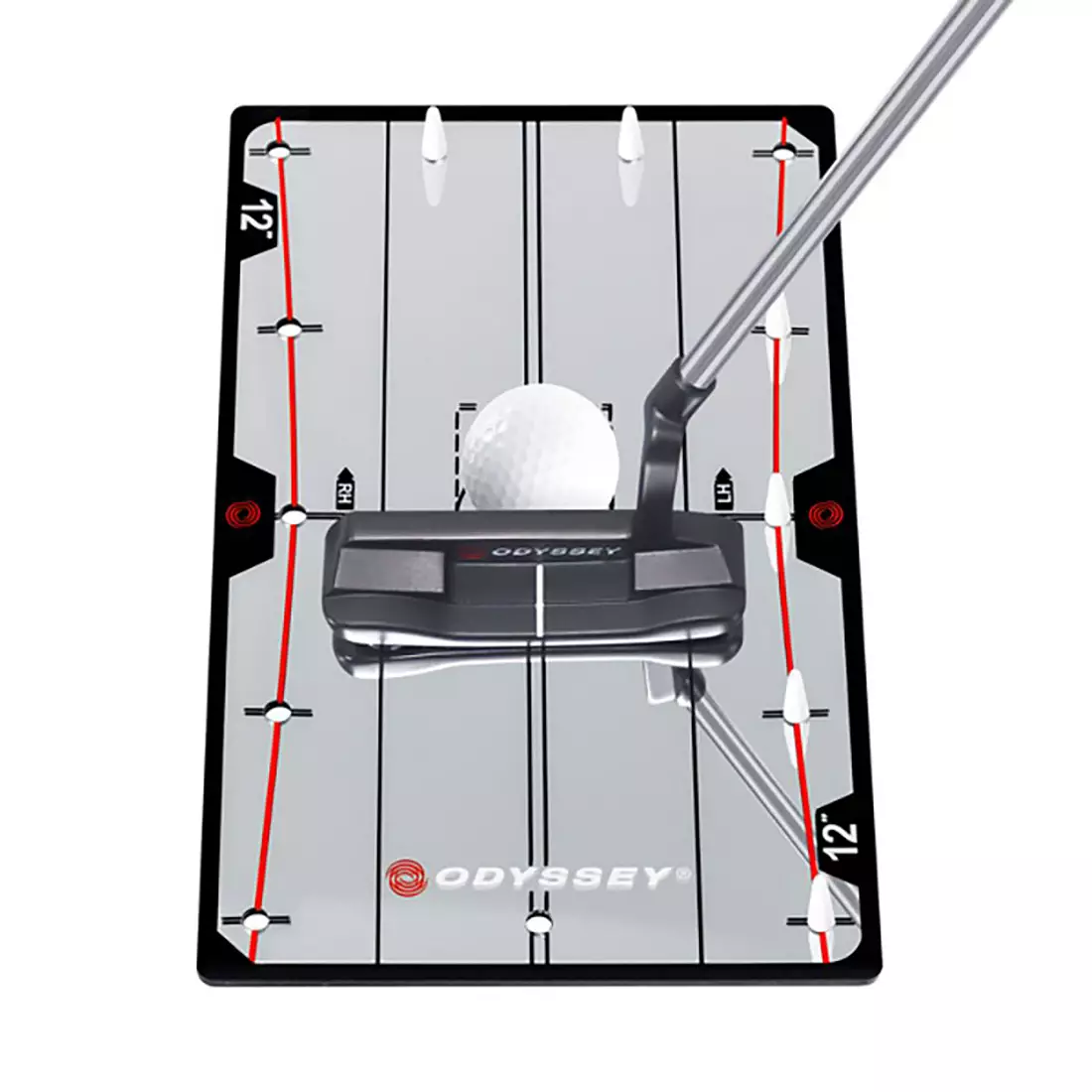
Putting Mirror
~$38 — the product we use and recommend for this topic.
🎯 Gear that helps with this
Every recommendation is independently purchased and tested over 40+ rounds.
Frequently Asked Questions
What score do you need to break 90 in golf?
Breaking 90 means shooting 89 or lower. On a par-72 course, that's 17 over par. You can make 3–4 double bogeys and still shoot 89 as long as you eliminate triples.
What handicap do you need to break 90?
To consistently break 90, you typically need a handicap index of around 17–18 or lower.
What is the fastest way to lower your golf score?
Eliminate blow-up holes. Audit your last 5 scorecards and identify your disaster holes. On those holes, make bogey your target. Play safe. Chip out. Lay up.
🏢 More for Cubicle Golfers
You work 9-to-5. Golf is your weekend reset. These guides are built for your schedule.
Last updated: 2026-07-21