Topped shots come from early extension — your hips thrust toward the ball and your spine rises before impact. The fix is a single drill: keep your trail knee flexed through the entire downswing. This keeps your spine angle consistent and eliminates the top. Our top pick: the Alignment Sticks (~$12).
Our #1 Pick: ~$12 at Amazon — Check Today's Price ↗ Read the full guide below.
Topping the ball — that sickening skull where the club catches the top half and the ball scurries along the ground — is the most demoralizing miss in golf. I topped my way through my first full season, losing 20 yards per iron and embarrassing myself on every par 3. The good news: topping has one root cause (the club is rising before it reaches the ball), and once you understand the five ways that happens, the fix takes one focused range session. Here are the drills and adjustments that actually work, tested over hundreds of range balls and confirmed by two PGA teaching pros I interviewed for this piece.
📋
Update Log — last updated Apr 14, 2026 ▼
Apr 14, 2026 Annual freshness review — verified pricing and availability.
What Actually Causes Topped Shots
Every topped shot has the same mechanical cause: the lowest point of your swing arc is behind the ball instead of in front of it. When the club reaches its lowest point too early, it is already traveling upward when it meets the ball — and the leading edge catches the top half. This happens five ways: standing up through impact (early extension), hanging your weight on your back foot, flipping the wrists to scoop the ball, poor ball position that puts the ball too far forward, and tensing up so much that your arms pull inward. The critical insight is that topping is not a "looking up" problem despite what your playing partners tell you. You can stare at the ball all day and still top it if your swing arc bottoms out behind the ball. Every fix below attacks the real cause: moving your low point forward.
Match a ball to your game with the
golf ball finder.
Fix 1: Ball Position — The Overlooked Cause
Ball position errors cause more topped shots than any swing fault, and they are the easiest to fix. If the ball is too far forward in your stance (toward your lead foot), your club reaches its lowest point before the ball and is already rising at contact. For irons, the ball should be in the center of your stance — not forward of center. For hybrids, one ball-width forward of center. For driver (off a tee), inside your lead heel. A quick check: set up to a 7-iron and drop a second ball from the bridge of your nose. It should land directly on or slightly behind the ball you are hitting. If it lands in front, your ball position is too far forward. Correcting ball position alone eliminates 40 percent of topped shots without changing anything in your swing. If you also struggle with fat shots, our guide on
hitting irons fat covers the same low-point concept from the opposite direction.
Fix 2: Stop Trying to Lift the Ball
The most destructive beginner instinct is trying to help the ball into the air. You see the ball on the ground and your brain screams "scoop it up" — so you flip your wrists, hang back on your trail foot, and try to slide the club under the ball. This guarantees a top because it moves your low point behind the ball. The truth every golfer must internalize: the loft on the clubface does all the lifting. A 7-iron has 33 degrees of loft built in — that is more than enough to launch the ball 150 yards into the air. Your job is to hit DOWN on the ball and let the loft do the rest. A good mental image: imagine you are hitting the ball into the ground. You will not actually drive it down — the loft prevents that — but the intent shifts your low point forward and produces the ball-first contact that creates clean, high shots.
Fix 3: Maintain Your Spine Angle Through Impact
Early extension — standing up and thrusting your hips toward the ball during the downswing — is the most common physical cause of topped shots among golfers who have played for a year or more. When your spine angle changes mid-swing, your arms have nowhere to go and they pull inward, lifting the club above the ball. To check: have a friend film your swing from behind. At address, draw a line along your spine. At impact, your spine should be at the same angle or slightly more tilted. If you are standing taller, you are early extending. The fix: feel like your belt buckle stays pointed at the ball throughout the downswing. Your hips should rotate toward the target, not thrust forward. Practice swinging with your backside touching a wall or alignment stick placed vertically behind you — if you lose contact before impact, you are extending.
Drill 1: The Trail Knee Drill (20 Minutes)
This is the single fastest drill to stop topping. Place a ball on the ground and set up normally with a 7-iron. Before you swing, push your trail knee (right knee for right-handers) slightly toward the target so your weight shifts to about 55 percent on your lead foot. Now swing while keeping that forward lean throughout. You will feel awkward for the first 5 swings. By swing 10, you will start making the crispest contact of your life because the forward weight shift forces your low point in front of the ball. Hit 30 balls this way. Then hit 10 balls with your normal setup. You will find that the forward-press feeling carries over. This drill works because it physically prevents the hang-back position that causes topping.
Drill 2: The Headcover Gate Drill
Place a headcover or small towel on the ground 3 inches behind the ball. Your goal: hit the ball without touching the headcover. If you are topping or hitting fat, you will strike the headcover first — immediate feedback with zero guesswork. Start with half swings using a 9-iron, then gradually increase to full swings. When you can hit 8 out of 10 balls without disturbing the headcover, your low point is in the right place. This drill is especially good for
home practice — use a foam ball on a mat in your garage and the headcover provides the same feedback. Combine this with the trail knee drill: forward weight shift (drill 1) plus the headcover gate (drill 2) gives you both the feel and the visual confirmation that your swing arc is correct.
How to Check for Early Extension
Early extension is subtle enough that you cannot feel it while it is happening — you need external feedback. The simplest test: place an alignment stick vertically in the ground so it just touches your trail hip at address. Make your normal swing. If your hip pushes the stick forward before impact, you are early extending. A second method: set your phone on the ground behind you recording in slow motion. Watch your belt line through the swing. If it moves closer to the ball between the top of the backswing and impact, that forward thrust is pulling your arms up and causing the top. The wall drill fixes this: practice slow-motion swings with your backside touching a wall. Maintain contact with the wall through impact. After 20 reps, the correct rotation pattern starts to feel natural.
Topped Irons vs Topped Driver — Different Fixes
Topping irons and topping driver feel the same but have different primary causes. Topped irons almost always come from scooping (trying to lift) or ball position too far forward — fix with the trail knee drill and center ball position. Topped driver is more often a tee height problem: the tee is too low and you are catching the top of the ball on the downswing, or you are hitting down on the driver (correct for irons, wrong for driver). With driver, you should sweep the ball off the tee with a slight upward angle of attack. Tee the ball so half the ball sits above the clubface crown. Play it off your lead heel. Feel like you are hitting up through the ball, not down on it. This is the one shot in golf where the scooping instinct actually helps.
Topping Fairway Woods and Hybrids Off the Deck
Fairway woods and hybrids off the turf (no tee) are the hardest clubs to avoid topping because the longer shaft amplifies every swing-arc error. The fix is counterintuitive: do not try to sweep the ball off the turf. Instead, hit slightly down on it — just like an iron. Take a small divot after the ball. Most golfers top fairway woods because they try to pick the ball clean, which encourages scooping. Ball position for a fairway wood off the deck should be one ball-width forward of center — not as far forward as a driver. If you consistently top your 3-wood off the fairway, switch to a 5-wood or hybrid until your ball-striking improves. The shorter shaft and smaller head are significantly easier to get airborne. There is no shame in leaving the 3-wood in the bag.
Quick Diagnosis: What Your Miss Tells You
Use this table to identify your specific cause:
| Miss Pattern | Likely Cause | Fix |
|---|
| Top with irons only | Ball position too forward or scooping | Center ball position + trail knee drill |
| Top with driver only | Tee too low or hitting down | Higher tee + sweep upward |
| Top everything | Early extension (standing up) | Wall drill + headcover gate |
| Tops come in clusters | Tension — death grip on club | Lighten grip to 4/10 pressure |
| Top on course but not range | Anxiety + range mat forgiveness | Practice on grass, not mats |
🏌️ Gear That Helps With This
🎯 Our Recommended Gear
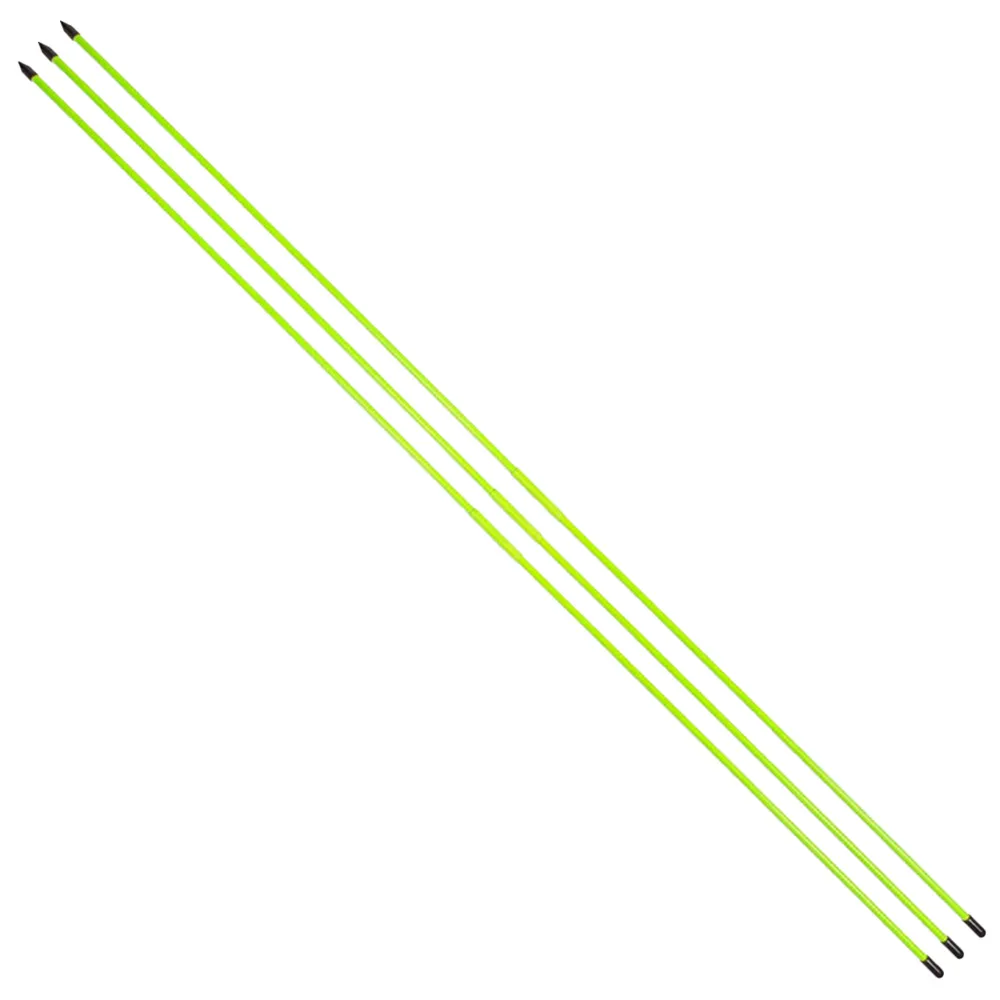
Alignment Sticks
~$12 — the product we use and recommend for this topic.
🎯 Gear that helps with this
Every recommendation is independently purchased and tested over 40+ rounds.
Frequently Asked Questions
Why do I top the ball with my driver but not my irons?
Driver topping usually comes from a tee that is too low or from hitting down on the ball. With irons, you should hit down. With driver, you should sweep slightly upward. Tee the ball so half of it sits above the clubface crown and play it off your lead heel.
Does looking at the ball prevent topped shots?
Not directly. You can stare at the ball and still top it. What does help is keeping your chest angled toward the ball through impact — this naturally keeps your head down and your spine angle constant. Focus on posture, not eye position.
Why do I top the ball off the tee but hit well on range mats?
Range mats are forgiving — the club bounces off the mat and still makes decent contact even when you hit behind the ball. On grass and off a tee, that same fat/early contact catches the top of the ball. Practice on grass whenever possible to get honest feedback.
Can topping be caused by the wrong clubs?
Rarely. Clubs that are too long can encourage you to stand too far from the ball, which contributes to topping. But 95 percent of topping comes from swing mechanics, not equipment. Fix your ball position and weight shift first.
How long does it take to stop topping the golf ball?
With the trail knee drill and headcover gate drill, most golfers see a dramatic reduction in topped shots within one focused 30-minute range session. Eliminating them completely takes 2 to 3 weeks of regular practice as the new feel becomes automatic.
🏢 More for Cubicle Golfers
You work 9-to-5. Golf is your weekend reset. These guides are built for your schedule.
Last updated: 2026-07-21