Most weekend golfers hit driver on every par-4 and par-5 by default. But data from Arccos and Shot Scope shows that golfers who hit 3-wood on tight holes score better — not because of distance, but because of dispersion. Here is the decision framework. For driver recommendations, see our best forgiving drivers guide.
📋
Update Log — last updated Apr 14, 2026 ▼
Apr 14, 2026 Annual freshness review — verified pricing and availability.
The Distance vs Accuracy Trade-Off
The average weekend golfer carries a driver 215 yards and a 3-wood 190 yards — a 25-yard gap. That sounds like driver wins every time. But look at the dispersion: the average driver shot misses the target line by 35 yards left or right, while the average 3-wood miss is 22 yards. On a hole with OB 30 yards off the fairway, the driver puts you in trouble 40% of the time. The 3-wood keeps you in play 85% of the time. Strokes Gained data from Arccos (covering 500 million shots) shows that a ball in the fairway at 190 yards produces a lower average score than a ball in deep rough, trees, or penalty area at 215 yards. The math is clear on tight holes. The hard part is knowing which holes are tight enough to justify the distance sacrifice.
When to Hit 3-Wood Off the Tee
Hit 3-wood on holes where penalty for missing the fairway is severe. The specific triggers: any hole with OB or water within 25 yards of the fairway edge, doglegs where driver carries through the fairway into trouble, holes shorter than 340 yards where 3-wood leaves a comfortable approach, and any time wind makes your driver dispersion unpredictable. On the average course, this means 3-4 holes per round where 3-wood is the mathematically better play. Most weekend golfers hit driver on all of them by default — and pay for it with penalty strokes and difficult recovery shots. A simple rule: if the fairway is narrower than 35 yards and trouble is close on either side, tee up the 3-wood. Your scorecard will thank you.
When Driver Is Always the Right Play
Driver wins on wide-open holes, par-5s you can reach in two, and any hole where the penalty for missing the fairway is minor (light rough, wide bailout areas). Specifically: par-5s under 530 yards where reaching in two is possible with a good drive, par-4s over 400 yards where a 3-wood leaves too long an approach, holes with wide fairways (40+ yards) where even a mishit stays in play, downwind holes where the extra distance compounds the wind advantage, and holes with no OB, water, or thick trouble within 40 yards of the fairway. On these holes, the 25-yard distance advantage of driver outweighs any accuracy benefit of 3-wood. Even a drive in the light rough at 215 yards is better than a 3-wood in the fairway at 190 yards when the approach is to a receptive green.
The Strokes Gained Math
Here is the actual math using PGA Tour Strokes Gained data scaled to amateur performance. A drive in the fairway at 190 yards leaves an average approach that scores 4.85 on a par 4. A drive in the fairway at 215 yards scores 4.70. But a drive in thick rough at 215 yards scores 5.05, and a drive OB (re-tee or drop) scores 6.20. For a golfer who hits 50% of fairways with driver and 75% with 3-wood, the expected score on a tight par-4 is: Driver = (0.5 × 4.70) + (0.3 × 5.05) + (0.2 × 6.20) = 5.11. 3-wood = (0.75 × 4.85) + (0.2 × 5.05) + (0.05 × 6.20) = 4.96. That is 0.15 strokes saved per hole with 3-wood. Over 3-4 tight holes per round, that is half a stroke per round — the difference between a 15 and a 14.5 handicap over a season.
A Practical Course Management Example
Consider a typical suburban course: 18 holes, par 72, 6,200 yards from the white tees. Walking through the scorecard, you identify 4 holes where 3-wood is the better play: the 310-yard par-4 with OB left (3-wood leaves 120 yards from the fairway), the 380-yard dogleg right with water right (3-wood takes the water out of play), the 165-yard par-3 where driver tempts you to cut the corner (this is a 3-wood or iron play), and the 420-yard par-4 with a narrow chute off the tee (3-wood to the wide part, 230-yard approach). On the other 10 par-4s and par-5s, hit driver. This mix — driver on 10 holes, 3-wood on 4 — typically saves 1-2 strokes per round versus hitting driver everywhere. The key insight is that you are not giving up distance on the majority of holes. You are selectively choosing accuracy on the few holes where it matters most.
Tee Height and Setup for 3-Wood Off the Tee
Tee the ball so half the ball sits above the top edge of the clubface — lower than your driver tee height but higher than hitting a 3-wood off the deck. Use a short tee or push a standard tee down. Ball position should be 1-2 inches inside your left heel (for right-handed golfers), slightly farther back than your driver position. Make a normal swing — do not try to swing easier. The 3-wood's shorter shaft and smaller head naturally produce a shorter, more controlled ball flight. The most common mistake weekend golfers make with 3-wood off the tee is topping the ball because they tee it too low or position it too far back in their stance. Err on the side of teeing it slightly higher — a slight high-face hit with a 3-wood still produces a playable shot.
Our Recommendations
STRONG PICK Read our full review →
★★★★★ Our score: 4.8/5
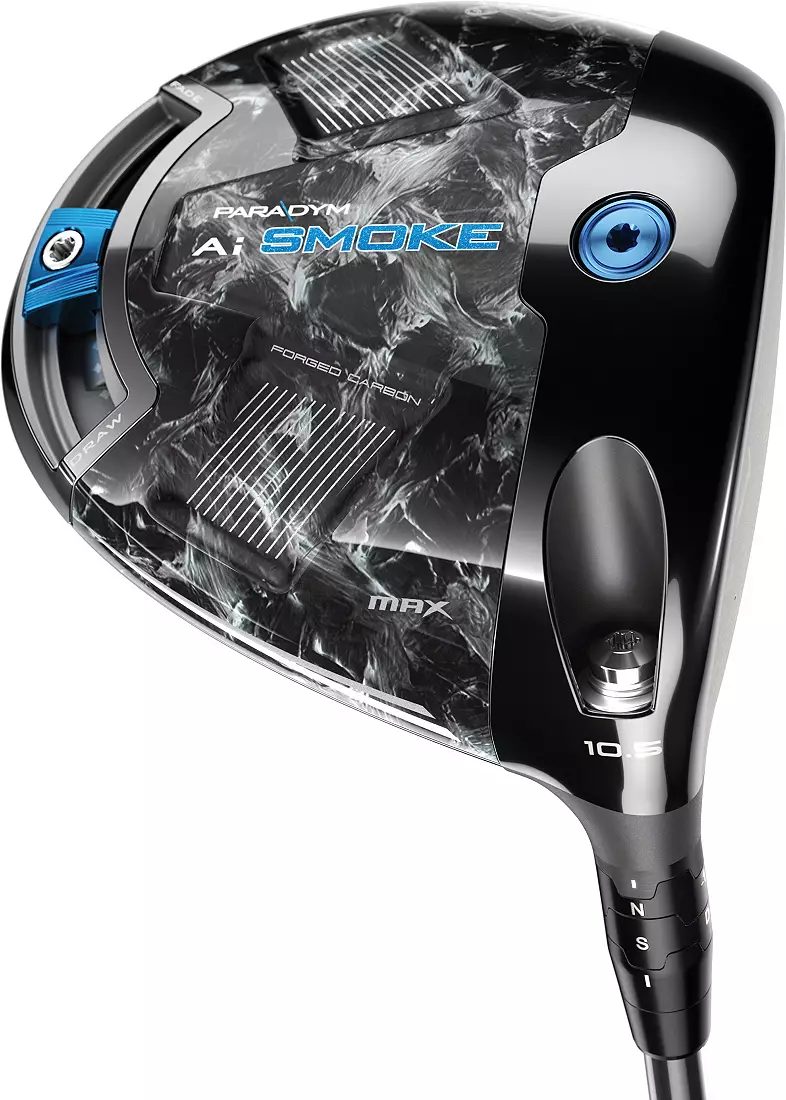
Callaway Paradym Ai Smoke Max
Most golfers should carry both and use each strategically:
- Best driver for forgiveness: Callaway Paradym Ai Smoke Max — keeps ball speed on mishits
- Best 3-wood: TaylorMade Qi35 Max — highest launch, easiest off the deck
See our driver guide for all options.
⚠️ Skip this if: you already hit it straight — this driver is built for forgiveness, not workability.
Best driver for forgivenessCallaway Paradym Ai Smoke Max
~$399
Best 3-wood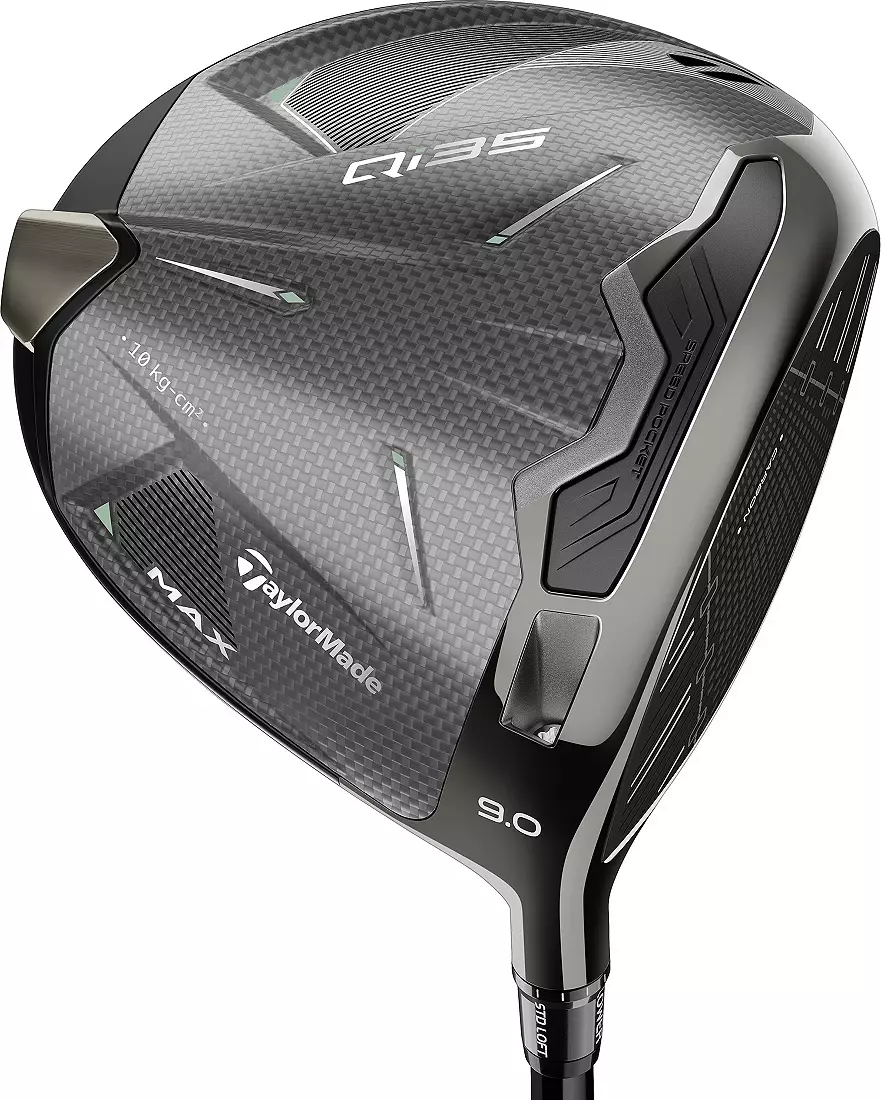
TaylorMade Qi35 Max
$449.98
Prices checked 2026-07-03 · Affiliate links — we earn a small commission at no extra cost to you.
🎯 Our Recommended Gear
Callaway Paradym Ai Smoke Max
~$399 — the product we use and recommend for this topic.
🎯 Gear that helps with this
Every recommendation is independently purchased and tested over 40+ rounds.
Frequently Asked Questions
How much distance do you lose with a 3-wood vs driver?
The average weekend golfer loses 20-30 yards of carry with a 3-wood compared to driver. However, 3-wood dispersion (left-right miss) is typically 30-40% tighter, which means more fairways hit and shorter approach shots.
Should high handicappers use 3-wood off the tee?
On tight holes with trouble (OB, water, thick rough), yes. On wide-open holes, hit driver — even a bad drive in play is better than a 3-wood in the fairway because you are closer to the green.
When should you always hit driver?
Par-5s you can reach in two, wide-open par-4s over 380 yards, downwind holes, and any hole where trouble is more than 30 yards offline. Distance advantage outweighs accuracy on these holes.
Does hitting 3-wood off the tee actually lower scores?
For the average 15-handicapper, replacing driver with 3-wood on the 3-4 tightest holes per round saves 1-2 strokes. The math: avoiding one penalty stroke is worth more than 25 extra yards on the other 10 tee shots.
Should I tee the ball lower with a 3-wood?
Yes — tee the ball so half the ball is above the top of the clubface. This is lower than driver tee height (where the equator sits at the crown) and promotes the slightly descending strike that 3-woods are designed for.
⚖️ Still deciding between two?
These head-to-head comparisons test the exact products from this guide side by side.
🏢 More for Cubicle Golfers
You work 9-to-5. Golf is your weekend reset. These guides are built for your schedule.
Last updated: 2026-07-03