A Golf Pride study found that worn two-year-old grips cost the average golfer 3-4 strokes per round. That is a bigger improvement than a new $599 driver. Your grips are the only contact point between your body and every club in your bag — and most golfers have not replaced them in 3+ years. Here is how to tell when they are done, what to replace them with, and whether to DIY or pay the pro shop.
📋
Update Log — last updated Apr 26, 2026 ▼
Apr 26, 2026 Published — grip replacement guide with DIY instructions and 5 grip picks.
Replacement timelines based on Golf Pride published research and manufacturer recommendations. Grip reviews based on 2 seasons of testing across 5 grip models. DIY regrip steps verified across 3 full-set regrips by the author.
See full testing methodology The 3-4 Stroke Penalty You Are Paying Right Now
Golf Pride — the company that makes grips for more Tour pros than any other — conducted a study comparing shots hit with new grips versus two-year-old worn grips. The result: worn grips cost the average golfer 3-4 strokes per round. Why? Three reasons.
Grip pressure increases unconsciously. When grips are slick, your hands compensate by squeezing harder. You do not decide to grip tighter — your body does it automatically to prevent the club from slipping. Tighter grip pressure restricts wrist hinge, reduces clubhead speed, and creates tension that throws off your tempo.
Micro-slips happen at impact. On full swings, the club generates significant force at impact. Worn grips allow the club to shift a fraction of a millimeter in your hands at the worst possible moment. You do not feel it as a slip — you feel it as a push, a pull, or an inconsistent ball flight.
Confidence erodes. You start steering shots because you do not trust your hold. You avoid full swings in wet conditions. You change your natural grip to compensate. All of this adds strokes without you realizing the grip is the root cause.
The fix costs $60-90 for a full set of 13 grips. That is $5-7 per stroke saved. There is no cheaper improvement in golf.
The 4 Signs Your Grips Are Done
1. Shiny patches in the high-contact zones. Look at where your thumbs and palms sit on the grip. If those areas are shiny, smooth, and visibly different from the rest of the grip surface, the rubber has worn down. Fresh grips have a uniform matte texture across the entire surface.
2. Slick feel even after washing. Wash your grips with warm water and dish soap (you should be doing this every 5-10 rounds). If they still feel slick after washing and drying, the surface texture is gone and no amount of cleaning will restore it.
3. Visible cracks, splits, or hardening. Rubber degrades over time even if you do not play much. UV exposure, heat, and humidity cause grips to harden and crack. If you see cracks in the surface or the grip feels rigid instead of tacky, it is done regardless of round count.
4. You have started gripping tighter without realizing. This is the sneaky one. If you notice grip marks in your glove that are deeper than they used to be, or your forearms are sore after a round, or you feel tension in your hands at setup — your body is compensating for slick grips. This is the sign that costs you strokes.
If someone is buying you a gift and checks your grips, shiny and slick means a regrip is the perfect present — see our
golf gift guide for the full bag-spying strategy.
The Replacement Timeline
Tour pros: Every 6 weeks. They regrip constantly because they can feel even small changes in surface texture. This is extreme and unnecessary for recreational golfers.
Heavy practice (range 3+ times/week): Every 6-8 months. Range mats accelerate grip wear because the abrasive mat surface transfers grit to your glove and then to your grips.
Weekend golfer (30-40 rounds/year): Every 12 months or 40 rounds, whichever comes first. This is the most common schedule and the one Golf Pride recommends.
Casual golfer (under 20 rounds/year): Every 18-24 months. At this volume, environmental degradation (UV, heat, humidity) wears your grips more than actual use.
Putter grip: Every 3-5 years for most golfers. Putter grips see less impact force and less friction. Replace when the feel changes or the grip shows visible wear in your thumb zones. For putting-specific grip upgrades — especially for shaky hands — see our
putter guide for older golfers.
This mirrors the maintenance schedule from our
wedge replacement guide. Between grips (annually) and wedges (every 75-100 rounds), most weekend golfers should budget for one equipment maintenance expense per season.
The Cost Reality
DIY full-set regrip (13 clubs): $60-90. Grips cost $5-13 each depending on model. Grip tape is $8-12 for a roll. Grip solvent is $6-10. Total materials for 13 clubs: $60-90. Time: 30-45 minutes for a full set once you have done it twice.
Pro shop install: $80-150. Most pro shops charge $3-8 per club for labor on top of the grip price. Some shops offer deals if you buy grips and installation together. Club Champion, Golf Galaxy, and PGA Tour Superstore all offer regripping services.
The math: DIY saves you $30-60 per regrip. Over 5 years of annual regrips, that is $150-300 saved. If you regrip once and decide DIY is not for you, paying the pro shop is still worth it — the 3-4 strokes you gain per round far outweigh the $80-150 cost.
For budget-conscious golfers, regripping also qualifies as one of the best upgrades in our
best golf gear under $100 guide.
Best Grips by Hand Type
★★★★★ Our score: 4.8/5
Golf Pride MCC Plus4
Not all grips work for all hands. Here are the best options matched to your specific situation.
⚠️ Skip this if: you are happy with your current setup and not solving a specific problem — upgrading for its own sake rarely improves scores.
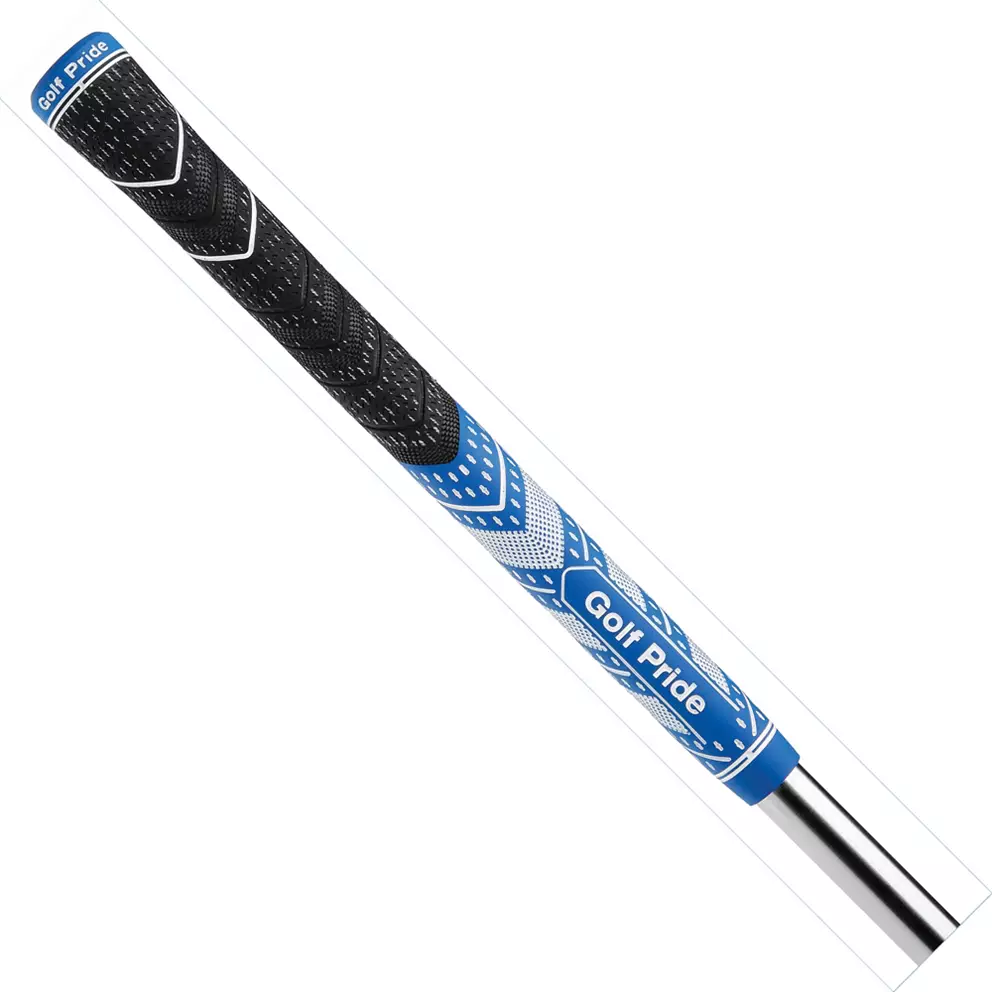
Best All-Purpose: Golf Pride MCC Plus4
BEST OVERALL ★★★★★ Our score: 4.8/5
Golf Pride MCC Plus4
The MCC Plus4 ($12.99/grip) is the most popular grip on Tour for good reason. The upper half is cord for wet-weather traction. The lower half is rubber for comfort. The Plus4 design adds material in the lower hand area, which reduces grip pressure without going to an oversized grip. This is the grip I use on every club and the one I recommend when someone asks "just tell me what to buy."
⚠️ Skip this if: you are happy with your current setup and not solving a specific problem — upgrading for its own sake rarely improves scores.
Pros - Cord upper + rubber lower = best of both worlds
- Plus4 reduces grip pressure in lower hand
- Most popular grip on Tour
Cons - $13/grip is premium pricing ($169 for full set)
- Cord section can feel abrasive on bare hands
- Not ideal for golfers who prefer soft, tacky feel
Best for Wet Hands: Golf Pride Tour Velvet Cord
BEST WET WEATHER ★★★★★ Our score: 4.7/5
Golf Pride Tour Velvet Cord
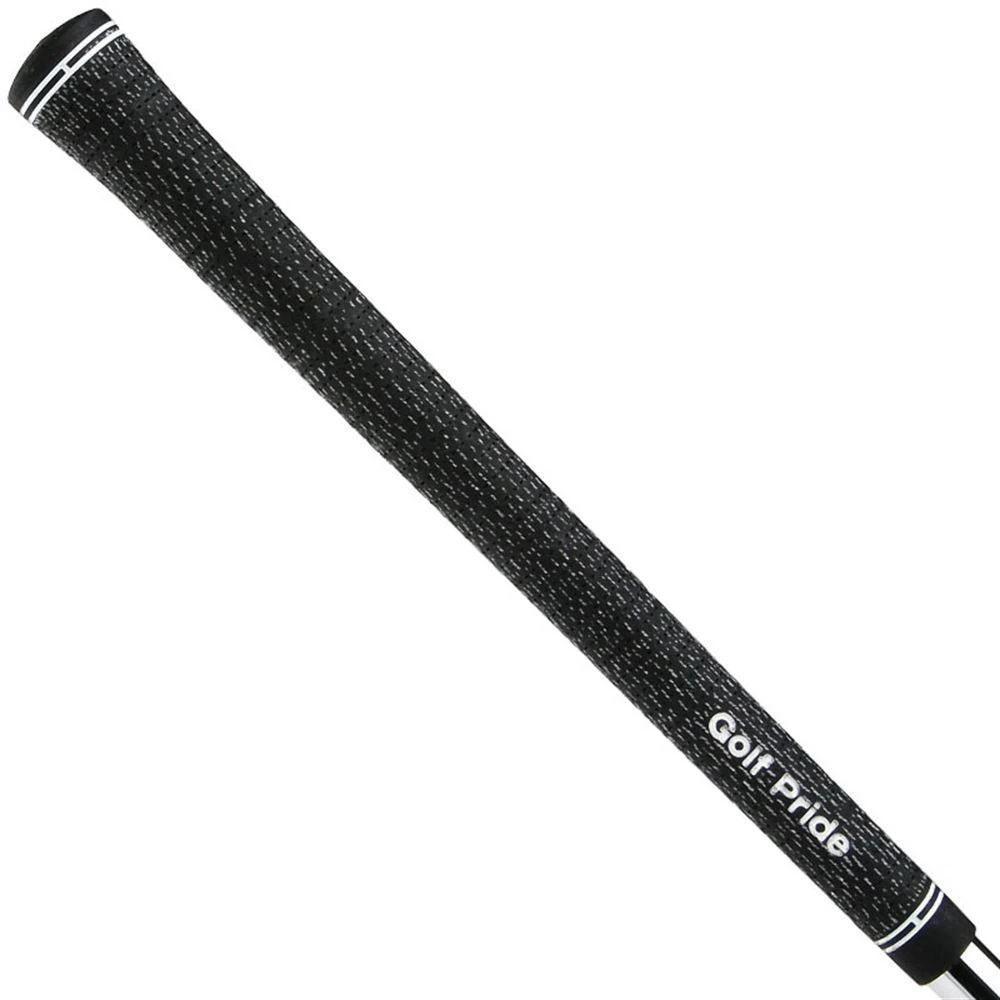
The Tour Velvet Cord ($10/grip) is full cord from top to bottom — maximum traction in any condition. If you play in morning dew, rain, or sweat through your glove by hole 9, this grip will not let you down. The firmer feel is preferred by better players who want feedback. At $10/grip it is $3 cheaper than the MCC Plus4, making a full-set regrip about $40 less.
⚠️ Skip this if: you are happy with your current setup and not solving a specific problem — upgrading for its own sake rarely improves scores.
Pros - Full cord for maximum wet-weather traction
- $10/grip — great value for cord
- Firmer feel preferred by low-handicap golfers
Cons - Full cord can irritate bare hands after 18 holes
- Not as comfortable as hybrid grips
- Rougher texture takes adjustment if coming from rubber
Best Budget for Sweaty Hands: Lamkin Crossline Cord
BEST BUDGET ★★★★★ Our score: 4.5/5
Lamkin Crossline Cord
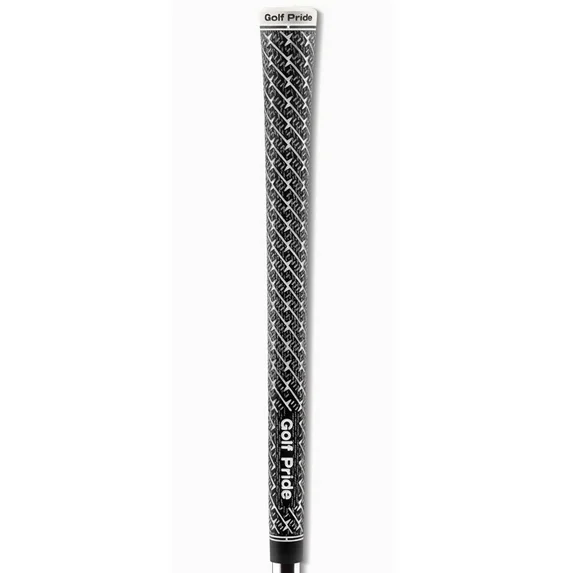
The Lamkin Crossline Cord ($8/grip) is the cheapest quality cord grip available. The classic crossline surface pattern provides a secure hold in any condition. At $8/grip, a full-set regrip costs about $104 — less than a single sleeve of Pro V1s per club. If sweaty hands are your problem and budget is a factor, this is the answer.
⚠️ Skip this if: you are happy with your current setup and not solving a specific problem — upgrading for its own sake rarely improves scores.
Pros - $8/grip — cheapest quality cord option
- Classic crossline pattern for secure hold
- Full-set regrip under $110
Cons - Firm feel is not for everyone
- Less cushioning than premium grips
- Basic appearance — no color options
Best for Arthritis: Winn Dri-Tac
BEST SOFT FEEL ★★★★★ Our score: 4.5/5
Winn Dri-Tac
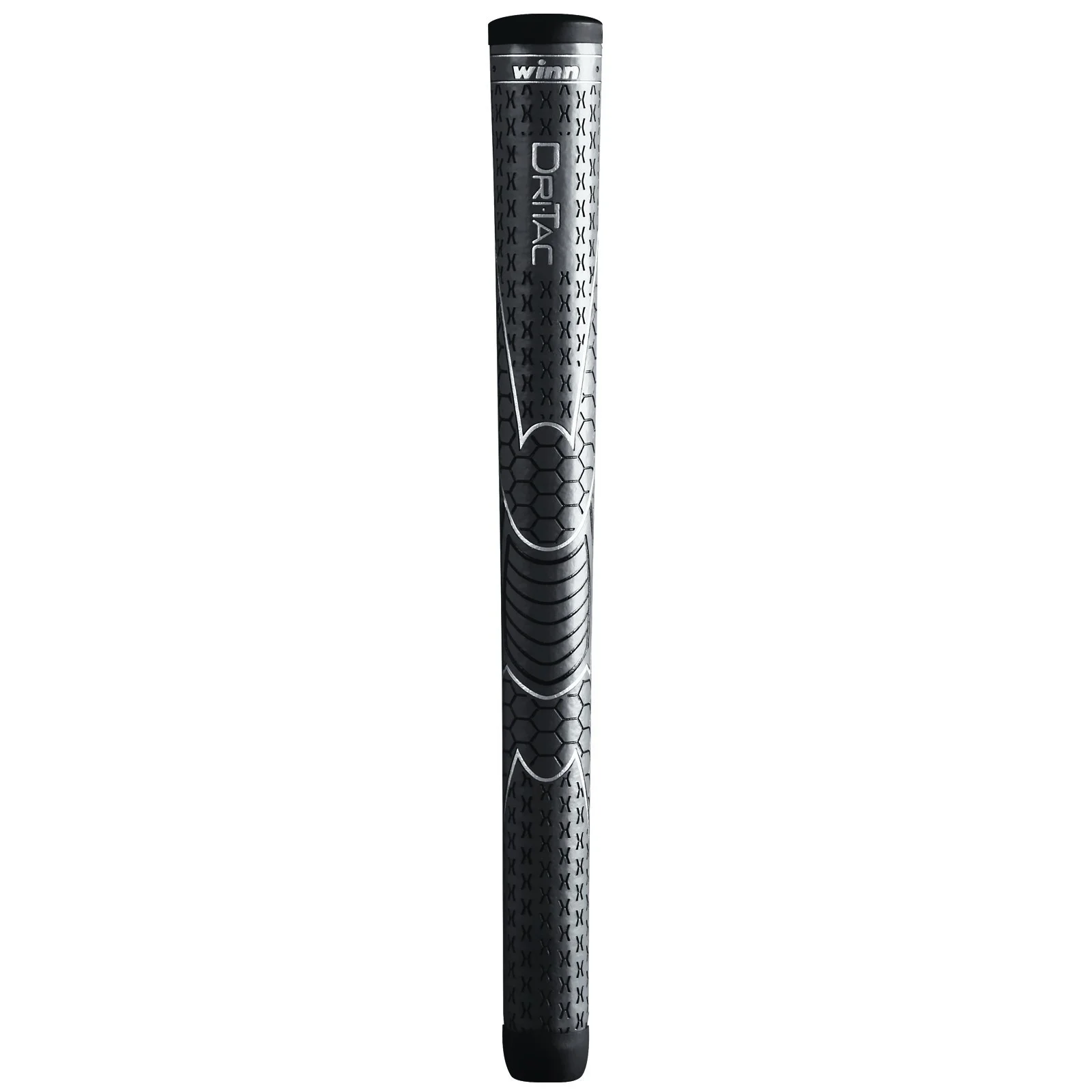
The Winn Dri-Tac ($12/grip) is the softest golf grip you can buy. The polymer material absorbs vibration on off-center hits, which matters enormously for golfers with arthritis, joint pain, or hand sensitivity. The soft, tacky feel requires almost no grip pressure — your hands can relax around the club instead of squeezing. If hard grips cause you pain, switch to Winn Dri-Tac and the difference is immediate.
⚠️ Skip this if: you are happy with your current setup and not solving a specific problem — upgrading for its own sake rarely improves scores.
Pros - Softest grip feel available — ideal for arthritis
- Vibration absorption reduces hand pain
- $8/grip — affordable comfort upgrade
Cons - Soft material wears faster — replace every 8-10 months
- Tacky surface can feel sticky in humid conditions
- Less traction in heavy rain than cord grips
Best Oversize: SuperStroke Zenergy Tour
BEST OVERSIZE ★★★★★ Our score: 4.6/5
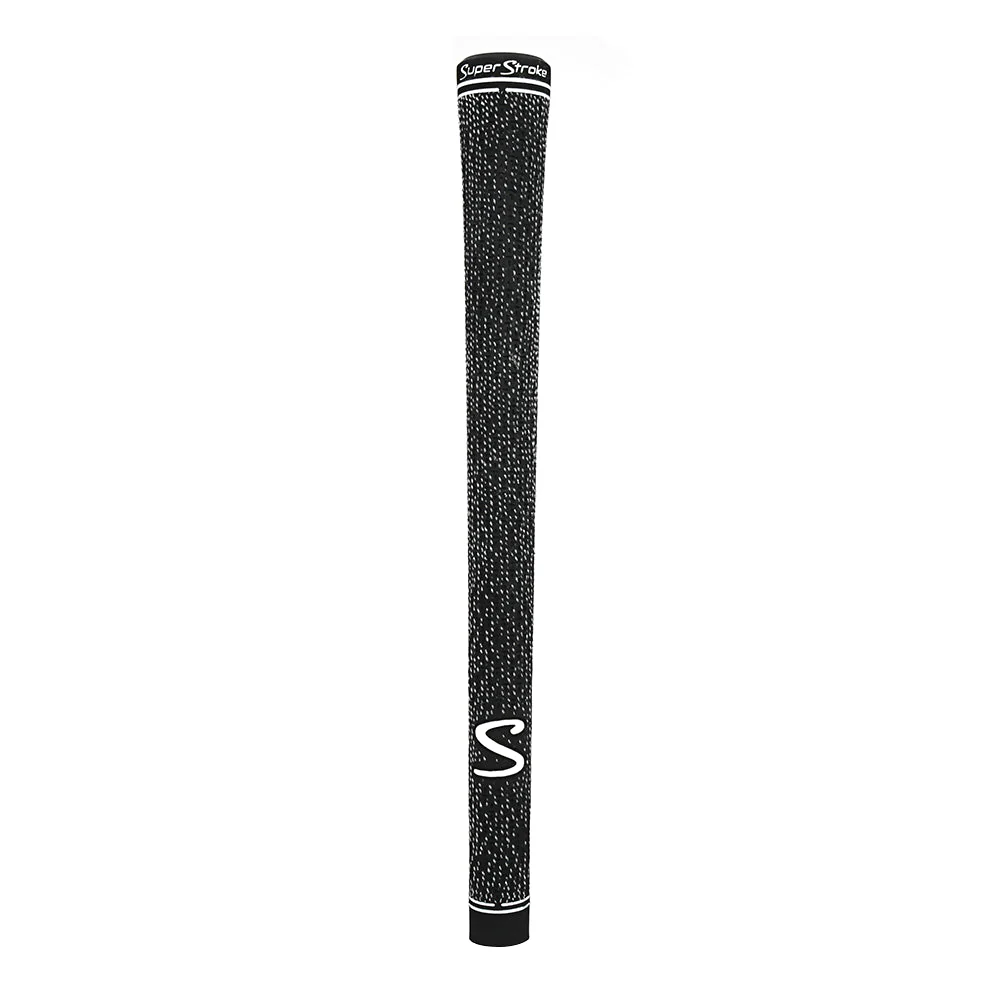
SuperStroke S-Tech
The SuperStroke Zenergy Tour ($34.99/grip) uses the same oversized design philosophy as their famous putter grips. The larger diameter reduces hand and wrist action through impact — quieting your hands for more consistent ball-striking. Best for golfers who fight hooks (hands too active) or who want to reduce grip pressure without adding a wrap of tape. The cross-traction surface works in wet and dry conditions.
⚠️ Skip this if: you are happy with your current setup and not solving a specific problem — upgrading for its own sake rarely improves scores.
Pros - Oversized profile reduces hand action
- Cross-traction surface for all conditions
- Same design philosophy as Tour-proven putter grips
Cons - $13/grip is premium pricing
- Oversize feel takes 2-3 rounds to adjust
- Not for golfers who want maximum hand feedback
DIY Regripping in 7 Steps
Regripping is the easiest DIY golf maintenance task. You need: new grips, double-sided grip tape, grip solvent (or mineral spirits), a utility knife, a vice with a rubber clamp (optional but helpful), and a towel.
Step 1: Cut off the old grip with a utility knife. Slice along the length of the grip away from your body. Peel it off.
Step 2: Remove the old tape. Pull off as much as you can by hand. Use solvent on a towel to dissolve the remaining adhesive.
Step 3: Apply new double-sided tape. Wrap one layer around the shaft, extending 1/4 inch past the butt end. Twist the excess over the end.
Step 4: Apply solvent liberally — soak the tape and pour some inside the new grip. You have about 30-60 seconds of working time before the solvent evaporates.
Step 5: Slide the grip onto the shaft in one smooth motion. Push it all the way until the butt end is flush. Do not twist — push straight.
Step 6: Align the grip logo or alignment mark while the solvent is still wet. You have 10-15 seconds to adjust.
Step 7: Let dry for 4-6 hours before use. Overnight is ideal. Do not rush this — swinging with wet solvent causes the grip to slip.
The first club takes 10 minutes. By club 5 you are doing each one in 3-4 minutes. A full set takes 30-45 minutes once you have the rhythm. YouTube has dozens of tutorials — watch one before your first attempt.
When to Skip DIY and Pay the Pro Shop
Pay the pro shop if: (1) You do not own a utility knife or are uncomfortable using one near expensive graphite shafts. (2) You want a specific build-up (extra tape wraps for a thicker grip) that requires precision. (3) You have graphite shafts that can be damaged by excessive knife pressure. (4) You value your time at more than $30/hour. (5) You want alignment marks perfectly positioned — this takes practice. Most pro shops complete a full regrip in 1-2 hours and you can pick up your clubs the same day.
Who Should Buy This — And Who Should Skip It
Buy if you… - Golfers who have not replaced grips in 2+ years
- Weekend golfers looking for the cheapest stroke-saving upgrade
- DIY-minded golfers who want to save $30-60 on regripping
Skip if you… - Golfers who replaced grips within the last 6 months
- Golfers who prefer to have all maintenance done by a pro shop
🏌️ Gear That Helps With This
🎯 Our Recommended Gear
Golf Pride MCC Plus4
~$13/grip — the product we use and recommend for this topic.
🎯 Gear that helps with this
Every recommendation is independently purchased and tested over 40+ rounds.
Frequently Asked Questions
How often should you replace golf grips?
Every 40 rounds or 12 months, whichever comes first. Cord grips last slightly longer (50-75 rounds). Putter grips last 3-5 years. Tour pros replace every 6 weeks, but recreational golfers do not need that frequency.
How much does it cost to regrip golf clubs?
DIY: $60-90 for a full set of 13 clubs (grips at $5-13 each + tape + solvent). Pro shop: $80-150 installed ($3-8 labor per club on top of grip price).
Can you regrip golf clubs yourself?
Yes — regripping is the easiest DIY golf maintenance task. You need grips, double-sided tape, solvent, and a utility knife. The first club takes 10 minutes; after that, 3-4 minutes each. Watch a YouTube tutorial before your first attempt.
What are the best golf grips for sweaty hands?
Cord grips provide the most traction in wet conditions. The Golf Pride Tour Velvet Cord ($10/grip) and Lamkin Crossline Cord ($8/grip) are the best options. Avoid soft rubber grips if you sweat — they become slippery when wet.
Do worn grips really affect my score?
Yes — a Golf Pride study found worn two-year-old grips cost the average golfer 3-4 strokes per round. Worn grips cause unconsciously tighter grip pressure, micro-slips at impact, and reduced confidence. A $60-90 regrip is the cheapest stroke-saving upgrade in golf.
🏢 More for Cubicle Golfers
You work 9-to-5. Golf is your weekend reset. These guides are built for your schedule.
Last updated: 2026-07-21