
⚡ Quick Verdict
You are standing on a 165-yard par 3. The yardage marker says 160 to the centre, but the pin is cut back-right and you have no idea if that is 158 or 172. You pick the wrong club, come up short, double bogey. That is the exact problem a rangefinder solves — and you do not need to spend $329 to solve it. We tested three rangefinders under $200 over 40+ real rounds to find the best one for a first-time buyer on a budget. All three were independently purchased. See our full rangefinder guide for premium picks if your budget extends further.
⚖️ This page contains affiliate links — we earn a small commission if you buy through them, at no extra cost to you. Editorial Policy →
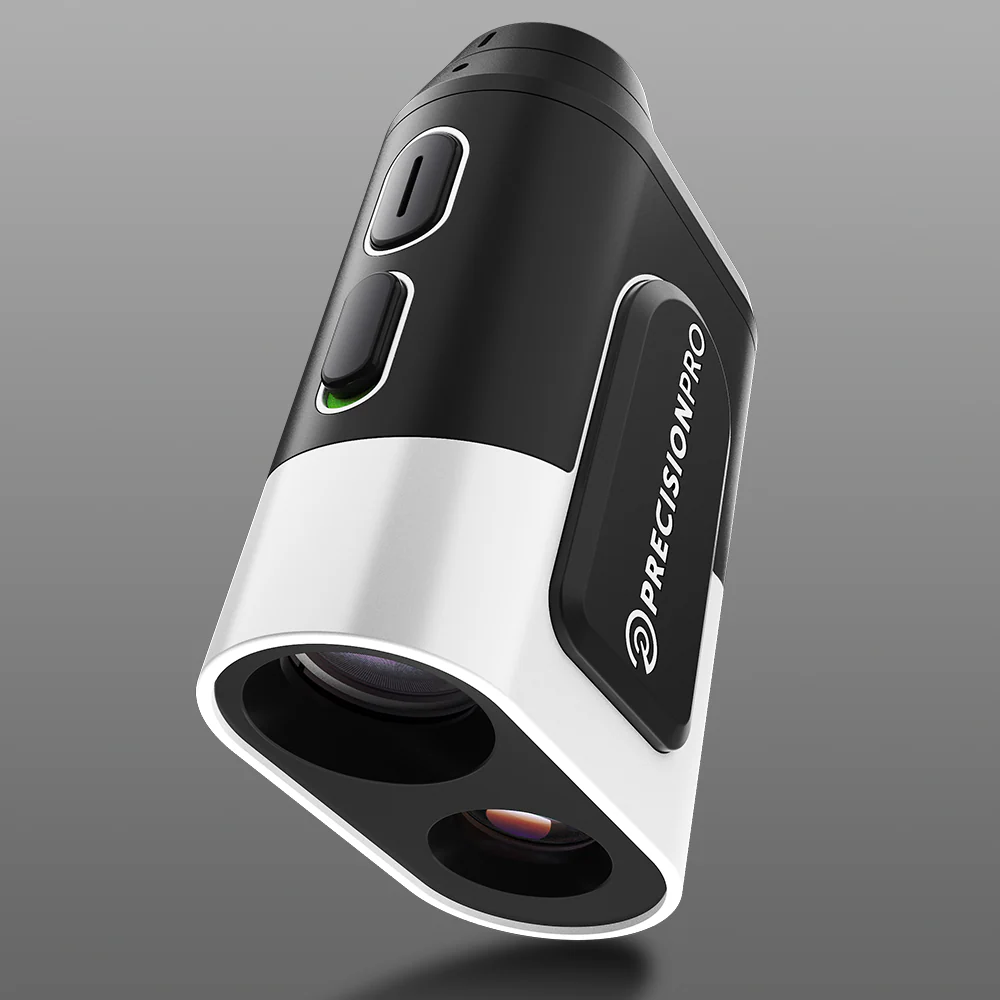
Precision Pro NX9 HD
- Adaptive slope technology adjusts for incline
- 1-year battery life — forget it's in your bag
- Backed by a lifetime warranty
Prices change — click to see current price
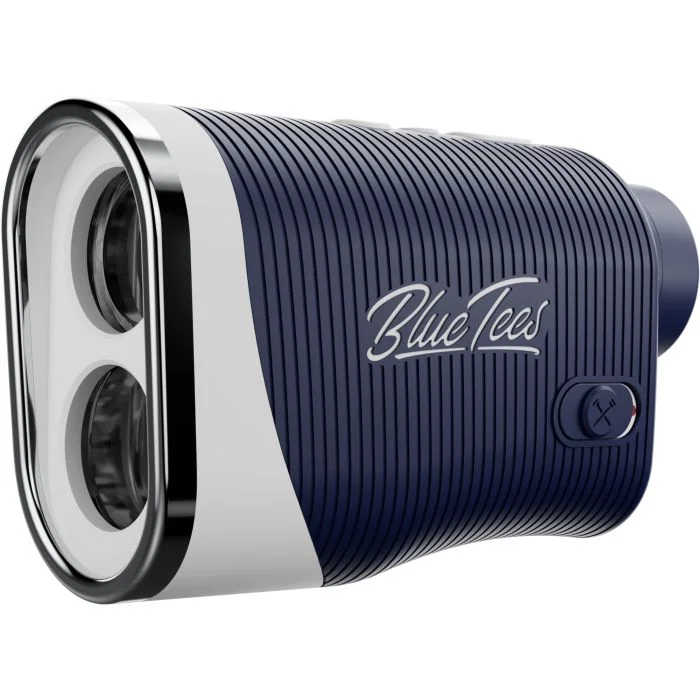
Blue Tees Series 3 Max
- Dual-display shows slope + actual distance simultaneously
- 1,000-yard range — longest in its price category
- Magnetic charging — no more CR2 battery hassle
Prices change — click to see current price
| Rangefinder | For You If... | Price | Key Advantage | Buy | |
|---|---|---|---|---|---|
| Precision Pro NX9 HD BEST PICK | You want reliability + slope + lifetime warranty in one purchase | ~$169 | Lifetime warranty + 1-year battery + slope toggle | ~$169 → | |
| Blue Tees Series 3 Max | You want USB-C charging instead of disposable batteries | ~$149 | Built-in rechargeable — no CR2 batteries ever | ~$149 → | |
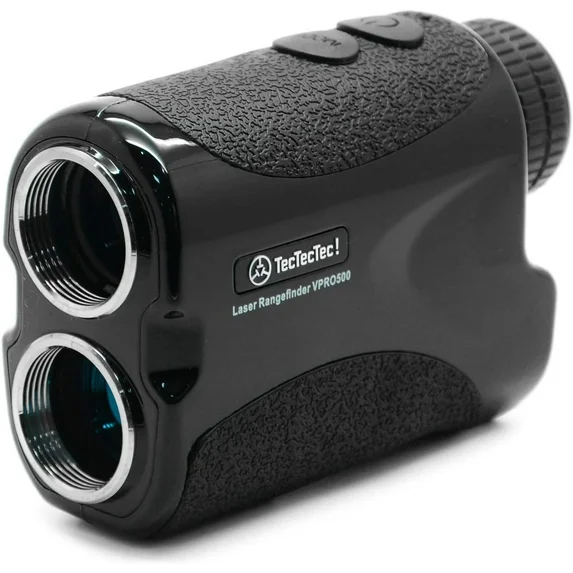
| TecTecTec VPRO500 | You want to try a rangefinder before spending more than $100 | ~$99 | Entry-point price — prove it works before committing | Check price → |
Best Overall Under $200 — Precision Pro NX9 HD
BEST OVERALLThe Precision Pro NX9 HD is the one we hand to every golfer who asks for a rangefinder recommendation under $200. At $169, it does everything a weekend golfer actually needs — slope-adjusted distances, vibration confirmation when you lock the pin, and a display clear enough to read on a bright day. The slope switch is legal for competition when toggled off: the same device works on a casual Saturday and in a club medal. The battery lasts a full year at 20 rounds — you charge or replace it once per season and forget it exists. The lifetime warranty means Precision Pro will repair or replace it if something goes wrong, which removes the risk of the purchase entirely. What it does not do: there is no GPS integration, the display is a basic LCD rather than OLED, and pin acquisition at distances over 250 yards is slower than the Bushnell Tour V6 Shift. For a golfer who plays 20–30 rounds per year on courses under 7,000 yards, none of those gaps matter. This is the rangefinder we would buy if we were spending our own $200 for the first time.
💰 Price: ~$169
Pros
- Slope switch — tournament legal when toggled off
- 1-year battery life on a single CR2
- Lifetime warranty — real long-term protection
- Vibration lock confirms you ranged the flag, not the trees
Cons
- No GPS integration — laser only
- Basic LCD display — not OLED quality
- Slower acquisition above 250 yards vs Bushnell
⚖️ Affiliate link — we earn a small commission at no extra cost to you. Prices change frequently — click to see the current price.
Best Value Under $150 — Blue Tees Series 3 Max
BEST VALUEThe Blue Tees Series 3 Max at $149 is the right pick if USB-C charging matters more to you than a lifetime warranty. It drops a CR2 battery for a built-in rechargeable — one charge lasts 12 months at typical amateur play frequency, and you plug it into the same cable as your phone. Slope is included and toggleable for competition. The 6x magnification is identical to the Precision Pro. Lock-on accuracy to within a yard is consistent inside 200 yards, which covers every approach shot most 18–25 handicappers will face. Where it falls behind: the optics are slightly less sharp than the Precision Pro at range, and the build quality — while solid — does not quite match. Blue Tees makes a style-forward product; the colours and case are noticeably more premium-feeling than the specs suggest, which some golfers love and others find irrelevant. If you like the idea of never buying a replacement battery, this is your rangefinder.
💰 Price: ~$149
Pros
- USB-C rechargeable — no CR2 batteries ever
- Slope toggle — competition legal
- 6x magnification for clear flag acquisition
- Accurate to ±1 yard inside 200 yards
Cons
- Slightly less sharp optics than Precision Pro at distance
- Build quality a step below Precision Pro
- No lifetime warranty
⚖️ Affiliate link — we earn a small commission at no extra cost to you. Prices change frequently — click to see the current price.
Best Under $100 — TecTecTec VPRO500
ENTRY POINTIf you are not sure a rangefinder is worth it for your game yet, the TecTecTec VPRO500 at $99 is the right way to find out. It is not as fast as the Precision Pro and it does not have slope, but it does the one essential job: it tells you exactly how far the flag is in about two seconds. For a golfer averaging 95–105 who plays 15–20 rounds a year, the VPRO500 removes the guessing on approach shots without requiring a significant financial commitment. If you use it for one season and decide rangefinders genuinely help your game, you upgrade to the Precision Pro or Blue Tees knowing the investment is worthwhile. If the game does not stick, you spent $99 rather than $329.
💰 Price: ~$99
Pros
- Under $100 — lowest commitment entry point
- Accurate to ±1 yard inside 200 yards
- Lightweight and easy to carry
Cons
- No slope adjustment
- Slower pin acquisition than the Precision Pro
- No vibration lock confirmation
⚖️ Affiliate link — we earn a small commission at no extra cost to you. Prices change frequently — click to see the current price.
What to Look For in a Budget Rangefinder
Four features separate a rangefinder that improves your game from one that frustrates you.
- Slope switch — Slope-adjusted distance accounts for elevation change — if the hole plays uphill, it might read 165 yards but play like 175. A slope switch means you can turn that feature off for competition play where slope is not permitted. Any rangefinder under $200 worth buying includes a slope switch. If it does not, skip it.
- Vibration lock (pin confirmation) — When you aim at the flag, the rangefinder needs to lock onto it rather than the trees behind the green. Vibration confirmation tells you when you have hit the right target — a short buzz when the flag registers. Without it, you cannot be certain whether the reading is the flag or a background object 40 yards further.
- Pin acquisition speed — On a busy course, you have about 45 seconds to pull the rangefinder, get a reading, and put it away before you slow play. A good budget rangefinder locks the flag in under two seconds from a stable position. The VPRO500 takes closer to three seconds. The Precision Pro is under two. That gap matters on a crowded Saturday morning.
- Battery life and type — CR2 batteries last 6–12 months at 20 rounds per year. A CR2 costs about $5 at any hardware store and takes 30 seconds to replace. Rechargeable built-in batteries (like the Blue Tees Series 3 Max) last equally long but need a USB-C cable when they run out. Neither is a meaningful advantage — choose based on preference.
Is a Rangefinder Worth It Under $200? The Honest Answer
Yes — if you play 15 or more rounds per year. Here is the math: the most common source of wasted strokes for a golfer shooting in the 90s is wrong club selection on approach shots. Guessing 160 yards when it is actually 171 means you pull one club short, miss the green, face a difficult chip, and card a double instead of a bogey. That one mistake adds two strokes. It happens 3–4 times per round for most 18–25 handicappers. A $169 rangefinder eliminates that mistake permanently — on every round, on every course, for the 6–8 years the device will last. At 25 rounds per year, that is $6.76 per round for the first year. At 50 rounds, it is $3.38. The math is not close. The one exception: if you play fewer than 10 rounds per year, the improvement in scores per dollar spent is lower. Casual golfers who play once a month may find a GPS app on their phone adequate. For anyone who plays regularly and cares about their score, a rangefinder under $200 is the best gear purchase available.
Frequently Asked Questions
What's the best cheap golf rangefinder?
Does a $150 rangefinder work as well as a $300 one?
Is slope worth paying extra for on a budget rangefinder?
Related Guides
Get the Free Golf Gear Buying Guide
The cheat sheet every weekend golfer needs before buying anything new. No spam, ever.
Browse All Guides →