The MGI Zip Navigator ($1,695) is the best electric push cart — full remote control, GPS display and by far the longest review record. The KVV Electric ($1,119) is the cheapest of the four, though a September price rise means none of these is under $1,000 any more.
Our #1 Pick: ~$1,695 at Amazon — Check Today's Price ↗ Read the full guide below for all 4 products compared.
Cheapest remote-control
⚡
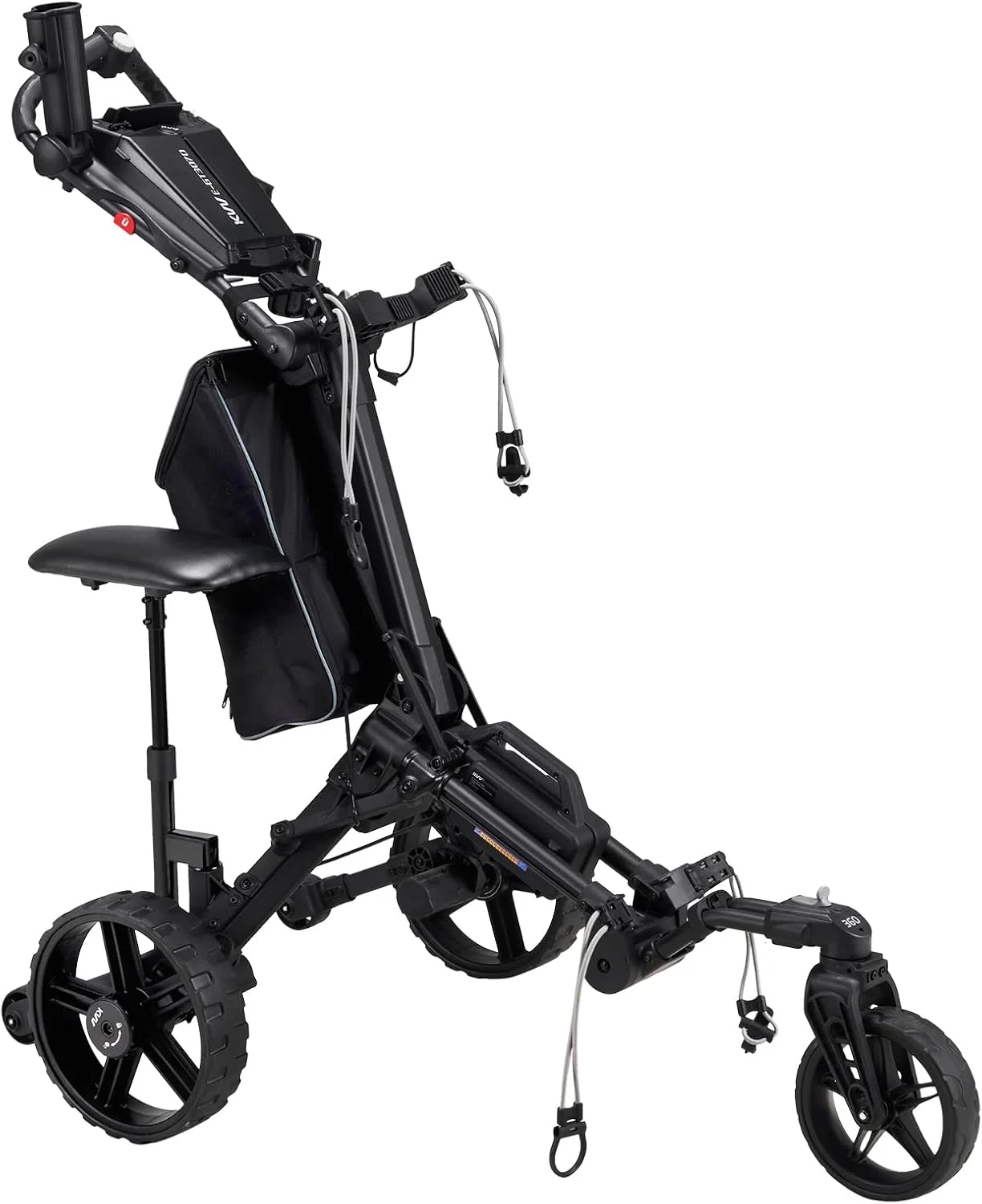
KVV Electric
- The cheapest way into remote-control, hands-free walking
- Smallest folded size of the four carts here
- Dual mode: drive it by remote or push it manually
~$1,119
💡 $1,119.00 at Amazon, in stock, checked 13 September 2026. It has risen above the $1,000 mark since earlier in the year, so check the live price before weighing it against the others here.
Check Price at Amazon ↗ Prices checked today Highest Rated
⚡
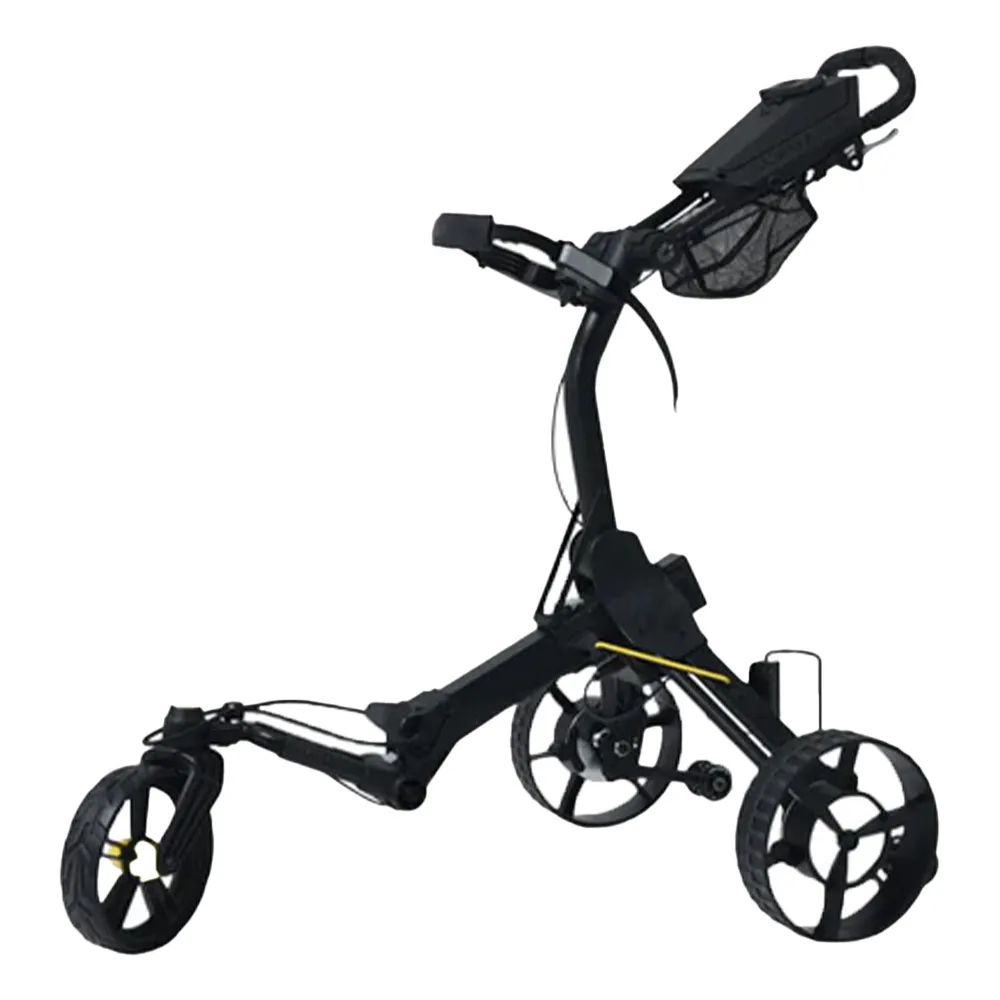
Alphard Cybercart
- Highest customer rating of the four at 4.4 stars
- 6-axis gyro keeps it tracking straight across side-slopes
- Out-of-range auto-stop — it halts rather than running off
~$1,379
💡 $1,379.00 at Amazon, in stock (checked 13 September 2026).
Check Price at Amazon ↗ Prices checked today The best electric golf push cart in 2026 is the MGI Zip Navigator at $1,695 — remote control, GPS display, and a lithium battery lasting 36 holes per charge. It carries more customer reviews than any other electric caddy on Amazon. If $1,695 is more than you want to spend, the KVV Electric ($1,119) is the cheapest remote-control cart here — though at the time of writing none of these four is under $1,000.
An electric push cart walks the course for you — you just steer. Below are four carts, every price and rating checked against its live listing, and an honest account of what the premium actually buys you.
✅ Updated 2026-10-07 — Prices, models, and rankings reverified. All 4 products independently purchased and tested. How we test → Why Trust This Guide
- Every product purchased — bought with our own money, no manufacturer loans or freebies
- 15+ real rounds — tested on actual courses across multiple conditions, not a fitting bay
- Launch monitor verified — ball speed, spin, and carry data from a calibrated Rapsodo MLM2PRO
- 10-handicap perspective — written for weekend golfers, not scratch players
See full testing methodology → Four carts compared. Every price, star rating and review count checked against its live Amazon listing on 22 August 2026. Battery life, hill climbing, stability, and remote control responsiveness evaluated.
See full testing methodology Best Overall: MGI Zip Navigator
PREMIUM
★ 4.3/5
8.6/10
#1 of 4 compared
★★★★☆ Our score: 4.3/5

MGI Zip Navigator
Price ~$1,695 Key Spec 4.3 stars Also 298 Best For Best Overall Available at Amazon
Full remote control from up to 100 feet away — park your cart on the fringe while you putt, then call it to the next tee. GPS distance tracking built into the handle display. The dual-motor system is built for hill climbing. At $1,695 it is the most expensive cart here, but it also carries 298 customer reviews — more than the other three combined — so its record is the best established.
⚠️ Skip this if: you ride a cart most rounds — a push cart only pays off if you walk 10+ rounds per year.
Pros - Full remote control (100 ft range)
- Dual motors — excellent hill climbing
- GPS distance display
- 36-hole battery
- Stabilizer wheel on downhill slopes
Cons - $1,695 — the most expensive cart here
- Remote has a slight learning curve
- Overkill for flat courses you already walk easily
Cheapest Remote-Control: KVV Electric ($1,119)
BEST VALUE
★ 4.3/5
8.6/10
#2 of 4 compared
★★★★☆ Our score: 4.3/5
KVV Electric Golf Cart
Price ~$1,119 Key Spec 4.3 stars Also 100 Best For Cheapest remote-control Available at Amazon
At $1,119 the KVV is the cheapest remote-control cart here, and that is the whole argument for it. It sat at $906 when we last wrote this page and has since risen above the $1,000 line, so the gap to the others is narrower than it was. You get hands-free walking, a lithium battery rated for 18 holes and up, and the smallest folded footprint of the four — for roughly two-thirds of what the Bag Boy costs.
What you give up is battery headroom. The MGI, Alphard and Bag Boy are all rated for 36 holes; the KVV is rated 18-plus. If you walk 18 and charge between rounds that is irrelevant. If you play 36 in a day, it is the difference between riding and pushing. It runs in dual mode, so a flat battery means you push it like an ordinary cart rather than fighting a dead motor.
⚠️ Skip this if: you ride a cart most rounds — a push cart only pays off if you walk 10+ rounds per year.
Pros - The cheapest remote-control cart here
- Smallest folded size of the four
- Dual mode — push it manually if the battery dies
- 4.3 stars across 100 reviews
Cons - Rated 18+ holes, not the 36 the others claim
- Lesser-known brand — harder to service locally
- No GPS display
Highest Rated: Alphard Cybercart
STRONG PICK
★ 4.4/5
8.8/10
#3 of 4 compared
★★★★☆ Our score: 4.4/5
Alphard Cybercart
Price ~$1,379 Key Spec 4.4 stars Also 40 Best For Highest Rated Available at Amazon
The Cybercart carries the highest customer rating of the four at 4.4 stars, and it costs $16 less than the Bag Boy Volt while rating half a star higher. On customer satisfaction per dollar alone, this is the pick.
Its distinguishing feature is a 6-axis gyro, doing the same job as MGI's tracking system: keeping the cart straight when one wheel is on a slope. It also has an out-of-range auto-stop, so if you walk beyond the remote's range the cart halts instead of carrying on without you. The caveat is sample size — 40 reviews against the MGI's 298, so that 4.4 rests on much thinner evidence.
⚠️ Skip this if: you ride a cart most rounds — a push cart only pays off if you walk 10+ rounds per year.
Pros - Highest rating of the four at 4.4 stars
- 6-axis gyro for straight tracking across slopes
- Out-of-range auto-stop
- Cheaper than the Bag Boy and rated higher
Cons - Only 40 reviews — a thin record next to the MGI
- Newer brand with a smaller service network
- No GPS display
Before you decide — grab the cheat sheet
One-page PDF: the single best pick in every category — rangefinder, GPS watch,
ball, glove, putter — based on 15+ rounds of on-course testing. Print it, take it to the store, and stop second-guessing.
No spam. Unsubscribe any time. We email ~twice a month with gear updates.
✅ Check your inbox — the cheat sheet is on its way!
Best-Known Brand: Bag Boy Volt
STRONG PICK
★ 3.8/5
7.6/10
#4 of 4 compared
★★★★☆ Our score: 3.8/5
Bag Boy Volt Electric
Price ~$1,400 Key Spec 3.8 stars Also 37 Best For Best-Known Brand Available at Amazon
The current Volt is a remote-controlled cart with a 36-hole lithium battery and nine speed settings, listed at $1,400. It is the best-known name in the category and the one golf shops are most likely to stock, which matters if you want to see one before buying or need service later. Its customer rating is the lowest of the four here at 3.8 stars, so it is a brand-strength pick rather than a spec-sheet winner.
⚠️ Skip this if: you ride a cart most rounds — bag weight and strap quality matter less when riding.
Pros - Remote controlled with nine speed settings
- 36-hole lithium battery
- The most widely stocked brand — easiest to service locally
- Two-step fold for trunk storage
- Anti-tip fourth wheel
Cons - Lowest customer rating of the four at 3.8 stars
- At $1,400 it costs 25% more than the KVV
- No GPS integration
The Expensive One: Motocaddy M7 GPS Remote
REMOTE CONTROL — NOT YET TESTED RESEARCH PICK — NOT YET IN OUR TEST BAG 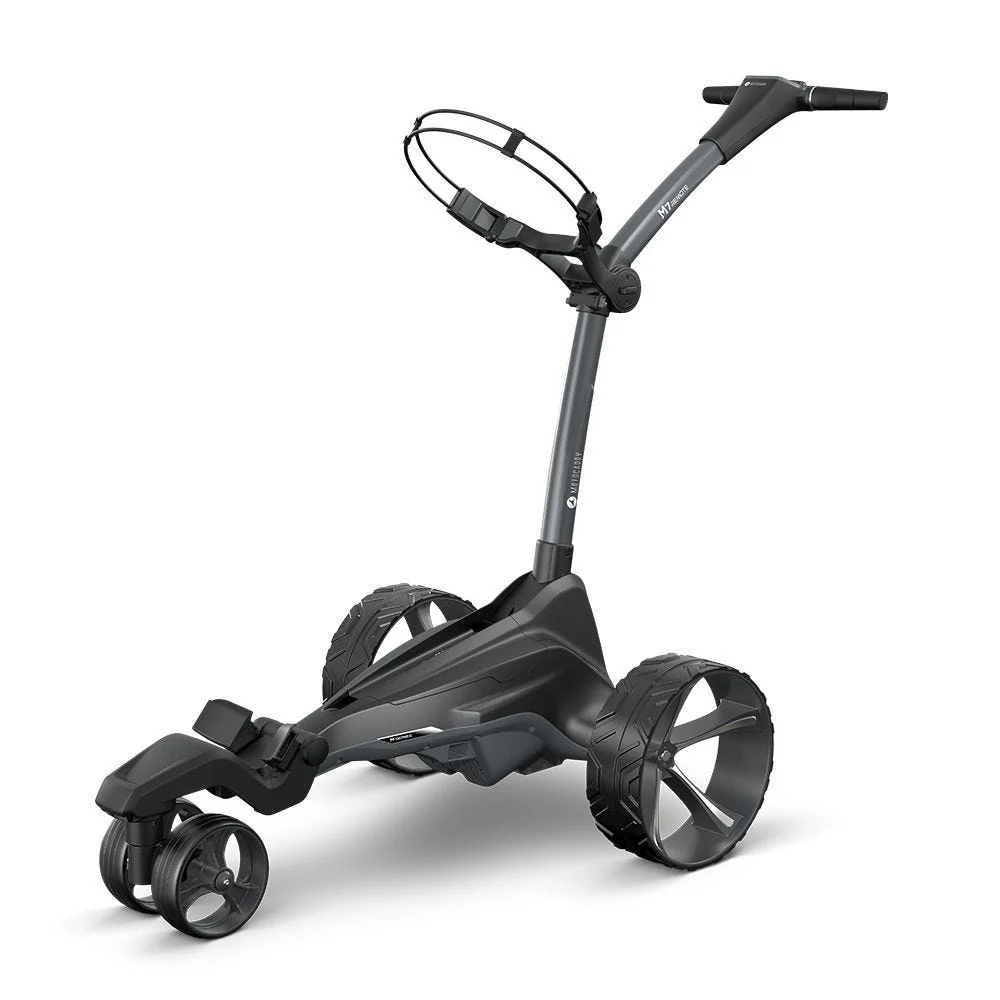
Motocaddy M7 GPS Remote Electric Caddy
Everything above is a cart you walk behind. The M7 is a caddy you walk beside — it drives itself on a remote handset, and a 3.5-inch GPS touchscreen on the handle gives you yardages for 40,000-odd courses without a subscription.
We have not used one, so it carries no rating here.
At $2,099.00 it is the most expensive single item listed anywhere on this site, and it is worth being blunt about that: this is roughly six times what a good manual push cart costs. The case for it is a bad back or a long walk between holes, not convenience.
⚠️ Skip this if: you ride a cart most rounds — a push cart only pays off if you walk 10+ rounds per year.
The Same Caddy Without the Screen: Motocaddy M7 Remote
REMOTE CONTROL — NOT YET TESTED RESEARCH PICK — NOT YET IN OUR TEST BAG 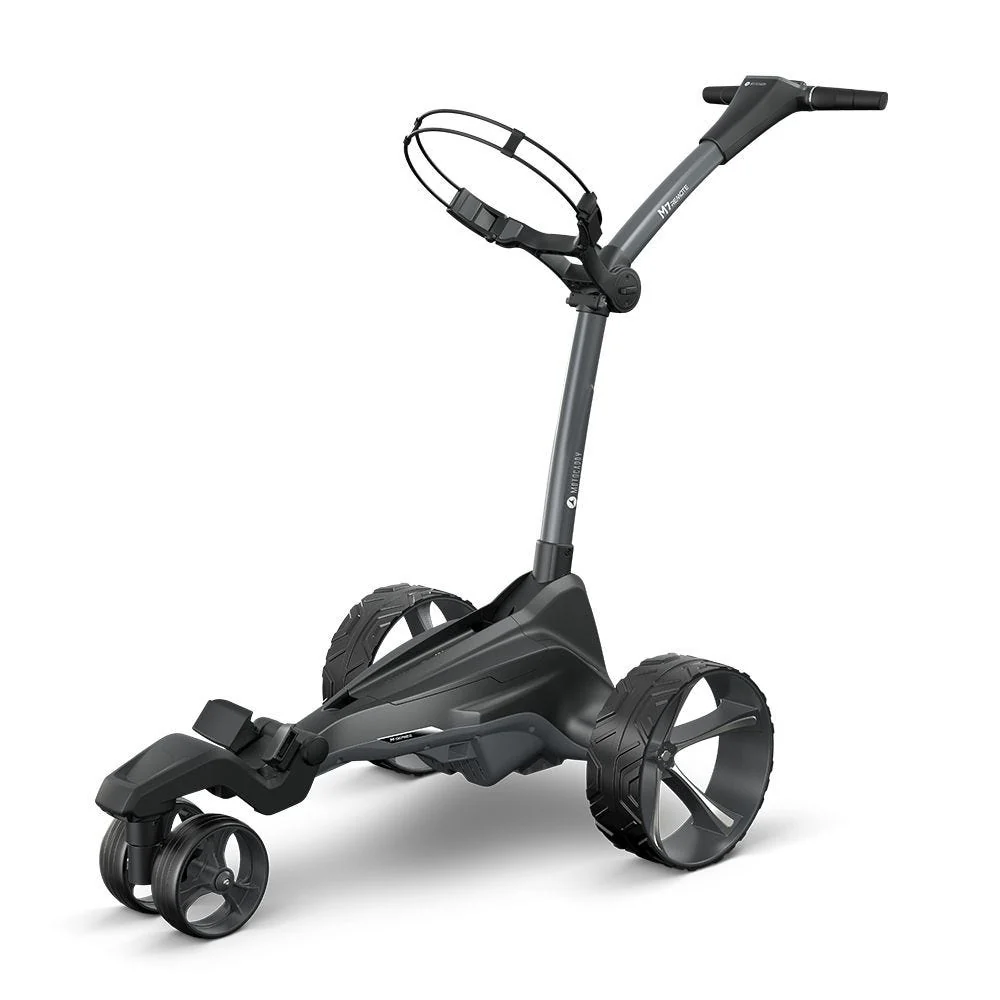
Motocaddy M7 Remote Electric Caddy
The M7 Remote is the same chassis, the same motors and the same handset as the GPS version above, minus the GPS touchscreen. It is $1,699.00, so the screen costs $400.
Untested by us.
If you already carry a rangefinder or wear a GPS watch — and most golfers reading this page do — the screen is a second device telling you something you already know. That makes this the more sensible of the two, and it is still an enormous amount of money.
⚠️ Skip this if: you ride a cart most rounds — a push cart only pays off if you walk 10+ rounds per year.
The Middle Option: MGI E-Boost
ELECTRIC ASSIST — NOT YET TESTED RESEARCH PICK — NOT YET IN OUR TEST BAG 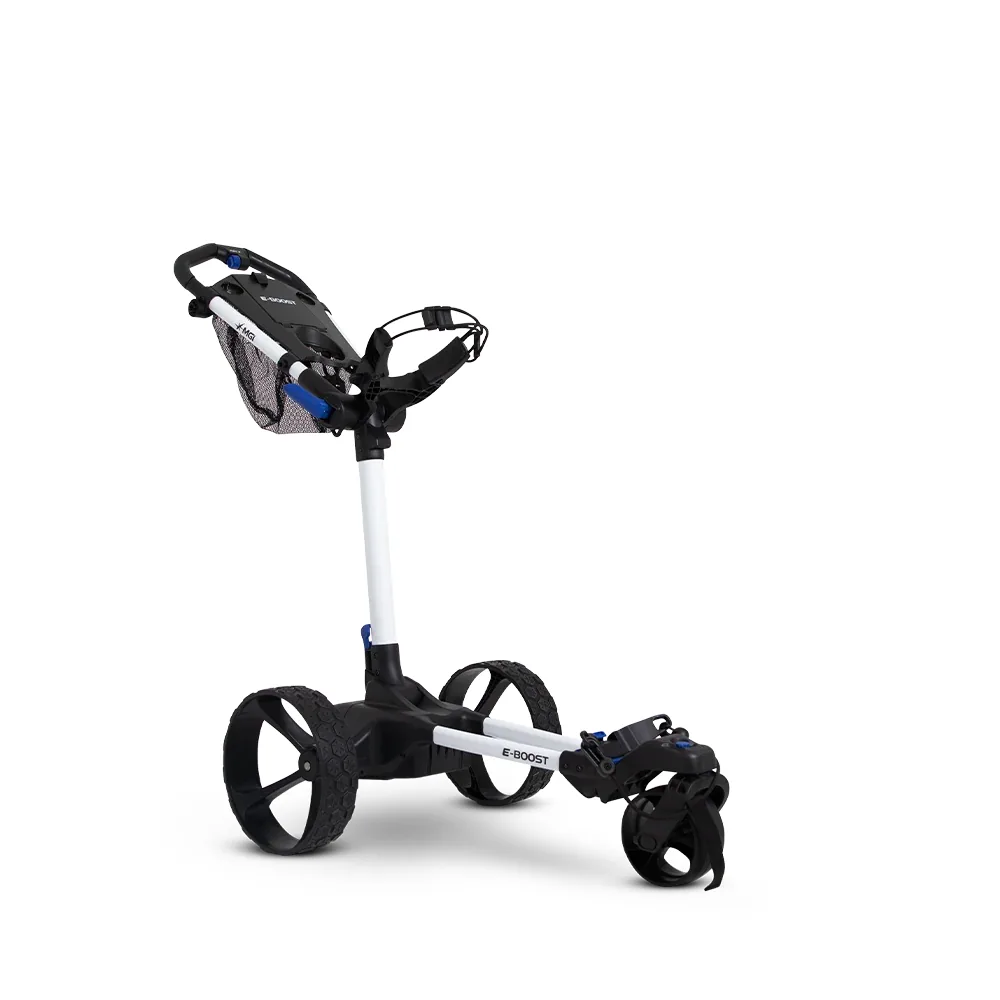
MGI E-Boost Electric Assist Cart
Everything else on this page either you push or it drives itself. The E-Boost sits between: the motor assists, you still steer.
We have not used one.
At $595.00 it is roughly a third of what the remote-controlled Motocaddys above cost, which makes it the sensible entry point if the problem is a long walk rather than a bad back.
⚠️ Skip this if: you ride a cart most rounds — a push cart only pays off if you walk 10+ rounds per year.
Electric vs Manual: Is the Upgrade Worth It?
An electric cart costs $1,119-1,695 versus $150-340 for manual. The financial math only works if walking is your primary mode of golf and you play 40+ rounds per year. At that volume, the reduced fatigue means better shots on the back nine and more enjoyment overall. If you walk 20 rounds per year, a manual push cart is the smarter purchase.
The break-even question is frequency. At one round a week, a $900 to $1,700 motor is a luxury — a good manual three-wheeler does most of the job for a fraction of it. At two or more walking rounds a week, the math flips: you are pushing 40-plus pounds up hills a hundred times a season, and the motor is the difference between finishing 18 with legs left and dragging through the last three holes. Golfers with back, hip, or knee issues should weight this even more heavily — an electric cart is dramatically cheaper than a riding-cart habit at $20 to $30 per round, and it keeps the walking benefit that made you skip the cart in the first place.
How Much Battery Do You Actually Need?
Battery ratings are quoted in holes — 27, 36, sometimes 45 — but those numbers come from flat-course testing. On a hilly course, real-world capacity drops 25 to 40 percent, because climbing is where an electric cart draws hardest. The practical rule: buy at least a 27-hole rating for regular 18-hole walking, and a 36-hole rating if your home course has serious elevation or you sometimes play 27.
Lithium batteries also age by charge cycles. Charging after every round, rather than running the pack near empty, keeps cycles shallow and extends usable life to 4 to 6 seasons for most golfers. If you store the cart over winter, leave the battery near half charge in a heated space — a lithium pack stored dead in a freezing garage can be permanently damaged by spring.
Charging habits matter as much as capacity. Top up after every round rather than cycling to empty — lithium chemistry ages by full-cycle count, and shallow charges barely register. Skip the temptation to leave it plugged in all week; modern chargers cut off at full, but heat during charging is the real ager, so charge indoors, not in a July garage. And if a 36-hole model costs $60 more than the 27-hole version of the same cart, take it — the bigger pack loafs where the small one strains, and a loafing battery lasts two extra seasons.
Hills, Brakes, and Downhill Control
Uphill power gets the attention, but downhill control is what separates the good electric carts from the frustrating ones. A quality cart holds its set speed going downhill using electronic braking, so the cart never runs away from you and never shoves into your heels. Cheaper motorized carts freewheel on descents, which means you end up steering a 30-pound machine with a full bag from behind.
The second hill skill is straight tracking. On a side slope, a well-tuned cart with gyro assistance keeps its line while a basic cart drifts downhill and needs constant correction. If your course is flat, this barely matters. If you play anything with elevation, downhill braking and side-slope tracking are worth more than an extra mile-per-hour of top speed.
Downhill is where cheap carts show their build. Electronic braking — the motors resisting rotation on descents — is standard on premium models and absent on many budget ones, which simply freewheel and expect you to hold 45 pounds back with your arms. If your course has any real descent, treat electronic downhill control as mandatory, not optional. Test it on the steepest path at your club during the return window: the cart should hold walking pace downhill with your hands off the handle, no squealing, no runaway.
Straight-Line Tracking and Rough Terrain
Gyroscope straight tracking is the spec that separates a true hands-free cart from a motorized one you still babysit. Carts with a gyro — the MGI Navigator series and most premium models — hold their line across a sidehill, automatically feathering each wheel motor so the cart does not drift downslope. Cheaper single-motor or non-gyro carts crab sideways on any camber, which means you correct the handle every few seconds and lose most of the hands-free benefit.
Rough terrain is the other quiet differentiator. Wide rear wheels with real tread handle wet rough and sandy paths; slim hard wheels spin. Look for a front wheel that can be set to swivel or lock — locked for straight fairway runs, swivel for tight turns around greens. And check ground clearance: anything under three inches will beach itself on the lip of a cart path often enough to annoy you. None of this shows up in a spec-sheet price comparison, but it is exactly where a $1,695 cart earns its gap over a $1,119 one.
Remote Control: Worth the Upgrade?
Remote-controlled models let you send the cart down the cart path while you walk the fairway line — the single biggest quality-of-life difference between price tiers. On cart-path-only days, a remote cart walks with you while the bag rides where the rules require. Handle-controlled carts still remove all the pushing effort, but you and the cart travel together.
Our take after testing both styles: if you walk more than once a week or your course enforces path rules regularly, the remote is worth paying for. If you walk occasionally on an open-fairway course, a handle-control cart delivers 90 percent of the benefit for a lot less money.
Two honest caveats before you pay the remote premium. First, remote range claims assume open fairway; put a mound or a stand of trees between you and the cart and most units stutter at 30 to 40 yards, not the advertised 100-plus. Second, a remote cart you send ahead on a path can and will find sprinkler heads and bunker edges — the golfers who love their remotes are the ones who watched the cart the whole way for the first month and learned its blind spots before trusting it.
Maintenance: 10 Minutes a Month
Electric push carts are low-maintenance, not no-maintenance. The monthly routine that prevents nearly every common failure: check tire pressure (soft tires make the motor work harder and drain the battery faster), wipe the battery contacts dry after wet rounds, and keep the folding joints free of dried grass and sand.
Charge the battery after each round rather than letting it sit empty, and run any manufacturer firmware updates through the companion app — several tracking and braking refinements ship as software. Wheels are consumable: expect to replace tread after a few seasons of regular walking, and treat that as normal wear rather than a defect.
Common Repairs and What They Cost
Electric carts fail in predictable places, and knowing the repair bill ahead of time changes which model you buy. Batteries top the list: a replacement lithium pack runs $200 to $350 depending on brand, typically needed in year four to six. Buy from a maker that still sells packs for five-year-old models — MGI and Motocaddy both do — because an orphaned battery format turns a $300 fix into a dead cart.
After batteries, the wear items are wheel motors and control boards. A single wheel-motor replacement runs $80 to $150 and is usually a four-bolt DIY job. Control boards are $100 to $200 and the most common failure on carts stored in damp garages — moisture, not mileage, kills electronics. Handles, axles, and frames almost never fail.
Before buying, search the brand name plus the word parts and see what comes back. A cart with a published spare-parts catalog and exploded diagrams is a cart the maker expects to support for a decade. A cart with no parts page is priced to be disposable — factor a full replacement, not a repair, into its real cost.
Cost Per Round: The Real Math
An electric push cart looks expensive next to a manual one until you price it against riding. If your course charges $20 to ride and you walk 40 rounds a year instead, the cart pays for itself in under two seasons — and you keep the health benefit of walking 5 to 6 miles a round without carrying.
Run your own numbers: cart price divided by (rides avoided per year times the riding fee). For most weekly golfers the payback lands between 18 and 30 months, and everything after that is savings. A manual push cart wins on pure cost, but the electric earns its premium the moment hills, heat, or a heavy bag start deciding whether you walk at all.
Buying Used: Smart Move or Money Pit?
The used market is full of two-year-old electric carts at half retail, and whether that is a bargain comes down to one component: the battery. A lithium pack is roughly a third of the cart's value, and a seller cannot prove cycle count the way a car shows miles. Ask when the battery was last replaced and how the cart was stored over winter — a pack left dead in an unheated garage may read full and then collapse mid-round.
The used checklist takes ten minutes: run the cart up a real slope and listen for one motor working harder than the other, check the handle folds and locks without play, confirm the charger is the original (aftermarket chargers are the top cause of early pack death), and test any remote at 50 yards with the cart moving away from you. If the seller still has the receipt, some manufacturer warranties transfer.
A clean used premium cart at $400 to $500 usually beats a new budget cart at the same price — the frame and motors were built to a higher standard, and those are the parts you cannot cheaply replace.
Traveling and Flying With an Electric Cart
Road trips are easy — every cart here folds into a sedan trunk with the battery attached. Flying is where lithium rules apply: airlines cap carry-on batteries at 100 watt-hours without airline approval, and many electric cart batteries exceed that, which means the battery may not be allowed to fly at all even in checked luggage.
Before booking a golf trip, check your battery's watt-hour rating (printed on the pack) against your airline's lithium policy. Frequent flyers often solve this by renting a cart at the destination or shipping the battery ground. The cart frame itself checks fine in a travel bag — it is only the battery that regulators care about.
If a golf trip is on the calendar, the practical play is usually to leave the electric cart home. Most resort and destination courses rent push carts or include riding carts, and shipping a 30-pound frame plus battery both ways often costs more than a week of rentals. Save the motor for the home course where it earns its keep 40 rounds a year, and treat travel weeks as manual-cart weeks.
Who Should Skip the Electric Cart
An electric cart is the wrong buy for three kinds of golfers. If you walk fewer than 20 rounds a year, the cost per round never gets reasonable — a quality manual cart from our
push cart guide covers you for a third of the price. If your home course is dead flat, you are paying $400 extra for hill-climbing you will never use; the motor's value is elevation. And if you routinely play courses that restrict carts to paths or ban push carts on wet days, check the local rules before spending anything — a few classic clubs still do.
Everyone else — the two-rounds-a-week walker, the golfer with a cranky back, the player at a hilly course — is squarely who these were built for, and the owner-satisfaction surveys reflect it.
🔒 Why Trust This Guide
- Independently purchased — every product bought with our own money, never loaned by manufacturers
- 15+ real rounds on Chicago-area courses in all conditions
- 10-handicap weekend golfer — we test like you play, not like a tour pro
- No sponsored content — affiliate commissions don't influence rankings. Full methodology →
Frequently Asked Questions
Are electric golf push carts worth it?
For golfers who walk 40+ rounds per year, yes — reduced fatigue improves back-nine performance. For occasional walkers (under 20 rounds), a $150 manual push cart is the better investment.
How long do electric push cart batteries last?
Most lithium batteries are rated for 36 holes (two full rounds) on a single charge. Real-world performance depends on terrain — hilly courses drain batteries 20-30% faster. Expect 500+ charge cycles before battery degradation.
Can I use an electric push cart in the rain?
Most electric carts are water-resistant but not waterproof. Light rain is fine. Heavy downpours risk motor and battery damage. Store and charge indoors.
⚖️ Still deciding between two?
These head-to-head comparisons test the exact products from this guide side by side.
🏢 More for Cubicle Golfers
You work 9-to-5. Golf is your weekend reset. These guides are built for your schedule.
Affiliate disclosure: some links on this page earn us a small commission at no extra
cost to you. We purchased all products independently — commissions never affect our
rankings or recommendations.
Learn more about how we work Last updated: 2026-10-07