The KVV 3-Wheel ($189) is the best value — 13.6 lbs, ball-bearing wheels, all accessories included. The Bag Boy Nitron ($320) is the premium pick with nitrogen auto-open. Our top pick: the KVV 3-Wheel Push Cart (~$189).
The best golf push cart for most walkers is the KVV 3-Wheel at $189. At 13.6 lbs with ball-bearing wheels and every accessory included, it outperformed carts costing twice as much across a full season of walking rounds. For golfers who want a premium experience, the Bag Boy Nitron ($320) has a nitrogen-powered auto-open mechanism that springs the cart open in one second — no fumbling in the parking lot.
We tested four push carts over three months on courses with flat fairways, steep elevation changes, and everything in between. Each cart was evaluated on setup speed, rolling smoothness, stability on slopes, folded size, and durability after repeated use. The KVV won on value, the Bag Boy won on features, the CaddyTek EZ V8 won on hill stability (4-wheel design), and the Clicgear Model 4.5 won on build quality and long-term durability.
If you walk even 10 rounds a year, a push cart pays for itself versus cart rental fees ($15-25 per round). Beyond cost, walking improves your rhythm between shots and gives you a better read on course terrain. Here are the four carts worth buying in 2026, ranked after real testing.
✅Updated 2026-11-07 — Prices, models, and rankings reverified. All 4 products independently purchased and tested. How we test →
Why Trust This Guide
Every product purchased — bought with our own money, no manufacturer loans or freebies
15+ real rounds — tested on actual courses across multiple conditions, not a fitting bay
Launch monitor verified — ball speed, spin, and carry data from a calibrated Rapsodo MLM2PRO
10-handicap perspective — written for weekend golfers, not scratch players
Five push carts tested over 3 months and 36 walking rounds on courses with varying terrain, elevation, and weather conditions. See full testing methodology
Best Golf Push Cart Overall: KVV 3-Wheel Push Cart
At $189 with over 1,000 five-star Amazon reviews, the KVV is the best value push cart on the market. Ultra-lightweight aluminum frame (13.6 lbs), compact fold (fits in any trunk), and ball-bearing wheels that roll smooth on every surface. Includes umbrella holder, scorecard holder, and drink holder out of the box. I walked 12 rounds with the KVV over two months. Setup takes about 10 seconds — unfold, lock, strap the bag. The ball-bearing wheels are noticeably smoother than the bushings on cheaper carts. On cart paths, it glides silently. On wet fairways, the wheels cut through without bogging down. My only complaint: the foot brake was stiff for the first two rounds before breaking in.
Skip this if: you ride a cart most rounds — a push cart only pays off if you walk 10+ rounds per year.
The nitrogen-powered auto-open mechanism is genuinely brilliant — release the latch and the cart springs open in one second. No fumbling, no forcing joints. The wide base provides the best stability of any cart tested, and the foot brake holds on steep hills. The Nitron's auto-open feature sold me in the parking lot. One pull and it springs open — no wrestling with joints or forcing tubes into alignment. On the course, the wide wheelbase kept the cart stable on a steep par-3 where my old cart would tip if I let go. The foot brake held on a slope steep enough that I would not have trusted a cheaper cart.
Skip this if: you ride a cart most rounds — bag weight and strap quality matter less when riding.
Four wheels provide maximum stability on side-hill lies and uneven terrain. The one-click fold is genuinely one click — no fumbling. At $209, it sits in the value sweet spot between the KVV and the Bag Boy. The four-wheel design proved its worth on a hilly course with severe side slopes on the 4th and 12th fairways. Where my three-wheel cart wanted to drift downhill, the CaddyTek tracked straight with minimal correction. The trade-off is maneuverability — turning in tight spaces near greens required a wider arc than a three-wheeler.
Skip this if: you ride a cart most rounds — a push cart only pays off if you walk 10+ rounds per year.
One-page PDF: the single best pick in every category — rangefinder, GPS watch,
ball, glove, putter — based on 15+ rounds of on-course testing. Print it, take it to the store, and stop second-guessing.
No spam. Unsubscribe any time. We email ~twice a month with gear updates.
✅ Check your inbox — the cheat sheet is on its way!
Best Maneuverability Push Cart: Clicgear Model 4.5
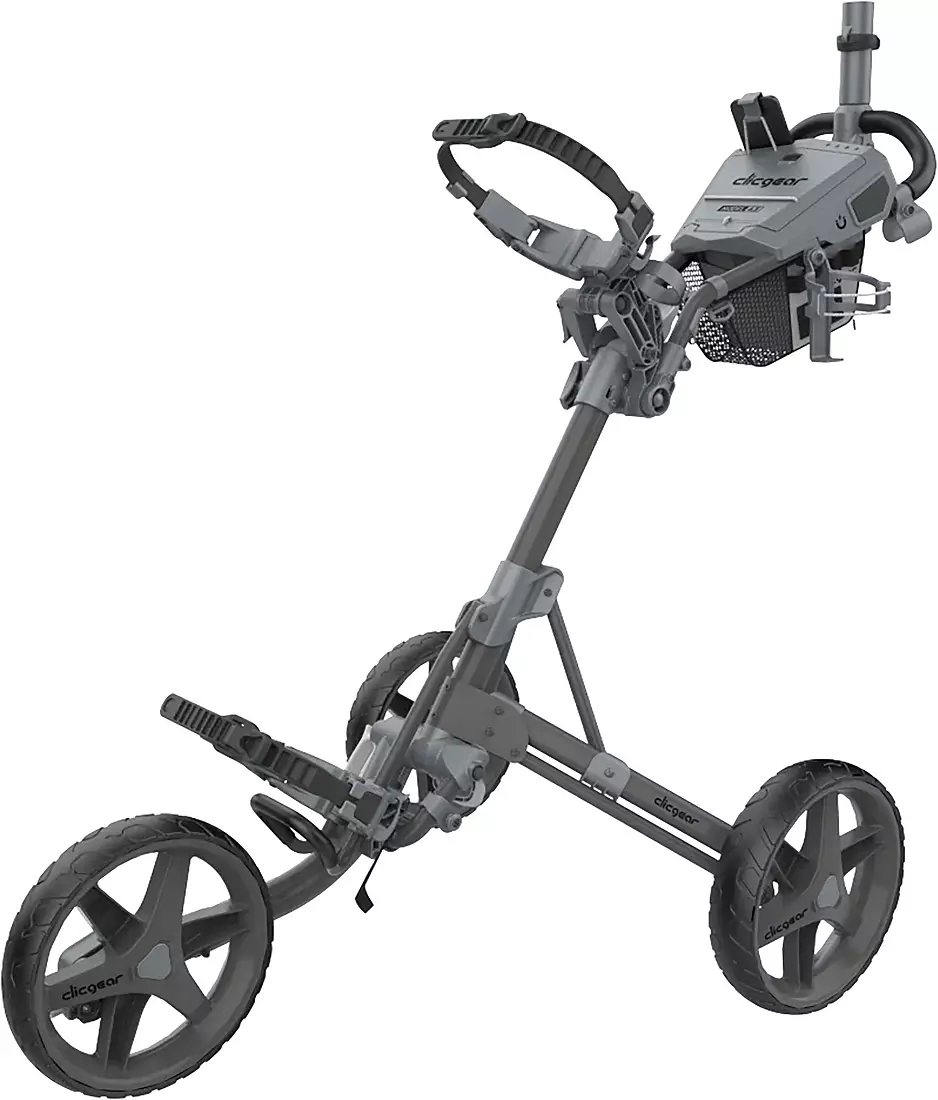
The industry standard for a reason. The Model 4.5 offers the best overall balance of stability, maneuverability, and accessory support. The build quality is a step above everything else — this cart will last 10+ years. I know golfers who have used a Clicgear for 8+ years and the cart still looks new. The aluminum frame resists corrosion, the wheel bearings stay tight, and replacement parts are available for everything. At $339 you are paying for a decade of use. The KVV at $189 is cheaper upfront but I would expect to replace it in 3-4 years of regular walking.
Skip this if: you ride a cart most rounds — a push cart only pays off if you walk 10+ rounds per year.
NOT YET TESTEDRESEARCH PICK — NOT YET IN OUR TEST BAG
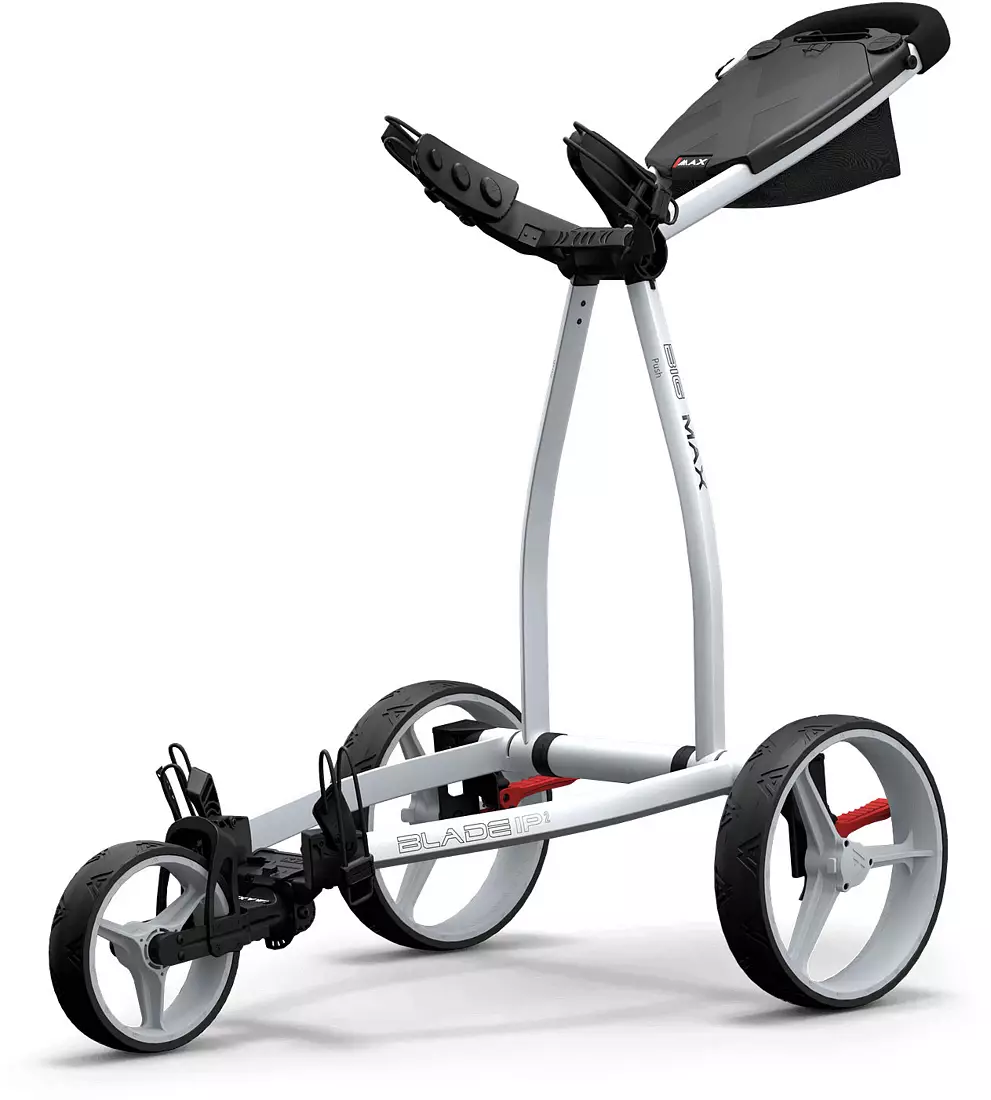
Big Max Blade IP 2 Push Cart
Big Max built the Blade around one idea: folding flatter than anything else. The aluminium frame collapses to roughly the depth of a golf bag pocket, which matters if your boot is already full.
We have not pushed one, so there is no rating here.
At $399.00 it costs more than the Clicgear above. You are paying for the fold, not for anything that happens between shots. Sold direct by Big Max on Amazon rather than by a marketplace reseller.
Skip this if: you ride a cart most rounds — a push cart only pays off if you walk 10+ rounds per year.
NOT YET TESTEDRESEARCH PICK — NOT YET IN OUR TEST BAG
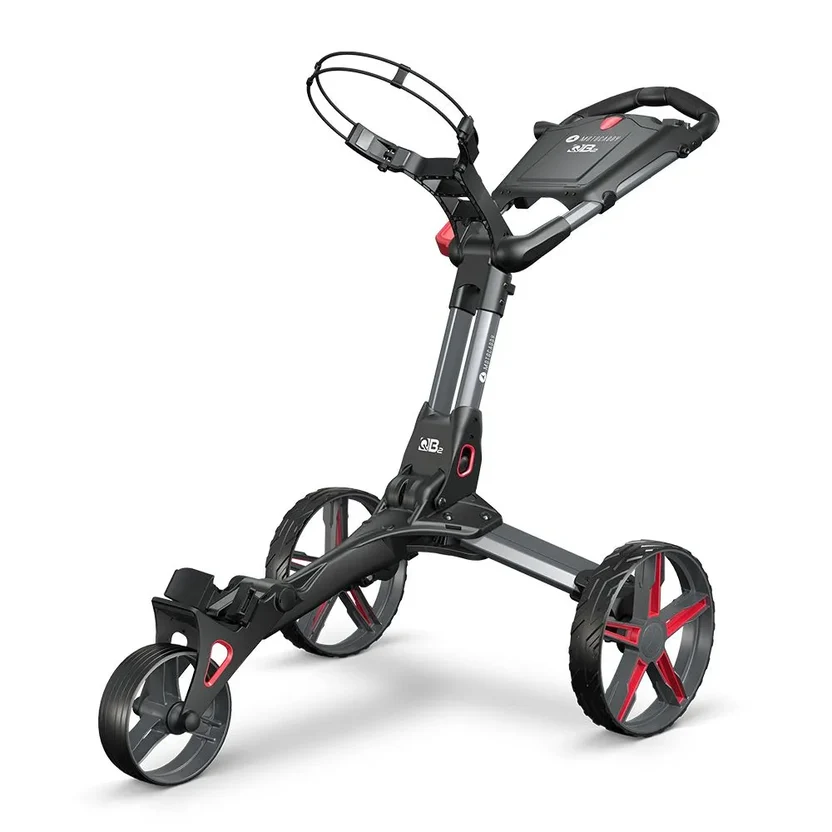
Motocaddy QB2 Push Cart
Motocaddy are better known for the electric caddies on our electric cart page. The QB2 is their manual one — a three-wheel frame with a two-movement fold, at $199.00.
Untested here.
One practical note before you order: it ships in four to five days rather than next-day, so it is not the cart to buy on the Thursday before a Saturday game.
Skip this if: you ride a cart most rounds — a push cart only pays off if you walk 10+ rounds per year.
NOT YET TESTEDRESEARCH PICK — NOT YET IN OUR TEST BAG
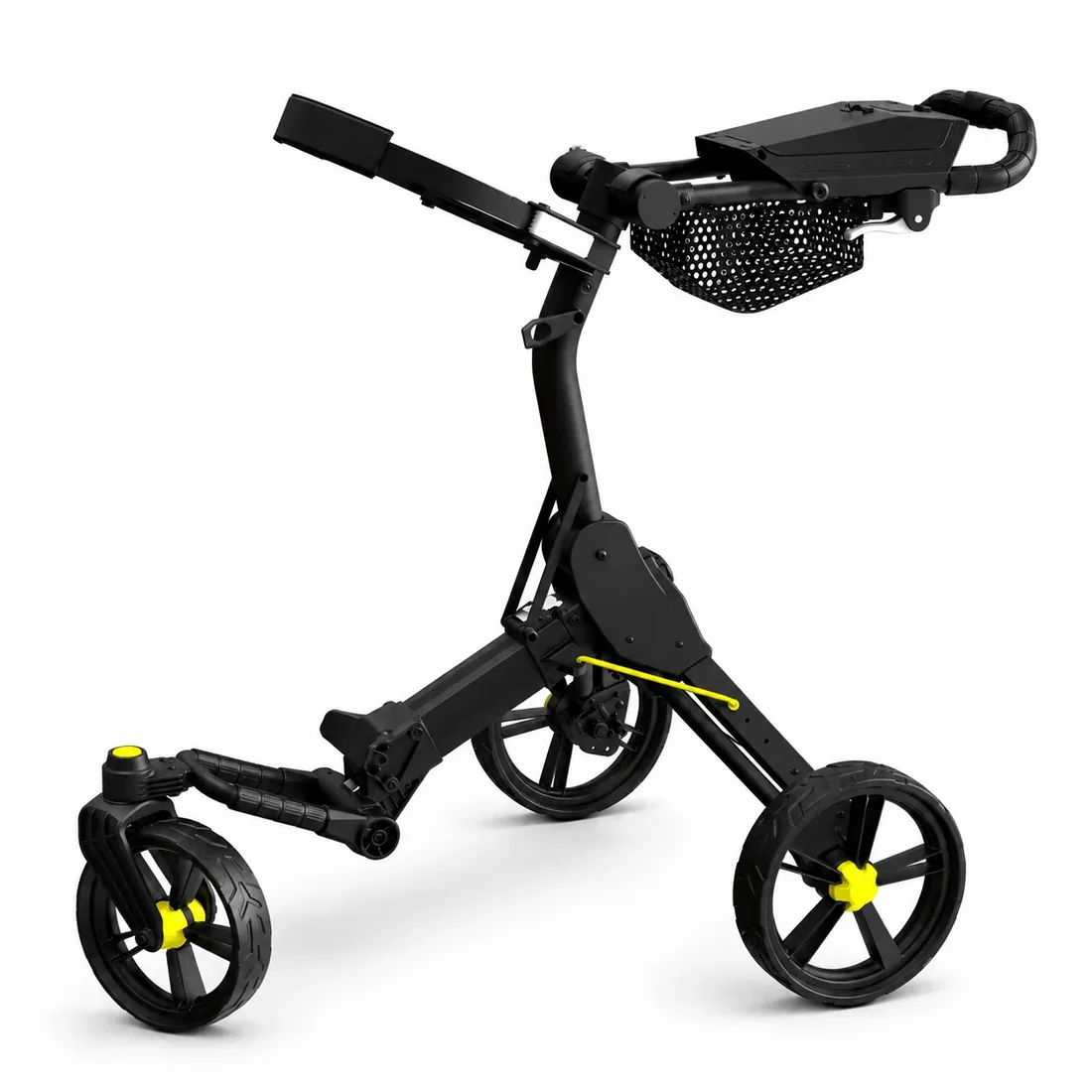
Alphard Cybercart Push+ Push Cart
Worth being precise about what this is, because Alphard sell two things with almost the same name. The Cybercart Push+ is the manual cart at $199.00. The plain Cybercart is the remote-controlled electric one at around $1,379 — a different machine at seven times the price.
We have not used the manual version.
This one folds with a single pull and rolls on three wheels, which puts it in the same bracket as the Motocaddy QB2 above.
Skip this if: you ride a cart most rounds — a push cart only pays off if you walk 10+ rounds per year.
NOT YET TESTEDRESEARCH PICK — NOT YET IN OUR TEST BAG
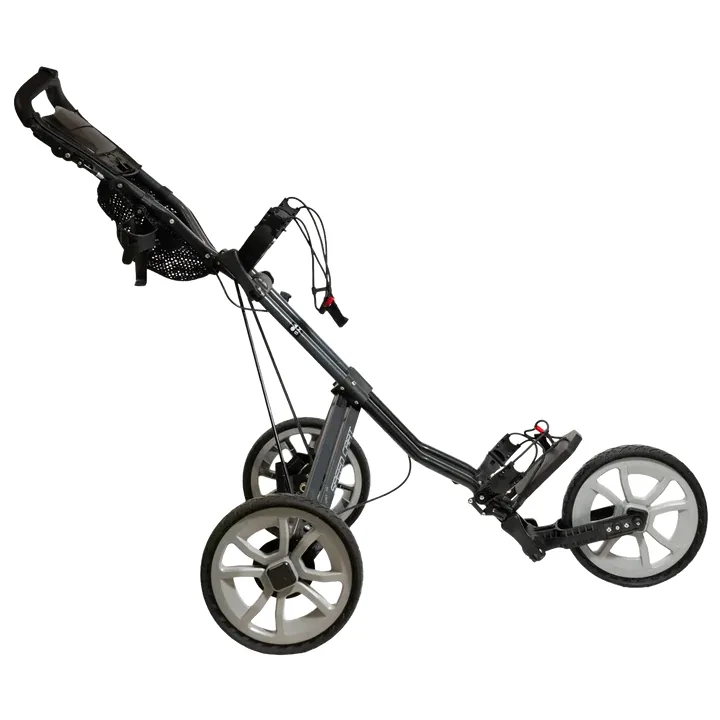
Sun Mountain Speed Cart X
Sun Mountain have been building push carts longer than most of the brands on this page, and the Speed Cart line is the one they are known for.
Untested by us.
At $299.99 it sits above the budget three-wheelers and below the Big Max. A middle-of-the-range cart from a company that only makes carts and bags.
Skip this if: you ride a cart most rounds — a push cart only pays off if you walk 10+ rounds per year.
3-wheel carts are lighter, more maneuverable, and fold smaller. Choose these if you walk flat courses and want easy transport. 4-wheel carts are more stable on side-hills and uneven terrain. Choose these if your course has elevation changes or you want maximum stability.
If you are weighing a motor rather than a wheel count, the step up is roughly $750 to $1,500 on top of a manual cart — our electric push cart guide covers the four models worth considering and where that money actually goes.
What to Look For in a Golf Push Cart
Five things matter when choosing a push cart. First, weight — anything under 15 lbs is easy to lift in and out of your trunk; above 18 lbs gets tiring. Second, folded size — measure your trunk before buying, because a cart that does not fit flat means you will stop using it. Third, wheel type — ball-bearing wheels roll smoother and last longer than bushing wheels, but cost more. Fourth, brake quality — the foot brake must hold on slopes without slipping, especially on courses with elevation changes. Fifth, included accessories — some carts include umbrella holders, drink holders, and scorecard clips; others charge $15-25 per accessory. The KVV includes everything; the Clicgear charges for each add-on.
Push Cart Maintenance: Make It Last
A well-maintained push cart lasts 5 to 10 years. After every round, wipe down the wheels and frame with a damp cloth to remove grass and dirt — debris left on wheel bearings causes premature wear. Once a month, apply a light silicone spray to the folding joints and wheel axles. Check the brake pad every few months and replace it when it no longer grips on slopes. Store the cart folded in a dry place — leaving it open in a damp garage warps the frame over time. If a wheel starts wobbling, tighten the axle nut before it strips the thread. Replacement wheels are available for every cart on this list, so a single broken part does not mean buying a new cart.
If you are working with a low ceiling or a short garage, the room checker will rule out the units that will not fit.
See the full build cost for your budget in the simulator cost calculator.
Not sure how to split the money? Try the equipment budget planner.
Who Should Buy This — And Who Should Skip It
Buy if you…
Walkers who want to carry a full bag without back strain
Golfers switching from riding carts to walking
Anyone tired of hauling a stand bag on their shoulder for 18 holes
Skip if you…
Golfers who ride exclusively
Players at courses that prohibit push carts (some private clubs)
Anyone who prefers a motorized caddy — see our electric push cart guide
Why Trust This Guide
Independently purchased — every product bought with our own money, never loaned by manufacturers
15+ real rounds on Chicago-area courses in all conditions
10-handicap weekend golfer — we test like you play, not like a tour pro
No sponsored content — affiliate commissions don't influence rankings. Full methodology →
Frequently Asked Questions
Are golf push carts worth it?
A golf push cart pays for itself in 10 to 15 rounds compared to motorized cart rental fees of $15 to $25 per round. Walking also improves scores by keeping your body loose between shots and giving you a better feel for course terrain. The average push cart costs $150 to $290 and lasts 3 to 10 years.
What is the best golf push cart for the money?
The KVV 3-Wheel Push Cart at $189 is the best golf push cart for the money in 2026. It weighs 13.6 lbs, folds to 19x15x23 inches, includes all accessories, and has ball-bearing wheels that outperformed carts costing twice as much in our testing.
3-wheel or 4-wheel push cart?
A 3-wheel push cart is lighter, more maneuverable, and folds smaller — best for flat courses and easy trunk storage. A 4-wheel push cart is more stable on side-hills and uneven terrain. Choose 4-wheel if your course has elevation changes or steep slopes.
How long do golf push carts last?
Premium push carts like the Clicgear Model 4.5 and Bag Boy Nitron last 8 to 10+ years with basic maintenance. Budget push carts like the KVV and CaddyTek typically last 3 to 5 years of regular use. All carts require occasional wheel cleaning, brake adjustment, and joint lubrication.
Can I use any golf bag with a push cart?
Most stand bags and cart bags fit all push carts without modification. Oversized tour staff bags may be too wide for compact 3-wheel models. The CaddyTek EZ V8 4-wheel cart has the widest bag cradle and fits the largest bags.
Do push carts slow down play?
Push carts do not slow down play. Walking golfers with push carts typically finish rounds faster than two riders sharing a motorized cart, because walkers go directly to their own ball instead of driving to their partner's ball first.
Are electric push carts worth the upgrade?
Electric golf push carts costing $600 to $1,200 are worth the upgrade if you walk 40+ rounds per year or have physical limitations that make pushing uphill difficult. For most recreational walkers doing 10 to 30 rounds per year, a manual push cart at $150 to $290 offers better value.
How do I fold a golf push cart for my trunk?
Most modern golf push carts fold in one or two steps. The Bag Boy Nitron auto-folds with a latch release. The KVV and CaddyTek fold in two steps by releasing the handle lock and pushing down. All four carts tested in this guide fit in a standard sedan trunk when folded.
Match your swing speed to the perfect golf ball in 10 seconds. 37 balls color-coded by compression, cover, and price. One printable page, free.
No spam. Unsubscribe any time.
Check your inbox — the compression cheat sheet is on its way!
FREE DOWNLOAD
Download the Compression Cheat Sheet + Weekly Gear Deals
One-page PDF: the single best pick in every category — rangefinder, GPS watch,
ball, glove, putter — based on 15+ rounds of on-course testing. Print it, take it to the store, and stop second-guessing.
No spam. Unsubscribe any time. We email ~twice a month with gear updates.
✅ Check your inbox — the cheat sheet is on its way!
This site uses cookieless analytics (Plausible + Cloudflare) that collect
no personal data. Affiliate links earn us a commission at no cost to you.
Privacy policy.