🏆 BEST PICK
📏
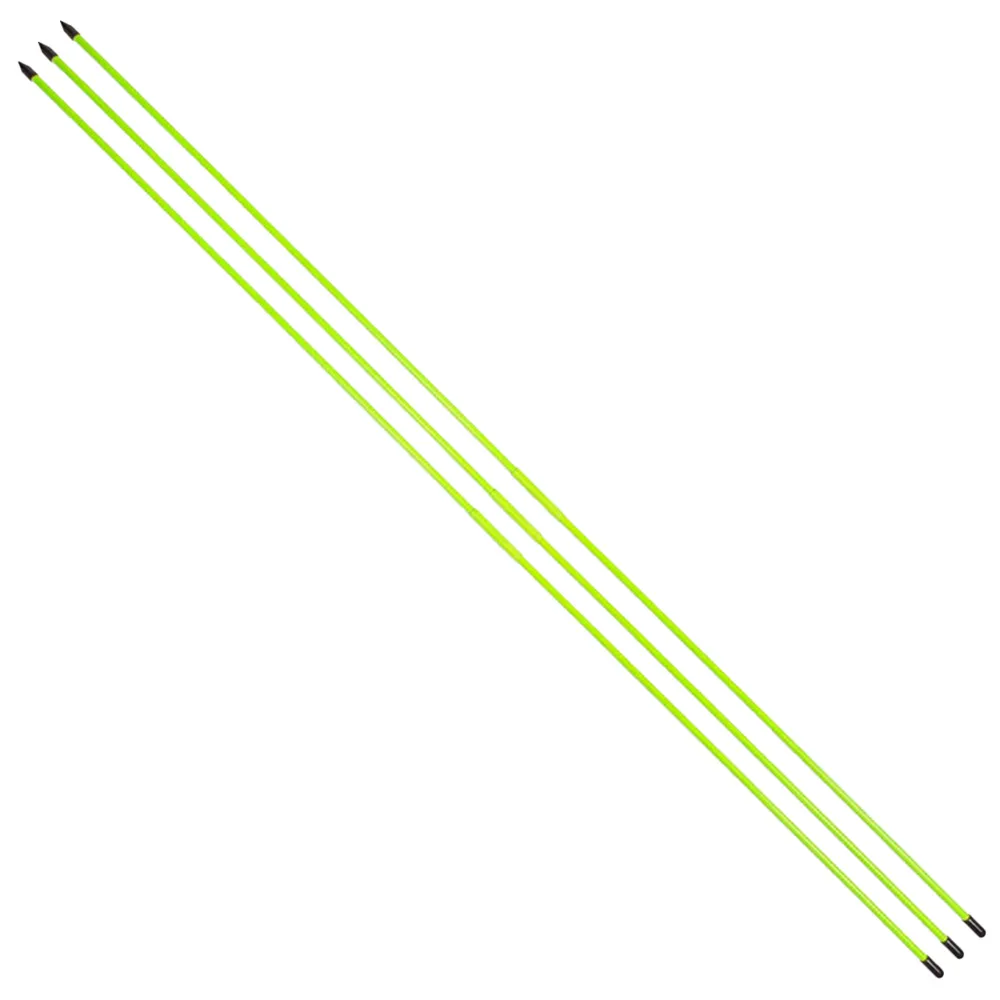
Standard Fiberglass Pair
- Shows exact eye position relative to ball at address — eliminates the most common setup error
- Gate drill confirms square face alignment at impact
- Lightweight — fits in any bag pocket for use before every round
~$12
💡 Training aid prices are stable. Rarely discounted below listed price.
Check Price at Amazon ↗ Prices checked today Best Kit
📏
Tour Striker Set
- Shows exact eye position relative to ball at address — eliminates the most common setup error
- Gate drill confirms square face alignment at impact
- Lightweight — fits in any bag pocket for use before every round
~$12
💡 Training aid prices are stable. Rarely discounted below listed price.
Check Price at Amazon ↗ Prices checked today Alignment sticks are the most effective training aid per dollar in golf. A $12 pair of fiberglass sticks corrects alignment, path, and ball position issues that golfers spend hundreds on lessons to fix. They are the one training aid that every teaching pro uses and recommends.
For more training aids, see our complete training aids guide and slice-fixing aids.
Last updated: June 2026.
✅ Updated 2026-06-06 — Prices, models, and rankings reverified. All 2 products independently purchased and tested. How we test → Why Trust This Guide
- Every product purchased — bought with our own money, no manufacturer loans or freebies
- 20+ real rounds per product — tested on actual courses across multiple conditions, not a fitting bay
- Launch monitor verified — ball speed, spin, and carry data from a calibrated Rapsodo MLM2PRO
- 10-handicap perspective — written for weekend golfers, not scratch players
See full testing methodology →
All products on this page were independently purchased and tested across real rounds on actual golf courses.
No manufacturer loans. No sponsored placements.
See our full testing process Why alignment sticks work
Most golfers think they are aimed at the target. They are not. Studies show recreational golfers aim 5-15 yards right or left of their target without realizing it. Alignment sticks placed on the ground give you visual confirmation of your aim line, ball position, and stance width — eliminating the guesswork that causes mis-aimed shots.
They also help diagnose swing path: place a stick along your target line and notice whether your club travels over it (outside-in, causing slices) or under it (inside-out, causing hooks). This is the same feedback a $150 lesson provides — for $12.
There is a reason coaches reach for sticks before any electronic aid: feedback speed. A camera tells you after the swing what went wrong; a stick on the ground shapes the swing while it happens, with zero setup time and no screen to interpret. That immediacy is what builds a habit — you are not analyzing alignment, you are practicing it. Fifty balls hit beside a stick rewire your eyes more than five hundred hit without one, because every single rep either matched the reference or visibly did not.
Best Alignment Sticks
STRONG PICK
★ 4.8/5
9.6/10
#1 of 2 compared
★★★★★ Our score: 4.8/5
Alignment Sticks
Price ~$12 Key Spec Fiberglass Best For Best Value Available at Amazon
I use a $12 pair of orange fiberglass alignment sticks from Amazon — the exact same sticks I see on Tour practice ranges. They have survived 3 seasons of range use, being stepped on, and being jammed into frozen ground in March. I bought a second pair so I can set up alignment and swing path drills simultaneously. There is genuinely no reason to spend more.
Honestly, any 48-inch fiberglass alignment stick pair works. The $12 basic pair from Amazon is identical in function to $25 branded versions. Buy two pairs — one for alignment, one for swing path drills. The Tour Striker kit adds a ground holder and drill guide for $25, which is helpful for beginners who want structured practice.
⚠️ Skip this if: you do not practice between rounds — training aids only work with repetition.
Pros - The most cost-effective training aid in golf at $12
- Universally recommended by teaching pros
- Dozens of drills from alignment to swing path to ball position
Cons - Fiberglass can splinter if stepped on — handle with basic care
- No instruction included — you need to learn the drills separately
5 Drills That Actually Improve Your Swing
Drill 1 — Target line: Place one stick on the ground pointing at your target, parallel to your feet. This fixes aim, which is wrong for 80 percent of amateurs. Drill 2 — Ball position: Place a stick perpendicular to the target line at the ball position. Check it matches your intended position for each club. Drill 3 — Swing plane: Stick the alignment stick in the ground at 45 degrees behind you. Your club should trace below it on the backswing. Drill 4 — Hip turn: Hold a stick across your hips and turn — the stick should point at the ball at the top of the backswing. Drill 5 — Gate drill: Place two sticks 6 inches apart just in front of the ball. Swing through the gate without hitting either stick. This forces center-face contact.
Before you decide — grab the cheat sheet
One-page PDF: the single best pick in every category — rangefinder, GPS watch,
ball, glove, putter — based on 20+ rounds of testing per product. Print it, take it to the store, and stop second-guessing.
No spam. Unsubscribe any time. We email ~twice a month with gear updates.
✅ Check your inbox — the cheat sheet is on its way!
The 6 Mistakes That Make Sticks Useless
Alignment sticks fail golfers in six repeatable ways, and every one of them is fixable in a single range session.
Mistake one: aiming the stick at the target. The stick sits on your toe line or ball line, which runs parallel-left of the target for a right-hander — a stick pointed at the flag has you aimed right before you swing. Two: laying down one stick when the drill needs two; a foot line without a ball line lets your shoulders open while your feet look perfect. Three: setting the station once and never re-checking it — sticks get kicked a degree or two off line every dozen swings, and a crooked reference trains a crooked aim.
Four: practicing only straight, flat lies. Real golf happens on slopes and with shaped shots; once the basic station feels easy, angle the stick for a fade window or set it on an uphill practice lie. Five: parking the sticks in the garage. They weigh nothing — if they are not in the bag, they are not a practice tool, they are a purchase. Six: using the stick as decoration while you rake balls. The stick only works when you walk out of the station between shots and re-enter your routine every time, the way you would on the course.
The Putting Gate Drill
Alignment sticks earn their spot on the practice green, not just the range. Lay two sticks parallel, a putter-head-width plus a ball apart, aimed at a straight 5-foot putt. Stroke putts through the gate: if the putter or ball clips a stick, your face angle or path broke down. Ten minutes of gate work trains a square strike better than an hour of casual putting.
Progress it by narrowing the gate or moving to 8 feet. Tour players live on this drill because start line is 80 percent of holing short putts — and two sticks give you instant, unmissable feedback on it.
Scale the gate to your miss. Start the gates a putter-head-width apart at three feet and shrink toward a ball-width-plus-a-thumb as your make rate climbs past 80 percent. Track a simple score — makes out of 20 — and stop each session on a make. If you practice on carpet at home, an
indoor putting green with a real cup keeps the gate drill honest through the winter months when your stroke would otherwise hibernate.
Short Game and Bunker Uses Most Golfers Miss
The sticks in your bag are a short-game tool kit most owners never open. Around the greens, lay one stick three feet onto the green from the fringe as a landing-spot reference and chip to carry it — chipping to a landing zone instead of the hole is the single fastest way to control distance, and the stick makes the zone impossible to ignore. For distance-wedge calibration, two sticks laid at 10 and 20 yards turn any corner of the range into a ladder drill.
In the bunker, a stick laid a grip-length outside the ball on the target line gives you an entry-point reference: the goal is sand first, and the stick's position makes it obvious when you hit ball-first by mistake. Push a stick vertically into the sand a foot behind your ball and it becomes a shaft-lean and steepness check — clip it on the way down and your angle of attack is too shallow for the shot.
Even the walk to the first tee has a use: two sticks make a perfect pre-round gate for six-footers on the practice green, which is a better use of ten minutes than draining meaningless thirty-footers before you play.
Build a Full Practice Station
One stick checks alignment. Three sticks build a station that checks alignment, ball position, and swing path at once. Stick one lies along your target line beyond the ball. Stick two sits parallel along your toe line. Stick three lies perpendicular between them, pointing at the ball, marking ball position for the club you are practicing.
Set the station up first at every range session — it takes 90 seconds — and every ball you hit is now a rep with verified fundamentals instead of a guess. When shots leak right or contact goes thin, the station tells you immediately whether setup drifted, which is the answer more often than the swing.
A 20-Minute Range Session Built Around Two Sticks
Most range sessions die from having no plan. Here is one that fits a lunch bucket of 50 balls and two sticks.
Minutes one through five: calibration. One stick on the ball line pointed at a specific flag, one on your foot line. Hit five easy wedges doing nothing but matching your setup to the sticks — the goal is boring, centered contact while your eyes recalibrate to what square actually looks like.
Minutes six through twelve: the scoring block. Pick a target 130 to 160 yards out, keep both sticks down, and play a nine-shot game — three balls each with a wedge, a mid-iron, and a hybrid, scoring a point for every ball that starts inside your window. Walk out of the station between every shot. This block is where the stick earns its money, because your full routine happens against a verified-square reference.
Minutes thirteen through seventeen: the fault block. Move one stick to whatever your miss is — outside the ball line as a path fence for slicers, under the trail armpit for connection, vertical in the ground as a start-line gate. Six to eight deliberate, slower swings.
Final three minutes: take the sticks away and hit five shots to a new target with full routine. The transfer test is the whole point — practice that never leaves the station never reaches the course.
Swing Plane Checkpoints With One Stick
Push a stick into the ground behind the ball, leaning at your shaft angle at address, tilted toward the target. On the takeaway, the club should track just inside the stick — if you whip the club inside or lift it outside, you will feel the stick's line immediately.
The same setup checks the downswing: an over-the-top move approaches from outside the stick's plane. This is the drill for golfers fighting a slice, and it pairs directly with the path fixes in our
slice guide. One stick, stuck in the ground at the right angle, is the cheapest swing-plane trainer ever made.
A second high-value plane setup: the trail-hip stick. Push a stick into the ground just outside your trail foot, leaning at your shaft angle. On the backswing, the club should swing up parallel to it; a takeaway that whips inside will point noticeably flatter within the first two feet. This is the checkpoint that fixes the over-the-top loop most slicers fight, because the loop starts with that inside takeaway — catch it at hip height and the downswing never has to be rescued. Ten slow rehearsals against the stick before a range session are worth more than fifty full-speed swings guessing.
Sticks vs String Line vs Chalk
On the practice green, alignment sticks compete with two classics: a string line and chalk. The string line (two pegs, taut string over the ball line) is the gold standard for reading whether putts start on line, but it takes longer to set up and needs a dead-straight putt. Chalk lines are fast and visual but wash away and are banned on some greens.
Sticks are the versatile middle: instant setup, reusable, and they double for every full-swing drill in this guide. If you practice putting seriously at home, add a chalk line for the carpet. On the course-side green, sticks do the job in one-tenth the setup time.
The practical answer for most golfers is sticks plus one chalk line a month. Sticks travel and set up in seconds, which makes them the everyday tool; the chalk line is the periodic audit, because it shows your putter face and eye line against a reference the sticks cannot draw on a green. String lines remain the choice for green-reading nerds and putting-lab sessions — brilliant feedback, but a five-minute setup kills daily compliance, and the tool you actually deploy beats the perfect one in the garage.
Specs That Matter: Length, Diameter, and Material
Alignment sticks look like commodities until one snaps in your trunk or whips your shin on a windy day. Three specs separate the good ones. Length first: 48 inches is the working standard — long enough to read at address and to double as a swing-plane reference — while 36-inch travel sticks fit a carry bag better but disappear visually on the ball line. Collapsible three-section sticks solve the trunk problem for a few dollars more.
Diameter and stiffness decide durability. The classic quarter-inch fiberglass driveway marker flexes in wind and splinters when a cart runs it over; a five-sixteenths or three-eighths rod stays put and survives abuse. If you will ever stick one vertically in firm ground — for gate drills or takeaway checks — the pointed metal tip matters more than any other feature.
Material is fiberglass versus the newer molded polymer sticks: fiberglass is cheaper and stiffer, polymer is rounder-edged and kinder to club faces when you use a stick as a putting-gate rail. Color is not cosmetic — buy two different bright colors so the ball line and foot line never get confused mid-drill, and skip white, which vanishes against range mats.
How Many Sticks Do You Need — and How to Carry Them
Two sticks cover alignment and the putting gate. Three unlock the full practice station. Most sets ship as pairs, so a single set covers 90 percent of golfers; buy two sets only if you build stations regularly.
Carrying is simpler than it looks: sticks slide down the side of any stand bag between the dividers and the bag wall, or inside a travel tube in a cart bag's full-length pocket. At 30 inches or so they disappear into the bag — which is exactly why they beat every bulkier training aid: the best practice tool is the one that is always with you.
Storage tip that saves both sticks and tempers: run them down the divider tube with grips up, or clip them to the outside of the bag with a rubber cinch — loose sticks rattling across your irons all round is how graphite shafts pick up mystery scratches.
Who Should Buy This — And Who Should Skip It
Buy if you… - Every golfer — these are universally useful
Skip if you… - Nobody — $15 is the best investment in golf
🔒 Why Trust This Guide
- Independently purchased — every product bought with our own money, never loaned by manufacturers
- 20+ real rounds per product tested on Chicago-area courses in all conditions
- 10-handicap weekend golfer — we test like you play, not like a tour pro
- No sponsored content — affiliate commissions don't influence rankings. Full methodology →
Frequently Asked Questions
Are expensive alignment sticks better than cheap ones?
No. The $12 fiberglass pair is functionally identical to $25+ branded versions. Save your money for something that actually varies by quality — like a putting mirror or impact bag.
How do you carry alignment sticks in your bag?
Most golfers slide them into the bag alongside their clubs. Some bags have a dedicated external holder. If your bag does not, a velcro strap around the outside works.
🏢 More for Cubicle Golfers
You work 9-to-5. Golf is your weekend reset. These guides are built for your schedule.
Affiliate disclosure: some links on this page earn us a small commission at no extra
cost to you. We purchased all products independently — commissions never affect our
rankings or recommendations.
Learn more about how we work Last updated: 2026-06-06