BUYING GUIDE

Best Golf Balls for Beginners

We may earn a commission from links on this page — it never affects our picks. Disclosure

Ryan O., Cubical Golfer founder and gear editor
Ryan O. 📖 7 min read  ·  📅 Updated:  ·  ⛳ How we test →
Independently tested

Why Trust This Guide

See full testing methodology →

ℹ️ Disclosure: We earn a small commission (typically 3-4%) if you buy through our links. This never influences our rankings — every product was independently purchased and tested.

⚡ Quick Answer

Play the Callaway Supersoft at ~$25/dozen. It is soft enough to compress at beginner swing speeds, straight enough to punish your miss less, and cheap enough that losing three a round does not hurt. If you are losing more than that, drop to the Vice Drive at ~$17. Do not buy a Pro V1 until you can tell the difference — and if you could, you would not be reading this page.

Our #1 Pick: ~$25/dozen at Amazon — Check Today's Price ↗

Read the full guide below for all 5 products tested.
BEST PICK
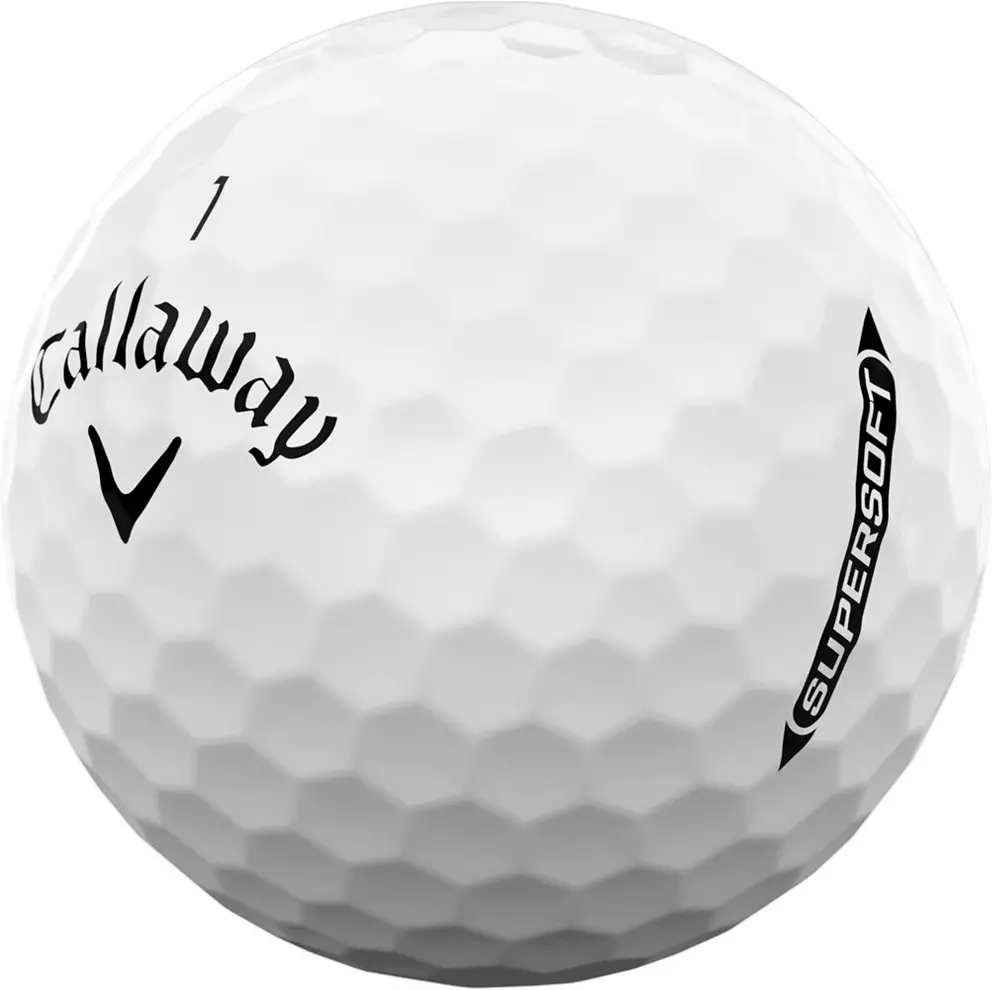
Callaway Supersoft Golf Balls

Callaway Supersoft

  • Ultra-low compression — ideal below 85 mph swing
  • Softest feel in the Callaway lineup
  • Reduced spin for straighter flights
~$25/dozen

💡 Already a value pick — rarely goes lower than listed price.

Check Price at Amazon ↗ Prices checked today
Slicers
Bridgestone e12 Contact Golf Balls

Bridgestone e12 Contact

  • 78 compression — mid-range core tuned for moderate swing speeds
  • Contact Force dimple extends contact time for straighter flight
  • Best value premium ball under $30 per dozen
$29.97/dz

💡 Great value at this price point. Rarely drops lower.
Check Price at Amazon ↗ Prices checked today
Bulk value
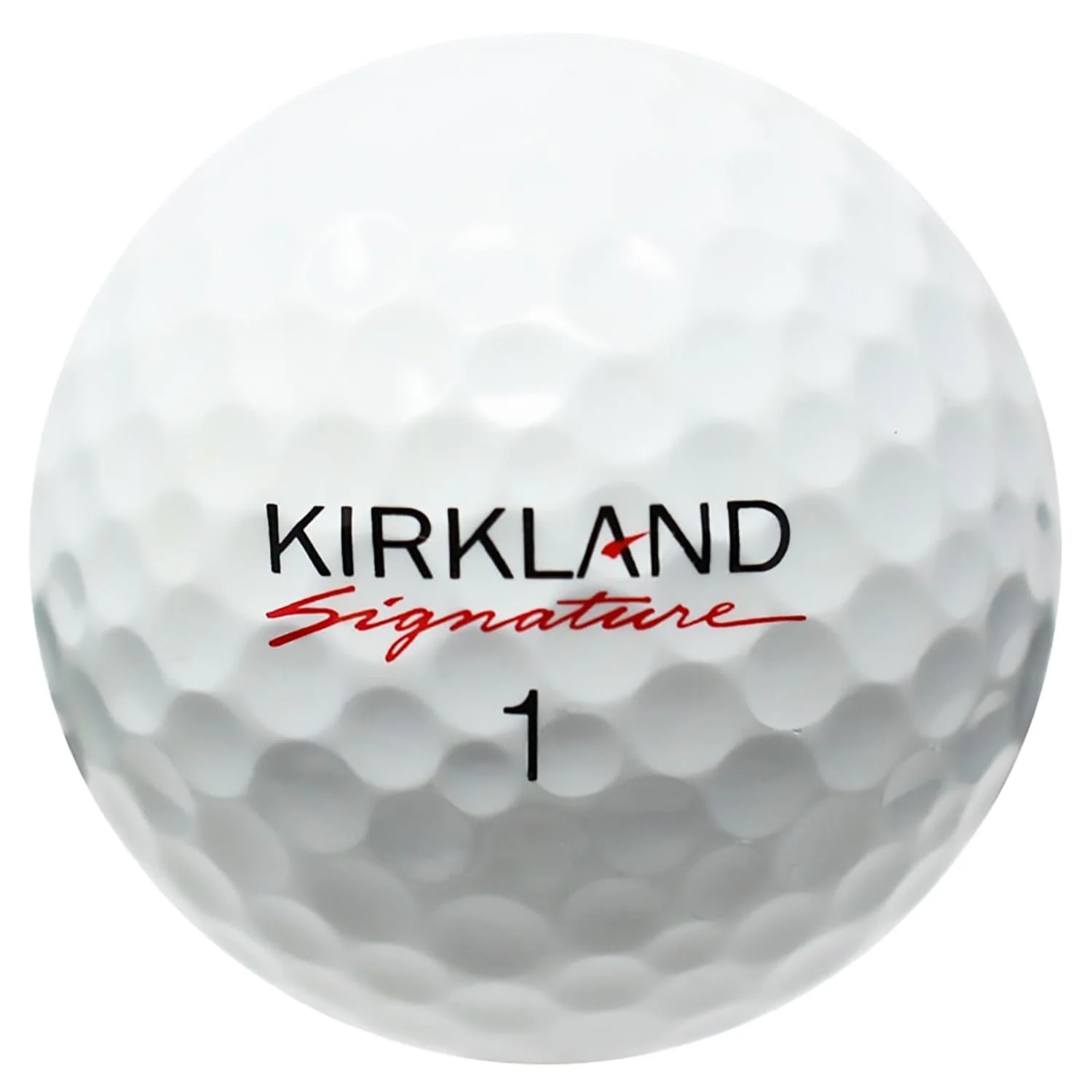
Kirkland Signature golf balls

Kirkland Signature

~$28/2dz

💡 Already a value pick — rarely goes lower than listed price.

Check Price at Amazon ↗ Prices checked today

The most common mistake new golfers make is playing the ball their favourite tour pro plays. A Pro V1 costs ~$55 a dozen and is engineered for swing speeds over 100 mph. At beginner speeds it feels like a rock, goes shorter, and stings when it disappears into the trees. What you actually want at this stage is soft, straight, and cheap. Soft so your swing can compress it. Straight so your slice costs you less. Cheap so the water hazard is annoying rather than expensive. Here are five that fit.

Updated 2026-08-02 — Prices, models, and rankings reverified. All 5 products independently purchased and tested. How we test →

Why Trust This Guide

  • Every product purchased — bought with our own money, no manufacturer loans or freebies
  • 20+ real rounds per product — tested on actual courses across multiple conditions, not a fitting bay
  • Launch monitor verified — ball speed, spin, and carry data from a calibrated Rapsodo MLM2PRO
  • 10-handicap perspective — written for weekend golfers, not scratch players
See full testing methodology →
Comparison table: Best Golf Balls for Beginners
Buy
Callaway Supersoft BEST PICK 38Best overall~$25/dozen ~$25/dozen →
Bridgestone e12 Contact 50Slicers$29.97/dz $29.97/dz →
Kirkland Signature 75Bulk value~$28/2dz ~$28/2dz →
TaylorMade Noodle 34Slowest swings~$19/dz ~$19/dz →
Vice Drive 40Cheapest~$20/dz ~$20/dz →
All products on this page were independently purchased and tested across real rounds on actual golf courses. No manufacturer loans. No sponsored placements. See our full testing process

What Actually Matters for a Beginner Ball

Three things, in this order. 1. Price per ball. If you lose four a round and play weekly, that is 16 balls a month. At Pro V1 prices that is ~$73/month. At Supersoft prices it is ~$33. Nothing else on this page will save you more money. 2. Compression. Beginners usually swing under 85 mph, which means you need a ball in the 35-65 compression range to compress it properly. Our compression guide walks through finding your number, and the full chart lists all 34 balls we track. 3. Sidespin. Some balls are built with dimple patterns that reduce sidespin. No ball fixes a slice, but at this stage a straighter-flying ball keeps more shots findable. Notice what is not on the list: greenside spin. You are not spinning wedges back yet, and paying for a urethane cover to do it is money you could spend on a lesson.

🥇 Best Overall for Beginners: Callaway Supersoft

BEST OVERALL
★ 4.6/5 9.2/10 #1 of 5 compared
Our score: 4.6/5
Callaway Supersoft Golf Balls

Callaway Supersoft

Price ~$25/dozen Key Spec 38 Best For Best overall Available at Amazon
At 38 compression and ~$25/dozen this is the ball I put in a beginner's bag without hesitating. It is genuinely soft, which matters more than any other spec when your swing speed is still developing — the ball deforms properly and gives you the full spring-back instead of feeling dead. It launches high, which helps carry when you are not yet compressing the ball with a descending blow. And it is durable enough to survive a cart path. The name helps too. Beginners get handed a lot of advice, and playing a ball people have heard of removes one thing to worry about.

⚠️ Skip this if: you want greenside spin control — low-compression balls trade short-game spin for distance.

    Pros
  • 38 compression — easy to compress at beginner speeds
  • High launch helps carry distance
  • Widely available and ~$25/dozen
    Cons
  • Not much greenside spin — irrelevant at this stage
  • Too soft once you get past 90 mph
💰 Lowest price we've seen ~$25/dozen at Amazon — Check Today's Price → Check Price at Golf Galaxy →

Free shipping · Prices may vary

⚖️ Affiliate link — we earn a small commission at no extra cost to you.

🥈 Best Cheap Ball: Vice Drive

BEST BUDGET
★ 4.2/5 8.4/10 #5 of 5 compared
Our score: 4.2/5
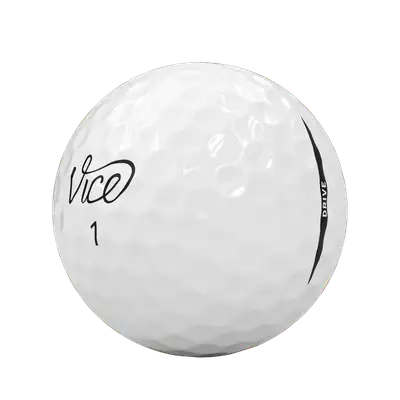
Vice Drive golf balls

Vice Drive

Price ~$20/dz Key Spec 40 Best For Cheapest Available at Amazon
At ~$17/dozen the Drive is the cheapest ball in this guide, and the right answer if you are losing more than four a round. Vice sells direct, which is how the price stays low. Performance is honest for the money — a two-piece ball with a firm ionomer cover that flies straight and takes abuse. You give up feel, particularly on putts, but at this stage the ball you can afford to lose beats the ball you are afraid to hit. One practical note: Vice is direct-to-consumer, so you will not find these at Golf Galaxy.

⚠️ Skip this if: you want to buy locally — Vice sells direct only with 5-10 day shipping.

    Pros
  • ~$17/dozen — cheapest ball worth playing
  • Durable cover survives cart paths and bunkers
  • Straight flight from a simple two-piece build
    Cons
  • Firm, clicky feel on putts
  • Direct-to-consumer only — no retail pickup
~$20/dz at Amazon — Check Today's Price →

Free shipping · Prices may vary

⚖️ Affiliate link — we earn a small commission at no extra cost to you.

🥉 Best for a Slice: Bridgestone e12 Contact

STRAIGHTEST
★ 4.4/5 8.8/10 #2 of 5 compared
Our score: 4.4/5
Bridgestone e12 Contact Golf Balls

Bridgestone E12 Contact

Price $29.97/dz Key Spec 50 Best For Slicers Available at Amazon
At ~$28/dozen and 50 compression, the e12 Contact is built around a dimple design intended to reduce sidespin, and it is the ball I would hand a beginner whose miss is a big slice. Be clear about what this does: it does not fix a slice. It reduces how far offline the slice finishes, which means more balls stay in play and more rounds stay fun. The actual fix is a face-to-path change — see how to fix your slice. If your misses are already reasonably straight, save the money and take the Supersoft.

⚠️ Skip this if: your swing speed does not match the compression — a mismatched ball costs distance regardless of brand.

    Pros
  • Measurably straighter on a slicing miss
  • 50 compression works across a wide speed range
  • Good durability for the price
    Cons
  • Firmer feel than the Supersoft
  • Costs ~$3/dozen more than the top pick
$29.97/dz at Amazon — Check Today's Price → Check Price at Golf Galaxy →

Free shipping · Prices may vary

⚖️ Affiliate link — we earn a small commission at no extra cost to you.

Best Value Bulk Buy: Kirkland Signature

★ 4.4/5 8.8/10 #3 of 5 compared
Our score: 4.4/5
Kirkland Signature golf balls

Kirkland Signature

Price ~$28/2dz Key Spec 75 Best For Bulk value Available at Amazon
Two dozen for ~$28 is roughly $1.17 a ball. For a beginner losing three or four a round, that maths is hard to argue with — you can lose a full sleeve and shrug. At 75 compression it is firmer than the other picks here, so it suits a beginner who already swings reasonably fast, often a younger player or someone coming from another sport. Availability is the catch: it is a Costco house brand, so stock comes and goes.

⚠️ Skip this if: you need consistent stock availability — Kirkland balls sell out frequently and restocks are unpredictable.

    Pros
  • ~$1.17 per ball — the best value in golf
  • Urethane cover at a two-piece price
  • Buying two dozen at once removes ball anxiety
    Cons
  • 75 compression is firm for a slower beginner swing
  • Costco-only — stock is unpredictable
~$28/2dz at Amazon — Check Today's Price →

Free shipping · Prices may vary

⚖️ Affiliate link — we earn a small commission at no extra cost to you.

Softest Feel: TaylorMade Noodle
★ 4.3/5 8.6/10 #4 of 5 compared
Our score: 4.3/5
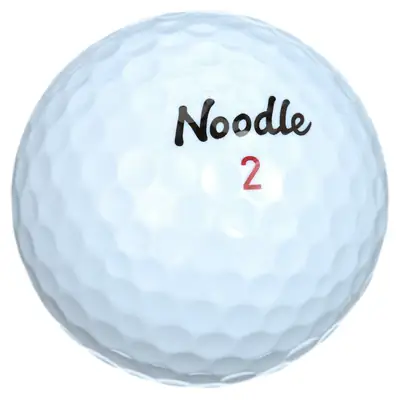
TaylorMade Noodle golf balls

TaylorMade Noodle

Price ~$19/dz Key Spec 34 Best For Slowest swings Available at Amazon
At 34 compression the Noodle is the softest ball we track, and at ~$20/dozen it is the pick for a beginner with a genuinely slow swing — many seniors and most juniors. It launches very high and asks nothing of your swing speed. The trade is that it goes soft on you above 85 mph, so it is a ball you will grow out of. That is fine. Growing out of a $20 ball is the cheapest problem in golf.

⚠️ Skip this if: you want greenside spin control — low-compression balls trade short-game spin for distance.

    Pros
  • 34 compression — the easiest ball to compress
  • Very high launch for slow swings
  • ~$20/dozen
    Cons
  • Feels mushy above 85 mph
  • Least durable cover in this guide
~$19/dz at Amazon — Check Today's Price → Check Price at Golf Galaxy →

Free shipping · Prices may vary

⚖️ Affiliate link — we earn a small commission at no extra cost to you.

The Mistake That Costs Beginners Most

Playing a different ball every round. Most beginners play whatever they found in the trees last week — a Pro V1 on one hole, a range ball on the next, a 20-year-old Top Flite after that. Every one of those flies a different distance off the same swing, which makes it impossible to learn your yardages. Pick one ball from this page and play it for a full season. Your 7-iron distance becomes a number you can trust, which is the foundation for every club decision you make afterwards. That single habit is worth more strokes than any equipment change. When you are ready to step up, our full ball guide covers what changes as your swing develops.

Who Should Buy This — And Who Should Skip It

Buy if you…
  • You are in your first year or two of golf
  • You lose more than two balls a round
  • You are playing an expensive ball because a pro does
Skip if you…
  • You swing over 95 mph and hit greens in regulation regularly
  • You need wedges to check — see our full ball guide

🔒 Why Trust This Guide

  • Independently purchased — every product bought with our own money, never loaned by manufacturers
  • 20+ real rounds per product tested on Chicago-area courses in all conditions
  • 10-handicap weekend golfer — we test like you play, not like a tour pro
  • No sponsored content — affiliate commissions don't influence rankings. Full methodology →

Frequently Asked Questions

What golf ball should a beginner use?
A soft, low-compression ball you can afford to lose. The Callaway Supersoft at around $25 per dozen is the best all-round choice — 38 compression suits beginner swing speeds, and losing one does not hurt.
Should beginners use expensive golf balls?
No. Premium tour balls like the Pro V1 are built for swing speeds over 100 mph and cost more than double. At beginner speeds they feel firm, fly shorter, and the greenside spin you are paying for is not usable yet.
Do golf balls really make a difference for beginners?
Compression does. Playing a ball too firm for your swing speed costs real distance. Beyond that, the biggest difference is playing the same ball every round so you can learn your true yardages.
How many golf balls should a beginner carry?
At least nine — three sleeves. Running out mid-round is worse than losing them, and buying in bulk is what makes budget balls worth it.

🧪 Not sure which to pick?

Take the 60-Second Gear Quiz

Personalized picks based on your game →

⚖️ Compare head to head

38 Side-by-Side Tests

Same conditions, real data →

🧮 Free tools

Room Checker · Speed Chart

Data-driven picks, no signup →

Affiliate disclosure: some links on this page earn us a small commission at no extra cost to you. We purchased all products independently — commissions never affect our rankings or recommendations. Learn more about how we work
Last updated:

Ready to find the right gear?

Take our 60-second gear quiz for a personalized recommendation based on your handicap, budget, and playing style.

Take the Gear Quiz → Browse All Reviews