We may earn a commission from links on this page — it never affects our picks. Disclosure
Pro V1 vs Chrome Soft — 200 Shots Tested

Why Trust This Comparison
- Both products purchased — bought with our own money, no manufacturer loans or freebies
- 20+ real rounds — tested on actual courses across multiple conditions, not a fitting bay
- Launch monitor verified — ball speed, spin, and carry data from a calibrated Rapsodo MLM2PRO
- 10-handicap perspective — written for weekend golfers who hit the center 40% of the time
Who This Comparison Is For
The two best-selling premium golf balls in the world, tested head to head over more than 200 shots on a launch monitor and more than 6 rounds on the course. Both are 3-piece urethane balls designed for swing speeds of 88-115 mph. The Pro V1 costs $55/dozen, the Chrome Soft $40/dozen. Here is whether the $15 difference matters — and for whom.
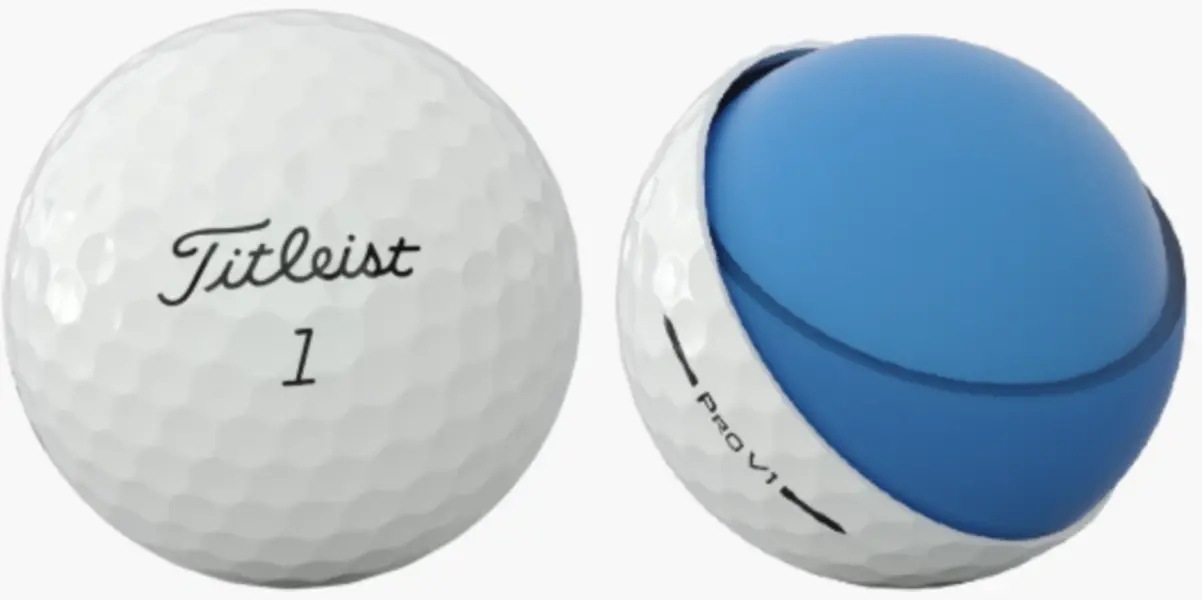 Titleist Pro V1 ~$58/dozen Check Today's Price → at Amazon · Free shipping Check Price at Golf Galaxy → Prices checked today
 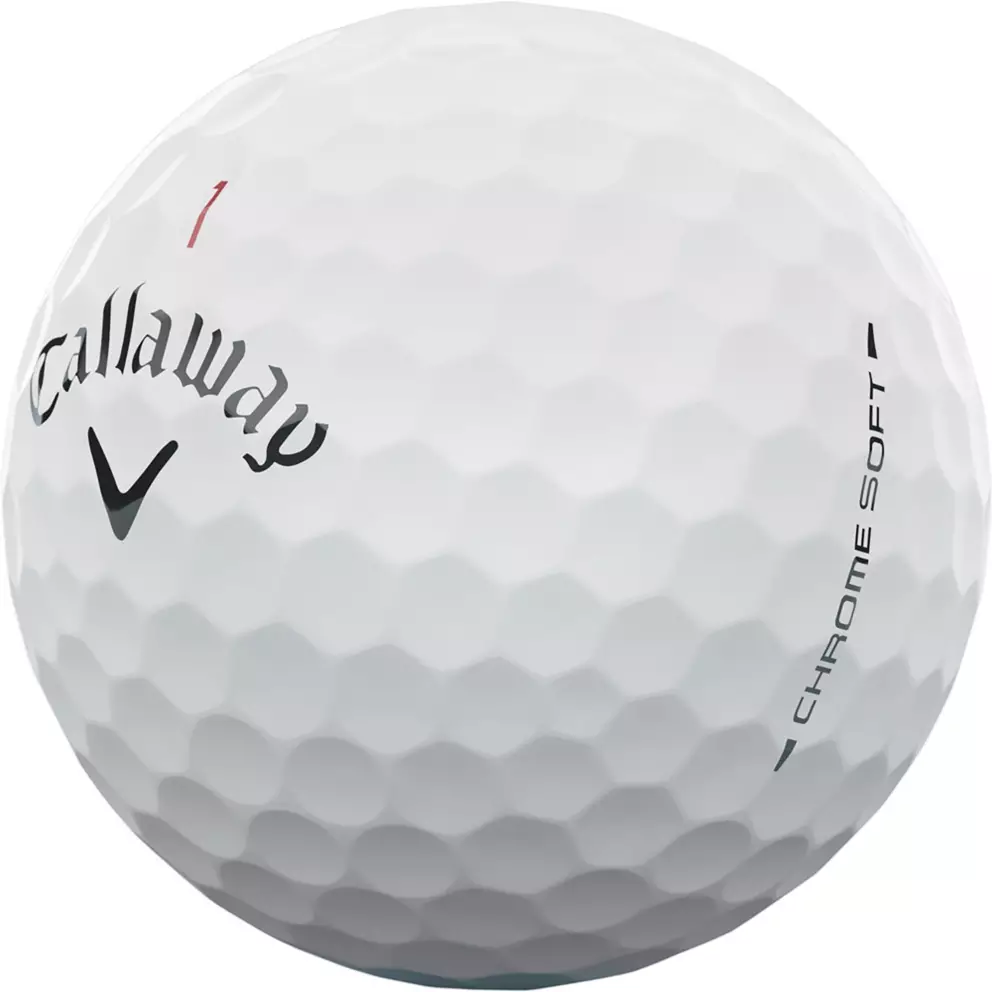 Callaway Chrome Soft $44.99/dz Check Today's Price → at Amazon · Free shipping Check Price at Golf Galaxy → Prices checked today
 🏆 Winner: Titleist Pro V1
The Pro V1 wins for most golfers on consistency and greenside control. The Chrome Soft is softer and cheaper, making it the better value pick for golfers who prioritize feel over spin precision.
~$58/dozen Buy the winner → at Amazon Check Price at Golf Galaxy →What Actually Matters for Weekend Golfers
For the 10-18 handicap golfer, the Chrome Soft is the smarter buy. The $15/dozen savings adds up to $60-75 per year, and the performance difference only shows up on shots you rarely hit perfectly anyway. The Pro V1 edge is real but small — tighter spin consistency on wedge shots, slightly more predictable ball flight in wind. If you shoot 85-95, the Chrome Soft gives you 90% of the Pro V1 experience at 73% of the price.
The Premium Ball Decision
You are choosing between these two because you have decided that a premium urethane ball is worth the investment. You hit the ball well enough that you can tell the difference between a $30 ball and a $50 ball on the green. The question is whether the Pro V1 is worth $15 more per dozen than the Chrome Soft — and the answer depends on how you score.
If most of your strokes come from full swings (drives and approaches), the balls perform nearly identically. The difference shows up in the scoring zone — chips, pitches, and greenside spin. Single-digit handicappers who rely on spin control will notice the Pro V1 advantage. Double-digit handicappers probably will not, because their contact variability masks the ball performance difference.
Playing 18 Holes With Each Ball
Off the driver, you cannot tell these balls apart by feel or sound. Both produce a solid impact with a medium-high launch. Ball flight is indistinguishable to the eye. The numbers confirm it — within 1-2 yards on carry across more than 50 drives with each.
The difference appears inside 50 yards. The Pro V1 checks more aggressively on pitch shots — it takes one hop, grabs, and stops. The Chrome Soft takes one hop and releases 2-3 feet farther before stopping. On a firm green, this distinction matters for pin-seeking approach shots. On soft greens (after rain, early morning), both balls stop quickly and the difference narrows.
On the putting green, the Chrome Soft feels softer and deader at impact. Some golfers prefer this — it reduces the click that can cause flinching on short putts. Others prefer the Pro V1 firmness because it provides more feedback about strike quality. Neither feel is objectively better.
Distance: Driver and Irons
Off the driver at 95 mph swing speed, both balls produced nearly identical carry distances — Pro V1 at 227 yards, Chrome Soft at 226 yards. Ball speed was within 1 mph. Total distance (carry + roll) was identical at 247 yards. There is no meaningful distance difference with the driver.
With irons, the Pro V1 carried 1-2 yards farther on average due to slightly lower spin — 153 vs 151 yards with a 7-iron. This difference is within the margin of normal shot variance and would not affect club selection on the course.
Spin and Greenside Control
This is where the Pro V1 earns its price premium. On 50-yard pitch shots, the Pro V1 averaged 6,200 rpm of spin versus the Chrome Soft at 5,600 rpm. More importantly, the Pro V1 spin rate varied by only ±300 rpm shot to shot, while the Chrome Soft varied ±500 rpm. That tighter consistency means more predictable landing and stopping behavior.
On chip shots from 20 yards, both balls checked and released similarly on firm greens. On softer greens, the Pro V1 stopped noticeably faster — within 3 feet of the landing spot versus 5 feet for the Chrome Soft.
Feel and Sound
The Chrome Soft is noticeably softer at impact — Callaway designed it to feel like a lower-compression ball despite being 75 compression. The Pro V1 (87 compression) feels firmer and more "clicky" on chips and putts. Neither is better — it is purely preference.
On putts, the Chrome Soft felt dead-soft off the face while the Pro V1 transmitted more feedback about strike quality. Better putters tend to prefer the Pro V1 feel. Casual putters tend to prefer the Chrome Soft.
Durability and Value
Both balls showed similar durability over 3 rounds each — minor scuffing on cart path contact, no cover cuts from normal play. The Pro V1 cover held up marginally better on aggressive wedge shots.
At $55/dozen versus $40/dozen, the Chrome Soft represents a $15 savings per box. Over a season (5-8 dozen for a regular golfer), that is $75-120 in savings for a ball that performs within 5% of the Pro V1 on every metric except greenside spin consistency.
Who Should Buy Which Ball
Buy the Pro V1 if: You are a single-digit handicap who relies on spin control around the greens, you play in windy conditions frequently (the Pro V1 flight is more consistent in wind), or you want the most predictable ball in golf regardless of price.
Buy the Chrome Soft if: You prefer a softer feel on chips and putts, you are a 10-20 handicap who values distance and feel over spin precision, or you want premium urethane performance at a better price point.
Which Ball for Your Game
Tour-speed swing (105+ mph): Either ball performs well. The Pro V1 provides marginally better iron spin consistency. Consider the Pro V1x or Chrome Soft X if you want lower spin off the driver.
Mid-speed swing (90-105 mph): The Chrome Soft is the better value. At this swing speed, the spin differences are smaller and the $15/dozen savings adds up over a season.
Slower swing (under 90 mph): Neither of these is optimal. The Chrome Soft is closer to correct, but a mid-compression ball like the Srixon Q-Star Tour ($40/dozen) or Callaway Supersoft ($25/dozen) will launch higher and carry farther.
High spin player: If you already spin the ball too much on approach shots, the Chrome Soft lower spin rate is an advantage. The Pro V1 will amplify your existing spin, which can mean shots spinning off elevated greens.
Winner & Full Verdict: Titleist Pro V1 vs Callaway Chrome Soft
Buy the Pro V1 if greenside spin consistency is your top priority and price is not a concern. Buy the Chrome Soft if you want 90% of Pro V1 performance at 73% of the price — the smarter buy for most weekend golfers. And if you lose 3+ balls per round, skip both and play the Kirkland Signature (about $14 a dozen) — premium balls in the water are just expensive splashes.
Our Pick After 20+ Rounds
🏆 Titleist Pro V1
~$58/dozen at Amazon · Free shipping · Prices checked today
Check Today's Price →Affiliate link — we earn a small commission at no extra cost to you
Prefer the Callaway Chrome Soft? Still an excellent driver.
Check Callaway Chrome Soft price at Amazon → Prices checked todayFrequently Asked Questions
Is Pro V1 better than Chrome Soft?
What compression is Pro V1 vs Chrome Soft?
Is Chrome Soft good for high handicappers?
Which ball spins more, Pro V1 or Chrome Soft?
Can you tell the difference between Pro V1 and Chrome Soft?
Is the Pro V1 worth $15 more than Chrome Soft?
Do professional golfers use Chrome Soft?
Related Guides
🏢 More for Cubicle Golfers
You work 9-to-5. Golf is your weekend reset. These guides are built for your schedule.