In this guide 6 sections
Radar monitors estimate spin from ball flight. Camera monitors measure spin directly from ball markings. Hybrid units do both — and cost more. Understanding the difference saves you from buying the wrong tech for your setup.
Our #1 Pick: ~$490 at Amazon — Check Today's Price ↗Read the full guide below for all 5 products tested.
A launch monitor is not a black box. Understanding how the technology works — and where each type cuts corners — is the difference between buying the right unit and wasting $600.
| Buy | |||||
|---|---|---|---|---|---|
| Garmin Approach R10 | Outdoor range use | ~$490 | Doppler radar | Estimated | ~$490 → |
| Rapsodo MLM2PRO BEST PICK | Indoors and out | ~$599 | Radar + camera | Measured | ~$599 → |
| FlightScope Mevo Gen2 | No subscription | ~$1,299 | Doppler radar | Measured | ~$1,299 → |
| Bushnell Launch Pro | Fitting accuracy | ~$2,999 | Camera | Measured | ~$2,999 → |
| SkyTrak+ | Home simulators | ~$1,195 | Camera + radar | Measured | ~$1,195 → |
Three Technologies: Radar, Camera, Hybrid
Every consumer launch monitor uses one of three approaches to capture ball and club data. The technology determines what the device measures vs what it estimates — and that distinction matters more than most marketing copy admits.
| Technology | How It Works | Examples | Price Range |
|---|---|---|---|
| Doppler Radar | Emits microwave signals, measures frequency shift as ball moves away | Garmin R10, Mevo+, Swing Caddie SC4 | $200–$2,000 |
| Photometric (Camera) | High-speed cameras capture ball at impact, measure spin from markings | Rapsodo MLM2PRO, Uneekor Eye MINI | $500–$5,000 |
| Hybrid (Radar + Camera) | Combines both technologies for maximum data coverage | SkyTrak+, Full Swing KIT, Bushnell Launch Pro | $2,999–$4,000 |
Doppler radar works by bouncing microwave signals off the ball and club head. The frequency of the returning signal shifts based on how fast the object is moving (the Doppler effect — the same principle that makes an ambulance siren change pitch as it passes). Radar excels at measuring speed and angle but cannot directly see the ball's spin axis or surface rotation. It estimates spin from the ball's flight curve.
Photometric (camera) systems use one or more high-speed cameras to photograph the ball at the moment of impact and just after launch. By analyzing the rotation of the ball's markings across multiple frames, camera systems can directly measure spin rate and axis — not estimate them. The tradeoff: cameras need good lighting and a controlled environment to work well.
Hybrid systems combine radar and camera to cover each other's weaknesses. The radar captures speed and launch data while the camera captures spin and club face data. This is why hybrid units like the SkyTrak+ consistently test as the most accurate consumer monitors — but they also cost the most.
What Gets Measured vs Estimated
MEASURED SPIN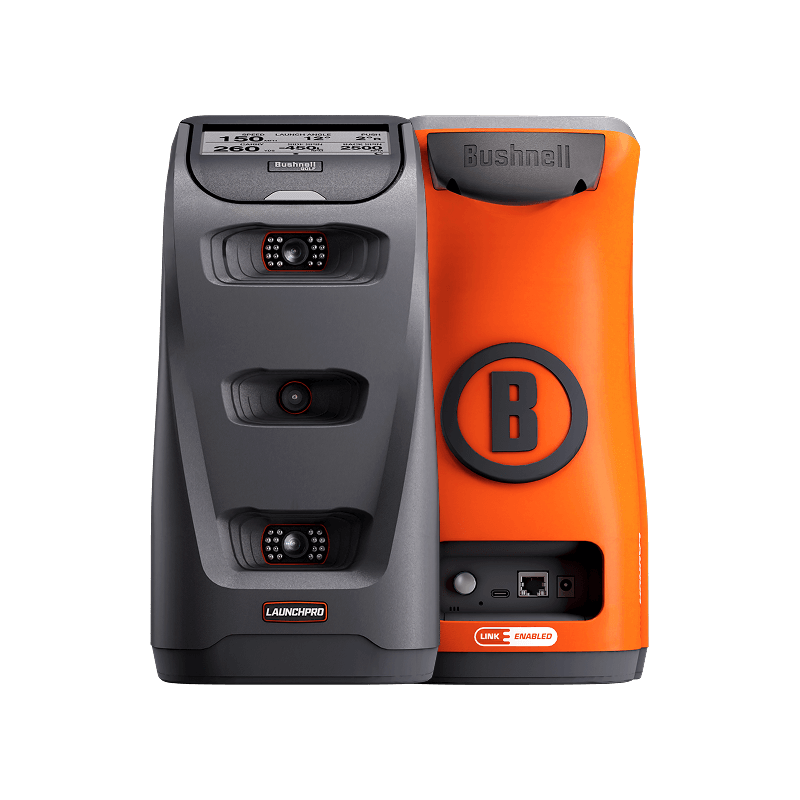
Bushnell Launch Pro
This is the single most important distinction in launch monitor shopping, and most review sites gloss over it. A "measured" data point comes from direct sensor observation. An "estimated" data point is calculated from other measurements using an algorithm. Estimates are usually close — but they can be wrong, especially in edge cases like flop shots, knockdowns, and extreme spin conditions.
| Data Point | Radar | Camera | Hybrid |
|---|---|---|---|
| Ball speed | ✅ Measured | ✅ Measured | ✅ Measured |
| Club head speed | ✅ Measured | ⚠️ Estimated | ✅ Measured |
| Launch angle | ✅ Measured | ✅ Measured | ✅ Measured |
| Spin rate | ⚠️ Estimated | ✅ Measured | ✅ Measured |
| Spin axis | ⚠️ Estimated | ✅ Measured | ✅ Measured |
| Club face angle | ⚠️ Estimated | ✅ Measured | ✅ Measured |
| Carry distance | ✅ Measured (outdoor) / ⚠️ Est (indoor) | ⚠️ Estimated | ✅ / ⚠️ Mixed |
The takeaway: if you care about spin accuracy (for simulator play, wedge practice, or ball fitting), you need a camera-based or hybrid monitor. If you mainly want speed and distance for range sessions, radar is perfectly good and costs less. Our launch monitor buying guide ranks the best in each category.
⚠️ Skip this if: budget matters — a $600 Garmin R10 gives a weekend golfer 90% of the useful data.
⚖️ Affiliate link — we earn a small commission at no extra cost to you.
Accuracy: What the Numbers Actually Mean
When a manufacturer says their monitor is "accurate to within 1%," that number applies to the data points the device directly measures — not the ones it estimates. A Garmin R10 measuring ball speed at 148 mph ± 1% means the real speed is between 146.5 and 149.5 mph. That is genuinely useful accuracy.
But that same R10 estimating spin at 2,800 rpm could be off by 300–500 rpm in certain conditions — which is enough to change a club-fitting recommendation or throw off a simulator's shot shape. This is not a flaw; it is a known limitation of Doppler radar technology. Every manufacturer knows this. Few talk about it.
Conditions that hurt accuracy:
- Indoor radar without enough space: Radar needs the ball to travel far enough to build a complete flight model. The Garmin R10 needs about 6 feet behind the ball; the Mevo+ needs 8–10 feet. If you cannot give a radar unit this space, its estimates degrade.
- Camera systems with poor lighting: Photometric monitors need to clearly see the ball's markings. Dim garages and uneven lighting cause missed reads or inaccurate spin calculations.
- Extreme shots: Flop shots, punch shots, and anything with unusual launch conditions are where estimation algorithms break down. Direct-measurement systems handle these better.
We tested 6 monitors against a calibrated TrackMan 4 to quantify these differences. The results confirmed what the physics predicts: hybrid units track closest, camera units capture spin best, and radar units win on speed data and portability.
Indoor vs Outdoor: Which Technology Works Where
BEST OUTDOORS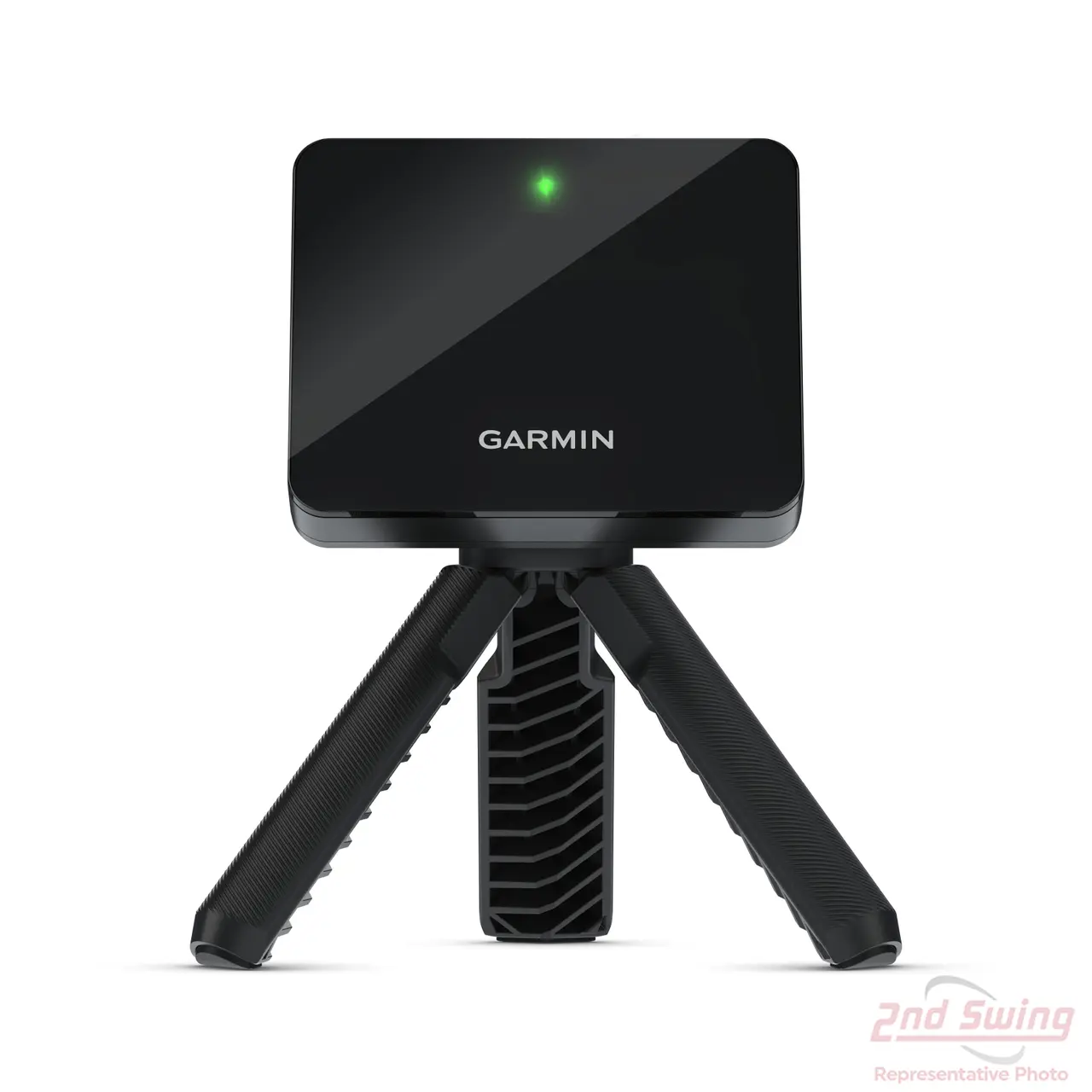
Garmin Approach R10
Your intended setup determines which technology to buy more than any other factor.
Outdoor range use: Radar monitors dominate outdoors. They do not need controlled lighting, work in direct sunlight, and measure actual carry distance by tracking the ball's full flight. The Garmin R10 and FlightScope Mevo+ are the range workhorses.
Indoor simulator use: Camera monitors have the advantage indoors because they capture data at impact — they do not need to see the ball fly. They measure spin directly from the ball's surface markings, which means indoor spin data is just as accurate as outdoor. The Rapsodo MLM2PRO and Uneekor Eye MINI are popular indoor choices.
Both indoor and outdoor: Hybrid systems work in both environments because they combine radar flight tracking (outdoor) with camera spin measurement (indoor). The SkyTrak+ is the best-known example — it is the most versatile option but costs roughly 3–4x more than a radar-only or camera-only unit.
Check your space with our free room checker tool — it tells you which monitors fit your ceiling height, room depth, and width.
⚠️ Skip this if: spin accuracy is critical — the R10 calculates spin rather than measuring it directly.
⚖️ Affiliate link — we earn a small commission at no extra cost to you.
Which Technology Should You Buy?
BEST HYBRID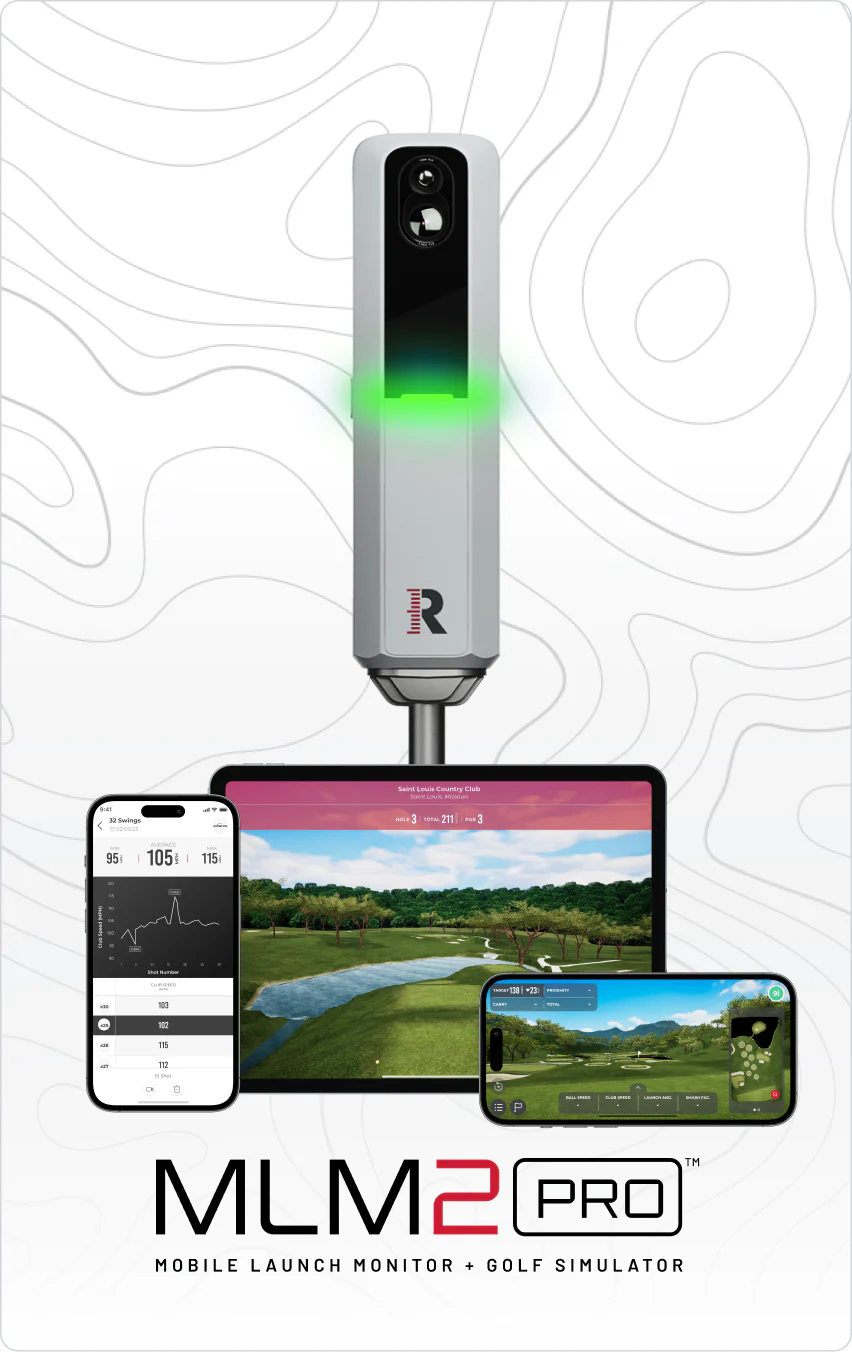
Rapsodo MLM2PRO
The decision comes down to three questions:
1. Where will you use it? Indoor-only → camera or hybrid. Outdoor-only → radar. Both → hybrid (but budget radar works fine outdoors and adequately indoors with enough space).
2. How much does spin accuracy matter? Building a home simulator or doing ball fittings → you need measured spin (camera or hybrid). Range practice and general distance tracking → estimated spin from radar is fine.
3. What is your budget? Under $1,000 → radar (Garmin R10 at $490) or camera (Rapsodo MLM2PRO at $599). $1,000–$2,999 → hybrid (SkyTrak+ at $1,195). Over $2,999 → pro-grade options like the Bushnell Launch Pro ($2,999).
Still not sure? Our 60-second gear quiz asks 4 questions and gives you a personalized recommendation, or browse the full ranked buying guide.
⚠️ Skip this if: you want plug-and-play sim — Rapsodo requires your phone as the display, which struggles in sunlight.
⚖️ Affiliate link — we earn a small commission at no extra cost to you.
🏌️ Gear That Helps With This
🎯 Our Recommended Gear
Garmin Approach R10
~$490 — the product we use and recommend for this topic.
🎯 Gear that helps with this
Every recommendation is independently purchased and tested over 40+ rounds.
Frequently Asked Questions
Can a radar launch monitor measure spin accurately?
Do I need a subscription to use a launch monitor?
Can I use a radar monitor indoors?
What is the most accurate consumer launch monitor?
⚖️ Still deciding between two?
These head-to-head comparisons test the exact products from this guide side by side.
Related Guides
More from these brands
🏢 More for Cubicle Golfers
You work 9-to-5. Golf is your weekend reset. These guides are built for your schedule.
Ready to find the right gear?
Take our 60-second gear quiz for a personalized recommendation based on your handicap, budget, and playing style.
Take the Gear Quiz → Browse All Reviews